
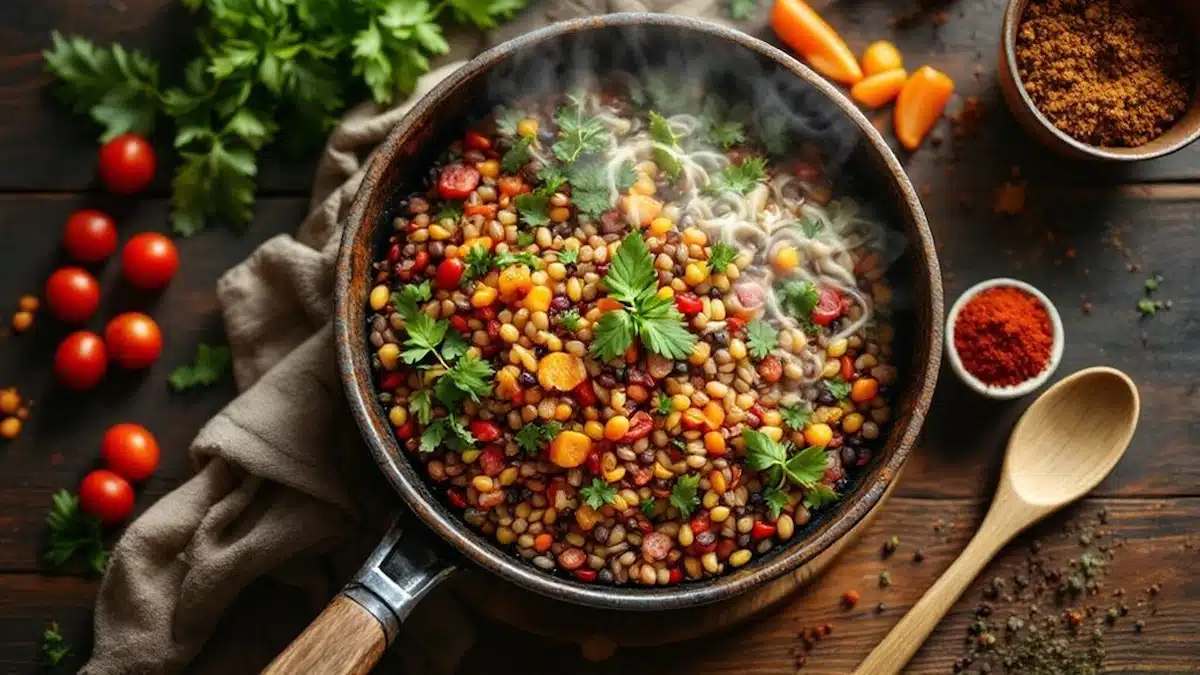
Lentils deliver 18g of protein and 15g of fibre per cooked cup — more than almost any other plant food — for roughly $0.30 a serving. They cook without soaking, last two years in your pantry, and work in everything from Indian dal to French salads. The lentil benefits profile is genuinely hard to beat.
This guide covers the full nutritional case for lentils, the five main varieties, how to cook them correctly, how they fit into global cuisines, and two complete recipes to get you started today.
Quick Stats — Cooked Green Lentils (1 cup)
Vegetarian
Gluten-Free
Dairy-Free
Diabetic-Friendly
Nut-Free
Why Lentil Benefits Are So Impressive
Protein density without the cost: At 18g of protein per cooked cup, lentils rival many meat sources at a fraction of the price. They’re one of the most protein-dense plant foods available, and unlike most plant proteins, lentils can be combined with grains or vegetables to supply all essential amino acids in a single meal.
Exceptional fibre content for satiety and gut health: With 15–16g of fibre per cup, lentils are among the highest-fibre foods in any category. This fibre content is associated with prolonged satiety, which means less snacking between meals and more consistent energy throughout the day.
Low glycaemic index for steady energy: Lentils have a glycaemic index of 28–32 — among the lowest of any carbohydrate food. This slow glucose release means lentils may support steady energy levels and are widely considered a blood-sugar-friendly food, particularly for those monitoring carbohydrate intake.
Iron and folate in meaningful amounts: One cup of cooked lentils provides approximately 6mg of iron (33% DV) and 358mcg of folate (90% DV). Adding lemon juice or other vitamin C-rich foods to lentil dishes may support iron absorption. Folate is essential for cell repair and is particularly important during periods of rapid tissue growth.
Budget and sustainability advantages: Dried lentils cost $1–$2 per pound and yield roughly 2.5 cups cooked per cup dried — making the cost per serving extremely low. They’re also one of the most water-efficient crops, requiring significantly less water to produce than most animal proteins, making them a sustainable pantry staple.
Lentils vs. Common Protein Sources (per 100g cooked)
| Protein Source | Protein | Fibre | Cost/100g | GI |
|---|---|---|---|---|
| Lentils (cooked) | 9g | 8g | ~$0.12 | 32 |
| Chicken breast | 31g | 0g | ~$1.20 | 0 |
| Canned chickpeas | 7g | 6g | ~$0.25 | 28 |
| Black beans | 8g | 8g | ~$0.20 | 30 |
| Tofu (firm) | 8g | 0g | ~$0.40 | 15 |
*Lentils win on fibre and cost; chicken leads on raw protein. Both have a place in a healthy diet.
The Five Types of Lentils and What They’re Best For
Not all lentils behave the same way in the kitchen. Choosing the right variety is the most important technique decision when cooking lentils.
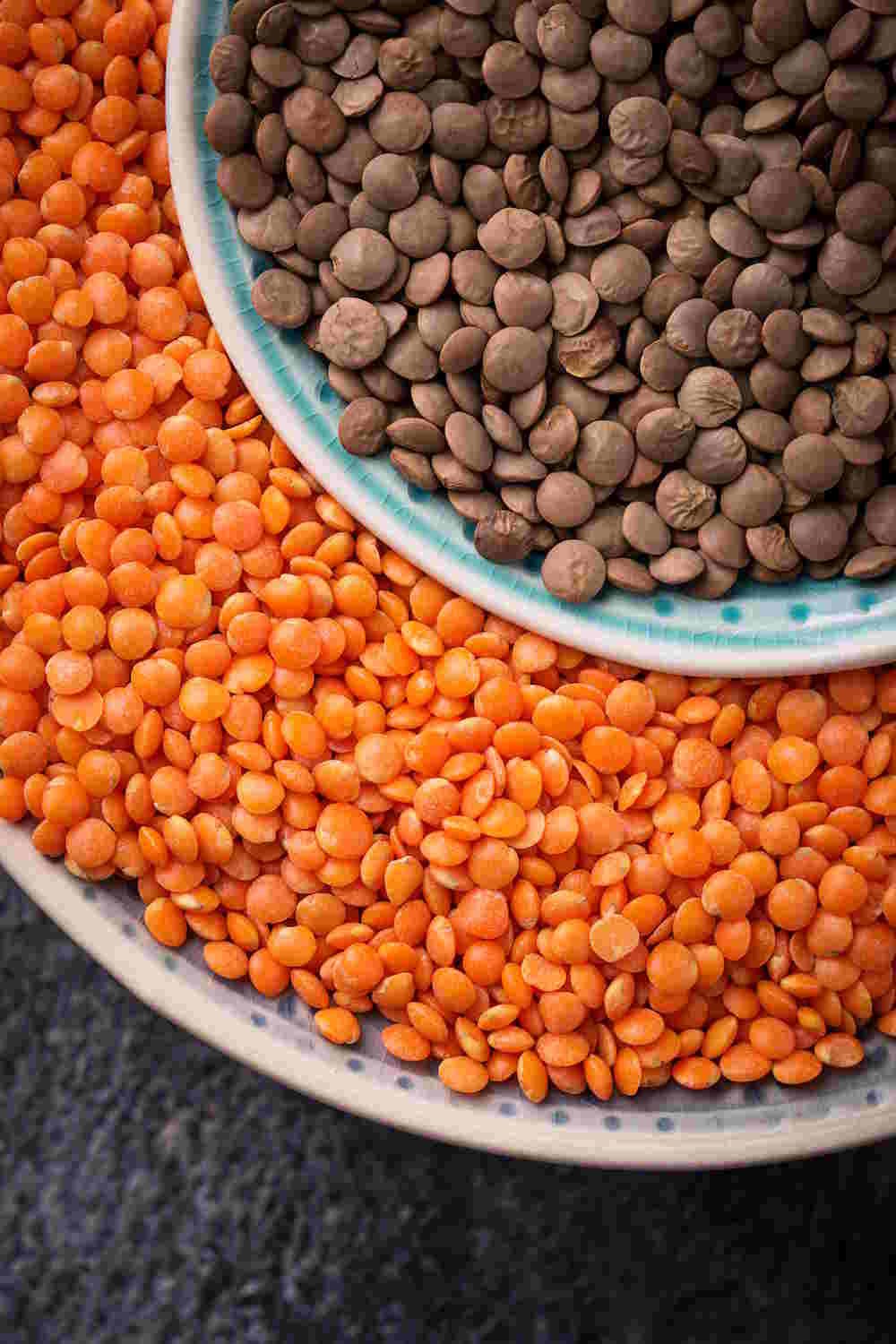
Red lentils (15–20 minutes): Lose their shape during cooking, becoming creamy and soft. Best for soups, dals, and puréed dishes. The fastest-cooking variety is ideal for weeknight meals. Used in the Vegan Coconut Lentil Soup recipe below.
Green lentils (20–25 minutes): Hold their shape well. Mild, earthy flavour. The most versatile variety for batch cooking — works equally well warm or cold. The go-to choice for our lentil meal prep guide.
Brown lentils (20–30 minutes): Slightly earthier flavour than green. Also hold shape. Most widely available and slightly more affordable. Good in soups, stews, and grain bowls.
French Puy lentils (25–30 minutes): Firm, peppery, and most shape-retentive of all varieties. Best for cold salads and presentations where texture matters. Considered the gourmet lentil — worth the premium for salad applications.
Black beluga lentils (20–25 minutes): Small, firm, slightly sweet, striking visual appearance. Excellent for grain bowls and dishes where contrast with colourful vegetables matters.
Lentil Nutrition: What’s Actually in a Cup
The lentil benefits profile goes well beyond protein and fibre. Per one cup cooked green lentils:
Protein — 18g: Roughly equivalent to 2.5 eggs or 60g of chicken. As a plant source, lentil protein is somewhat lower in methionine, but combining lentils with rice, bread, or quinoa compensates for this and produces a complete amino acid profile.
Fibre — 15–16g: Split roughly 60/40 between soluble and insoluble fibre. Soluble fibre forms a gel in the digestive tract that may support healthy cholesterol levels and steady blood glucose. Insoluble fibre supports regular digestion and gut motility.
Iron — 6.6mg (37% DV): Non-heme iron (plant-sourced), which is less bioavailable than heme iron from meat. Pair lentils with vitamin C-rich foods (lemon juice, bell peppers, tomatoes) to meaningfully increase absorption. The stew recipe below includes tomatoes for this reason.
Folate — 358mcg (90% DV): One of the highest folate sources in any food category. Folate is essential for DNA synthesis and cell repair, and plays a key role during periods of rapid cell division.
Potassium — 731mg (16% DV): Higher than a banana. Potassium supports normal fluid balance and muscle function.
Magnesium — 71mg (17% DV): Involved in over 300 enzymatic reactions. Most adults consume below the recommended levels.
How to Cook Lentils Correctly
Lentils are one of the easiest legumes to cook because they require no soaking. The basic method is identical for all varieties:
1. Rinse thoroughly in a colander — remove any debris or small stones. 2. Add to a pot with cold water (3:1 water-to-lentil ratio) and optional aromatics: bay leaf, garlic clove, and half an onion. 3. Bring to a boil, then reduce to a gentle simmer. 4. Cook covered until tender but still holding shape (red: 15–20 min; green/brown: 20–30 min; Puy/beluga: 25–30 min). 5. Drain, discard aromatics, season after cooking.
Critical rule: Never add acidic ingredients (tomatoes, lemon juice, vinegar) during cooking — acid prevents lentils from softening. Always add acids after the lentils are fully cooked and drained.
Instant Pot method: 1 cup dried lentils + 2 cups water/broth, high pressure 8–10 minutes, natural release. Produces slightly softer lentils than stovetop — better for soups, less ideal for salads.
Lentil Benefits in Global Cuisines
Lentils have been central to human diets for over 8,000 years and appear in the culinary traditions of nearly every region. Understanding how different cultures use lentils is the fastest way to expand your cooking repertoire.
Indian cuisine — Dal: The most consumed lentil preparation globally. Red or yellow lentils (masoor or chana dal) simmered with turmeric, cumin, and garam masala, finished with a tarka (tempered spice oil). For a fully developed dal recipe, see our Indian Lentil Stew (Dal) | Vegan and Diabetic-Friendly.
French cuisine — Salade de lentilles: Puy lentils dressed with Dijon vinaigrette, served warm or cold alongside duck confit or poached eggs. The firmness of Puy lentils is essential here.
Middle Eastern cuisine — Mujaddara: Lentils and rice cooked together, topped with deeply caramelised onions. One of the oldest dishes in recorded history — simple, filling, and deeply flavourful. For more Mediterranean plant-based ideas, see our Mediterranean diet lunch ideas.
Ethiopian cuisine — Misir Wat: Spiced red lentil stew with berbere spice blend, served with injera flatbread. One of the most flavourful lentil preparations in any cuisine.
Canadian/North American: Lentil soups, grain bowls, and veggie burgers. See the Spiced Lentil and Sweet Potato Stew below for a North American take on warming lentil cooking.
Recipe: Spiced Lentil and Sweet Potato Stew
A warming, deeply spiced stew that showcases lentil benefits at their best — high protein, high fibre, fully vegan, and ready in 45 minutes:
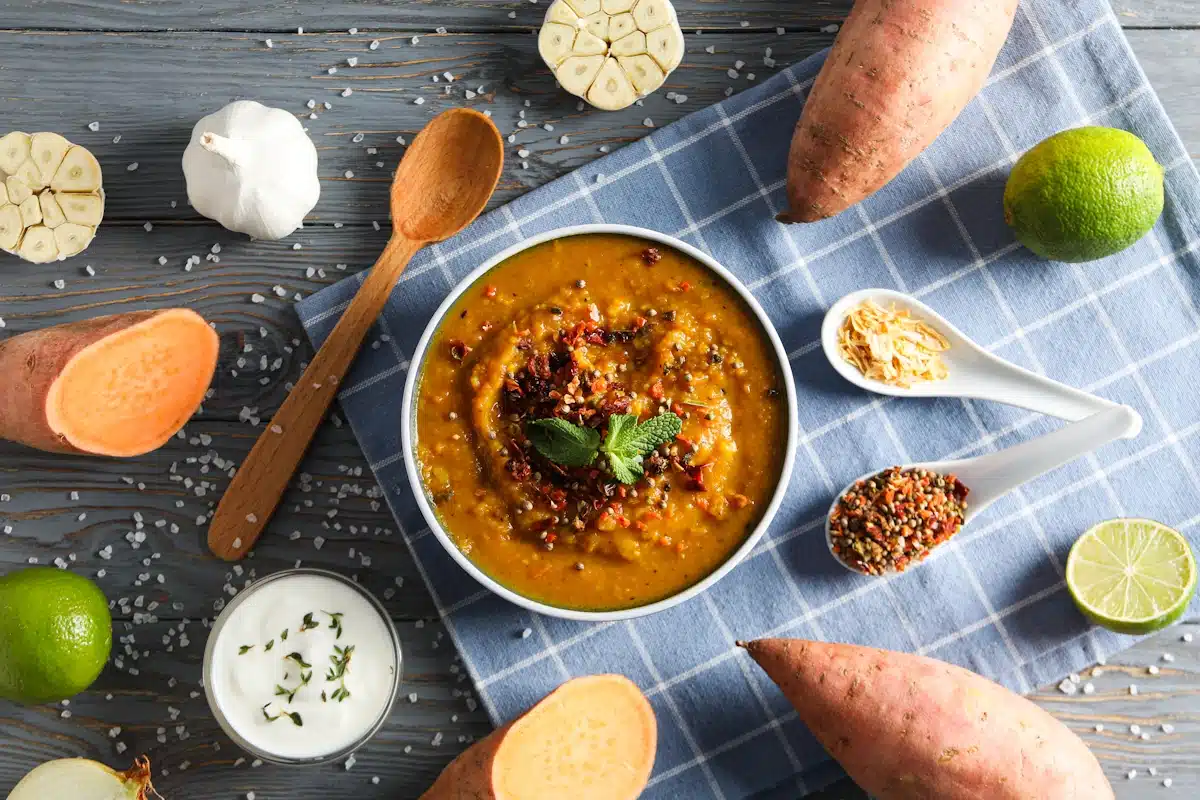
Spiced Lentil and Sweet Potato Stew
Ingredients
Equipment
Method
- In a pot, heat olive oil over medium heat. Add onion and garlic, sautéing until fragrant.
- Stir in cumin and cinnamon, cooking for another minute.
- Add lentils, sweet potatoes, and vegetable broth. Bring to a boil, then reduce heat and simmer for 30-40 minutes, or until lentils and sweet potatoes are tender.
- Season with salt and pepper, and garnish with fresh parsley before serving.
Nutrition
Notes
Tried this recipe?
Let us know how it was!Recipe: Vegan Coconut Lentil Soup
A creamy, coconut-based red lentil soup that comes together in under 30 minutes — the easiest introduction to cooking with lentils:
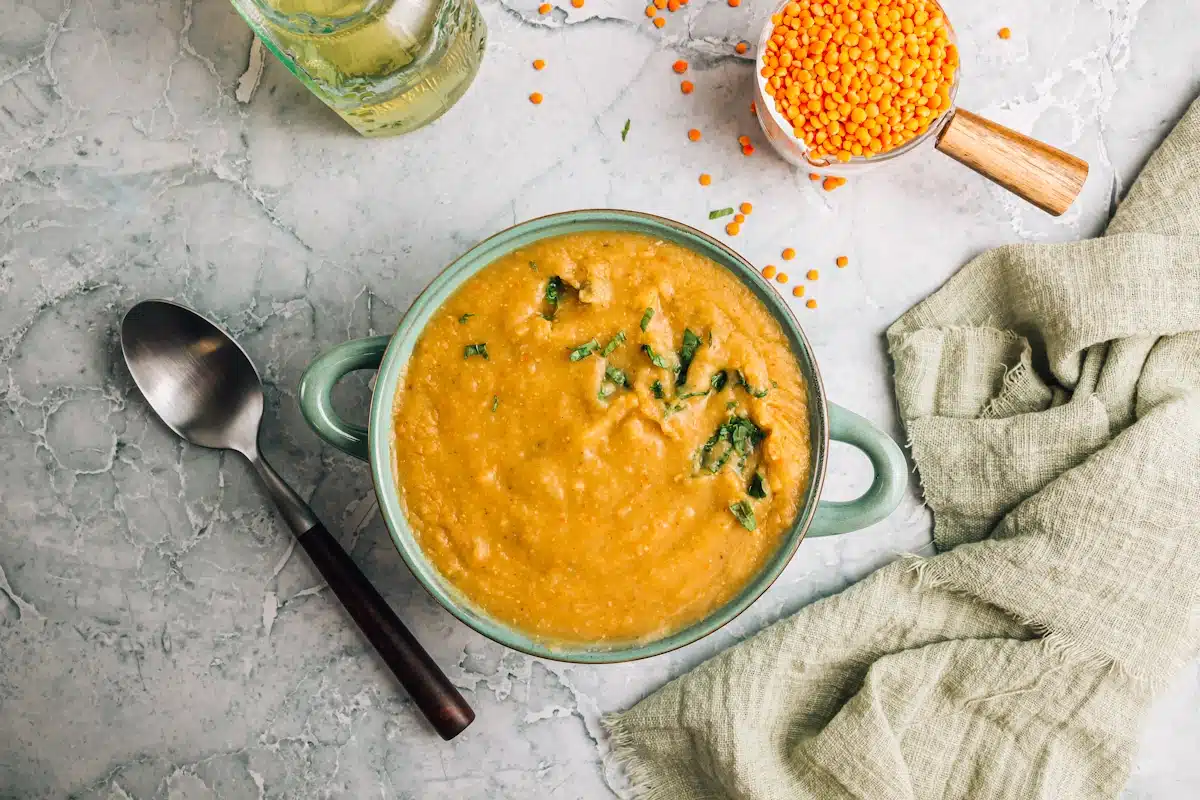
Vegan Coconut Lentil Soup
Ingredients
Equipment
Method
- Heat olive oil in a pot over medium heat. Add onion and garlic, cooking until softened.
- Stir in turmeric and cumin and cook for another minute.
- Add red lentils, coconut milk, and vegetable broth. Bring to a boil, then simmer for 20 minutes, or until lentils are soft.
- Season with salt and pepper, and garnish with cilantro before serving.
Nutrition
Notes
Tried this recipe?
Let us know how it was!Budget-Friendly Meal Planning with Lentils
One pound of dried lentils ($1–$2) yields roughly 5–6 cups cooked, enough for 5–6 generous servings. A full week of lentil-based lunches costs well under $5 in ingredients. Unlike meat or fish, dried lentils have a two-year shelf life, making bulk buying practical without concerns about waste.
The most efficient approach is batch cooking: cook 2 cups dried lentils on Sunday (yields ~6 cups cooked), then portion and season differently each day — Mediterranean, Indian, Mexican, Middle Eastern. For the full batch-cooking playbook with a 5-day meal plan, see our Lentil Recipes | Batch Cook Once, Eat All Week guide. For a broader budget-focused meal prep strategy, Budget Meal Prep: 5 Lunches for Under $15 covers the framework.
Tips for Getting the Most Lentil Benefits
Always rinse and sort: Dried lentils can contain small stones or debris that pass quality control. Spread them on a baking sheet or rinse in a colander before cooking. This takes 60 seconds and prevents a very unpleasant crunch.
Cook in broth for flavour depth: Replacing cooking water with low-sodium vegetable broth adds layers of flavour that carry through regardless of which seasoning profile you apply afterwards. This is a one-change upgrade that makes a noticeable difference.
Add acid only after cooking: Lemon juice, tomatoes, and vinegar all contain acid that prevents lentils from softening properly if added during cooking. Always add acidic ingredients after the lentils are fully cooked and drained. This applies to both stovetop and Instant Pot methods.
Check for doneness early: Cooking times vary based on the age of the lentils — older lentils take longer, fresh-crop lentils can be done several minutes early. Start checking texture 5 minutes before the minimum suggested time. Overcooked lentils become mushy and won’t hold up in bowls or salads.
Undercook slightly for freezing: Lentils destined for the freezer should come off heat 3–4 minutes before they’re fully tender. They’ll continue softening during freezing and reheating, reaching perfect texture rather than turning to mush.
Storage and Serving Suggestions
Dried lentils: Store in an airtight container in a cool, dry pantry for up to 2 years. Avoid moisture and direct sunlight. No refrigeration needed. Unlike most legumes, lentils don’t benefit significantly from vacuum sealing for home storage.
Cooked lentils (plain): Refrigerate in airtight containers for up to 5 days. They absorb liquid overnight — add a splash of water or broth when reheating to restore original consistency. Microwave in 30-second intervals, stirring between each, until heated through to 74°C (165°F).
Freezer Storage: Plain cooked lentils freeze well for up to 3 months. Portion in 1-cup freezer bags, flatten before sealing for faster thawing, label with variety and date. Thaw overnight in the refrigerator. Never refreeze previously frozen lentils. Assembled soups and stews (including the recipes above) also freeze well for up to 3 months.
Complete the Meal: Lentils pair naturally with whole grains (rice, quinoa, barley), leafy greens, roasted root vegetables, and crusty bread. For a broad range of plant-based lunch combinations that work well alongside lentil dishes, see our Mediterranean diet lunch ideas. For no-cook options that complement lentil prep days, explore our cold lunch recipes guide.
Lentil Benefits FAQs
What are the main health lentil benefits?
The main lentil benefits include 18g of protein per cooked cup, 15–16g of fibre, a low glycaemic index of 28–32, and significant amounts of iron (33% DV), folate (90% DV), and potassium (16% DV). They are fully vegan, gluten-free, dairy-free, and nut-free, making them one of the most diet-inclusive protein sources available. Their low GI means energy release is gradual, which is associated with better blood sugar management and sustained satiety.
Are lentils good for weight management?
Lentils are associated with satiety due to their high fibre and protein content — both of which slow digestion and may reduce overall calorie intake at subsequent meals. Their low glycaemic index means they don’t cause the blood sugar spike-and-crash cycle that often leads to overeating. At roughly 230 calories per cup cooked with minimal fat, they provide substantial nutrition per calorie.
How much protein do lentils have compared to meat?
One cup of cooked lentils contains 18g of protein, compared to approximately 31g in 100g of cooked chicken breast. Lentils are lower in raw protein density but higher in fibre and significantly lower in cost and saturated fat. When combined with rice or other grains, lentils provide a complete amino acid profile similar to that of animal proteins. For purely protein-focused needs, lentils are best used alongside other protein sources rather than as a sole replacement.
Are lentils good for diabetics?
Lentils are widely considered a blood-sugar-friendly food. With a glycaemic index of 28–32 — one of the lowest of any carbohydrate food — and 15–16g of fibre per cup, lentils are associated with slower glucose absorption and more stable energy levels. They contain no added sugar and are naturally low in fat. As always, individual responses vary, and dietary changes should be discussed with a healthcare provider.
Get More Lentil Benefits That You Might Also Like
Put these lentil benefits into practice — one 30-minute Sunday batch gives you five different lunches with Mediterranean, Indian, Mexican, and Middle Eastern flavour profiles.
A deep-flavoured masoor dal built specifically for blood-sugar-friendly eating — the most globally eaten lentil preparation, fully developed.
18 Mediterranean-style lunches built around the same plant-forward, high-fibre principles that make lentils so nutritionally valuable.
Lentils are the anchor of serious budget meal prep. This guide builds a full week of lunches for under $3 each using the same ingredients explored here.
The case for lentils doesn’t need overselling — 18g of protein, 15g of fibre, a GI of 32, iron, folate, and potassium, all for $0.30 a serving. That’s a nutritional profile most foods can’t approach at any price.
Start with the Spiced Lentil and Sweet Potato Stew in the recipe card above. Once you’ve made it twice, the rest of the lentil benefits guide starts to feel like practical knowledge rather than abstract nutrition data.
Medical Disclaimer: The nutritional information provided in this article is for informational purposes only. While we strive for accuracy, individual responses to foods vary. Always consult with your healthcare provider or registered dietitian about dietary changes.


