
Published June 8, 2026 · Updated June 26, 2026
One pot of lentils on Sunday. Five completely different lunches by Friday. Lentil recipes are the most underrated meal prep tool in any kitchen; they are cheap, cook in under 30 minutes without soaking, and pack 18g of protein and 15g of fiber per cup, cooked.
This guide covers the batch cooking method, four flavor profiles (Mediterranean, Indian, Mexican, Middle Eastern), a 5-day meal plan, and the exact storage strategy to keep everything tasting fresh all week.
Quick Stats: Mediterranean Lentil Bowl
Why Lentil Recipes Work So Well
Exceptionally high fiber content: One cup of cooked lentils contains 15 to 16g of fiber, more than half the recommended daily intake in a single meal. This fiber slows digestion, supports gut health, and contributes to the feeling of sustained fullness that prevents mid-afternoon snacking.
Complete protein from a plant source: Lentils provide 18g of protein per cooked cup, making them one of the most protein-dense plant foods available. When paired with a grain or vegetable, they supply all essential amino acids, making these lentil recipes genuinely muscle-supporting as a vegetarian or vegan meal.
Low glycemic index for steady energy: Lentils have a GI of 28 to 32, which is among the lowest of any carbohydrate food. This means the energy release is slow and steady rather than a rapid glucose spike, ideal for maintaining consistent focus and energy levels through a long workday.
Iron and folate in meaningful amounts: A single serving of cooked lentils delivers approximately 6mg of iron (33% DV) and over 350mcg of folate (90% DV). Adding lemon juice or vitamin C-rich vegetables to the bowl, as in the Mediterranean version, may support iron absorption.
Budget-friendly batch cooking anchor: Dried lentils cost roughly $0.30 to $0.50 per cooked cup, making a full week of lunches achievable for under $5 in ingredients. Unlike chicken or fish, they do not require refrigerated storage before cooking and have a shelf life of 2-plus years dried.
Store-Bought Grain Bowl vs. Homemade Lentil Bowl
| Factor | Store-Bought Grain Bowl | This Lentil Bowl | Advantage |
|---|---|---|---|
| Protein | 8 to 10g | 15 to 18g | ~75% more protein |
| Fiber | 3 to 5g | 12 to 16g | 3 to 4x more fiber |
| Sodium | 700 to 1,100mg | 300 to 580mg | ~50% less sodium |
| Cost per serving | $8 to $14 | $1 to $2 | 85 to 90% cheaper |
| Added Sugar | 4 to 8g | 0g | Zero added sugar |
Here is the primary recipe, the Mediterranean Lentil Bowl, formatted with everything you need for four meal-prep servings:
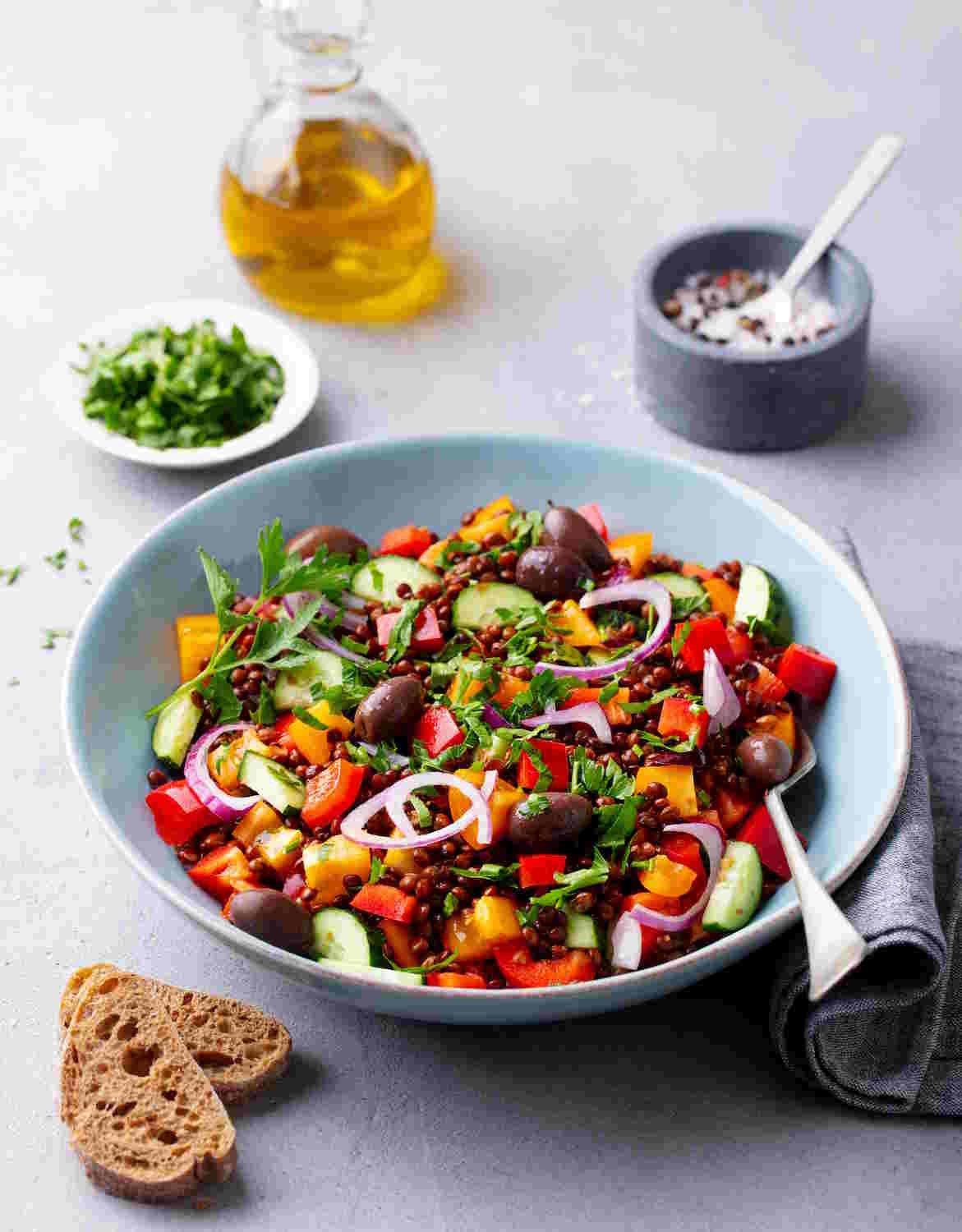

Mediterranean Lentil Bowl | Meal Prep Lentil Recipes
Ingredients
Equipment
Method
- Rinse lentils under cold water in a colander, sorting through to remove any debris or small stones. Drain well.
- Add lentils to a medium saucepan with the water or broth and bay leaf. Bring to a boil over high heat, then reduce the heat to a simmer and cover. Cook for 20–25 minutes, checking for tenderness at 18 minutes. They should be tender but still hold their shape, not mushy.
- Drain the cooked lentils, remove and discard the bay leaf, and spread on a baking sheet or large plate to cool for 15–20 minutes. Do not add dressing to hot lentils.
- While lentils cool, whisk together olive oil, lemon juice, minced garlic, and dried oregano in a small bowl. Season with salt and pepper to taste.
- In a large mixing bowl, combine the cooled lentils with cherry tomatoes, cucumber, red onion, and kalamata olives. Pour three-quarters of the dressing over the mixture and toss gently to combine.
- Divide baby spinach evenly among four meal prep containers. Top each with an equal portion of the dressed lentil mixture. If adding feta, sprinkle over top and store separately if meal prepping more than 2 days ahead. Drizzle remaining dressing over each container.
- Seal containers and refrigerate for up to 4 days. Serve cold, or microwave without the spinach layer for 1–2 minutes, then add spinach and toss before eating.
Nutrition
Notes
Tried this recipe?
Let us know how it was!New to lentils? Start with the basics in our guide to lentil benefits, or try a cozy carrot lentil soup for a warm-weather change of pace.
Lentil Types and When to Use Each
Not all lentil recipes use the same variety, and choosing the right type is the most important technique decision in this guide.
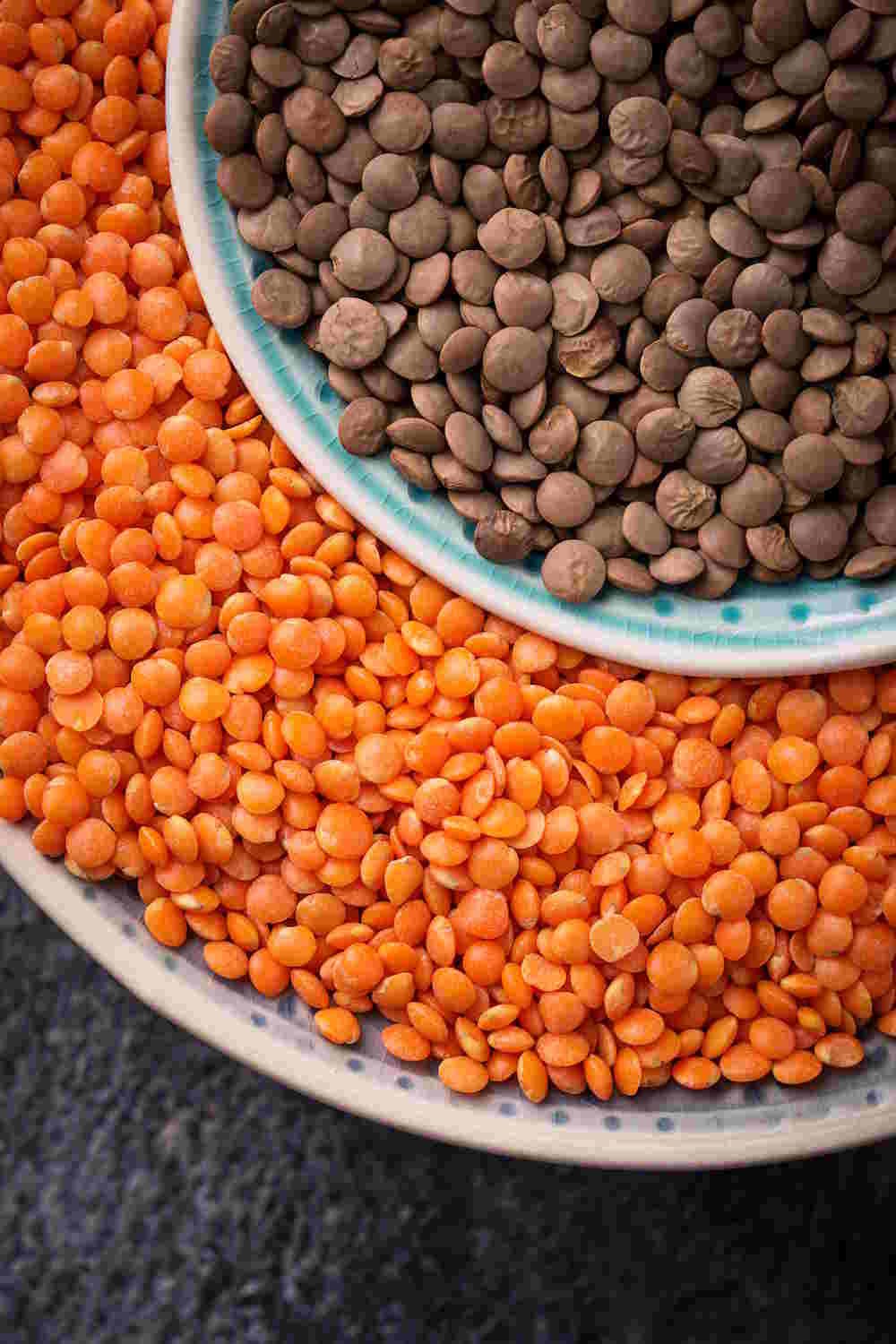
Red lentils (15 to 20 minutes): Break down into a soft, creamy texture during cooking. Best for soups, dals, and puréed dishes. Not ideal for meal prep bowls where you want a distinct texture.
Green lentils (20 to 25 minutes): Hold their shape well, with a mild, earthy flavor. The most versatile batch cooking choice, working equally well warm or cold, in bowls or salads. The primary recipe uses green lentils.
Brown lentils (20 to 30 minutes): Slightly earthier than green lentils, they also hold their shape, and are slightly more affordable. A good substitute in any recipe here.
French Puy lentils (25 to 30 minutes): Firmer, peppery, and the most shape-retentive of all. The premium choice for cold salads and grain bowls, worth the extra cost if presentation matters. For more dish ideas using these in a Mediterranean context, see our Mediterranean diet lunch ideas roundup.
Black beluga lentils (20 to 25 minutes): Striking appearance, slightly sweet flavor, very firm texture. Excellent for bowls where visual contrast with colorful vegetables matters.
The Lentil Recipe Base Batch: How to Cook Lentils for the Week
The foundation of all the lentil recipes in this guide is a single batch of plain, cooked lentils, flavored differently each day. The technique is simple: rinse thoroughly, add to cold water with aromatics (bay leaf, garlic, half an onion), bring to a boil, reduce heat, simmer covered 20 to 25 minutes until tender but not mushy, drain, and cool.
Two cups of dried lentils yield approximately 6 cups cooked, enough for six generous half-cup portions or four generous 1-cup bowl servings. The batch-cooking approach makes lentil recipes practical for a full workweek without cooking every day. The budget meal prep strategy of cooking a single batch and dressing it differently each day is exactly what this guide delivers.
Critical technique note: Do not add acidic ingredients (tomatoes, vinegar, lemon juice) during cooking; acid prevents lentils from softening properly. Add all acids after the lentils are fully cooked and drained.
Four Flavor Profiles to Use All Week
Once the base batch is cooked, divide it into portions and season each differently. This prevents the “same lunch every day” fatigue that derails most meal prep routines.
Mediterranean: Olive oil, lemon juice, garlic, dried oregano, topped with cherry tomatoes, cucumber, red onion, kalamata olives, and optional feta. See the recipe card for full details.
Indian: 2 tsp curry powder, 1 tsp turmeric, 1 tsp garam masala, stirred into warm lentils with sautéed onion and garlic, served over rice or with flatbread. For a standalone lentil dal recipe developed specifically with blood-sugar management in mind, see Indian Lentil Stew (Dal), Vegan and Diabetic-Friendly.
Mexican: 2 tsp cumin, 1 tsp chili powder, 1 tsp smoked paprika, add diced jalapeño, fresh cilantro, lime juice. Serve in lettuce cups or with corn tortillas.
Middle Eastern: 2 tsp cumin, 1 tsp coriander, 1 tsp za’atar, drizzle with tahini, top with roasted red peppers and fresh parsley.
5-Day Lentil Meal Plan
Here is how to deploy one base batch (6 cups cooked) across a full work week:
Monday, Mediterranean Lentil Bowl: 1 cup lentils plus cherry tomatoes, cucumber, olives, and lemon-oregano dressing. Full recipe in the card above.
Tuesday, Indian Dal Bowls: 1 cup lentils, curry-garam masala spice mix, sautéed onion, and baby spinach. Serve warm.
Wednesday, Cold Lentil Salad: 1 cup lentils plus roasted red peppers, arugula, and Dijon mustard vinaigrette. Serve cold, ideal if no microwave access. More ideas in our cold lunch recipes guide.
Thursday, Mexican Lentil Bowls: 1 cup lentils plus cumin-chili spice mix, corn, avocado, lime juice, and fresh cilantro.
Friday, Middle Eastern Lentil Plate: 1 cup lentils plus za’atar, tahini drizzle, roasted vegetables, and fresh parsley.
Chef Tips for Perfect Lentil Recipes
Check for doneness 5 minutes early: Lentil cooking times vary significantly based on how old the dried lentils are. Older lentils take longer; fresh-crop lentils can be done in 15 minutes. Start checking texture at the 15-minute mark, they should be tender but still hold their shape. Overcooked lentils become mushy and do not work in bowls or salads.
Cool completely before dressing: Hot or even warm lentils will absorb dressing unevenly and can wilt salad greens instantly. Spread cooked lentils on a baking sheet for 15 minutes or use an ice bath to cool them quickly before combining with fresh vegetables and dressing.
Cook lentils in broth, not just water: Replacing all or half the cooking water with low-sodium vegetable broth adds a layer of flavor that carries through no matter which dressing or spice profile you apply. This single upgrade makes plain batch-cooked lentils taste noticeably more complex.
Undercook slightly if freezing: Lentils destined for the freezer should come off heat 3 to 4 minutes before they are fully tender. They will continue to cook slightly during freezing and thawing and will reach perfect texture when reheated rather than turning mushy.
Reheat with a splash of liquid: Refrigerated lentils thicken considerably overnight. When microwaving, add 1 to 2 tablespoons of water or broth before reheating to restore the original consistency. Heat in 30-second intervals, stirring between each, until reaching 165°F (74°C) throughout.
Lentil Recipes Storage and Serving Suggestions
Refrigerator Storage: Cooked plain lentils keep for up to 5 days in airtight containers. Assembled dressed bowls (with dressing mixed in) keep for 3 to 4 days. Store dressings and fresh toppings (feta, herbs, avocado) separately and add just before eating for maximum freshness. Label containers with the date.
Freezer Storage: Plain cooked lentils freeze exceptionally well for up to 3 months. Portion into 1-cup freezer bags, flatten before sealing (speeds thawing), and label with variety and date. Thaw overnight in the refrigerator. Never refreeze previously frozen lentils. Do not freeze assembled bowls with fresh vegetables or dressing.
Meal Prep Strategy: Cook the full base batch on Sunday (30 to 35 minutes total). Divide into 5 to 6 equal portions in separate containers while still warm. Allow to cool uncovered 20 minutes before sealing. Prep your fresh toppings separately (chop vegetables, make dressings, portion cheese) and store in small containers alongside. Assembly at lunchtime takes under 3 minutes.
Complete the Meal: Lentil bowls pair well with a slice of crusty sourdough or a whole-grain pita for extra complex carbohydrates. For a lighter pairing, add a side of roasted vegetables or a simple cucumber-tomato salad. If you are building a full week of varied protein-forward plant-based lunches, see our Sunday meal prep guide for additional bowl and salad combinations.
Lentil Recipes FAQs
Do lentils need to be soaked before cooking?
No, lentils are one of the few legumes that do not require soaking. Simply rinse them under cold water, pick out any debris or small stones, and add them directly to your pot. Red lentils cook in 15 to 20 minutes, green and brown in 20 to 30 minutes. Soaking can slightly reduce cook time, but it is not necessary and does not significantly affect nutrition or texture.
How long do cooked lentils last in the fridge?
Plain cooked lentils last up to 5 days in an airtight container in the refrigerator. Assembled lentil bowls with dressing mixed in are best consumed within 3 to 4 days. For best results, store dressings, fresh herbs, and delicate toppings like feta or avocado separately and add them just before eating rather than mixing everything in advance.
Can I freeze batch-cooked lentils?
Yes, plain cooked lentils freeze very well for up to 3 months. Slightly undercook the lentils (by about 3 to 4 minutes) before freezing, as they will continue cooking when reheated and can become mushy if fully cooked before freezing. Portion into 1-cup servings in freezer bags, flatten before sealing for faster thawing, and thaw overnight in the refrigerator before use.
What lentil variety is best for meal prep bowls?
Green lentils are the best all-purpose choice for meal prep bowls; they hold their shape after cooking, work well both warm and cold, and have a mild enough flavor to work with Mediterranean, Indian, Mexican, or Middle Eastern seasoning profiles. French Puy (green) lentils are the premium version with firmer texture and peppery flavor. Avoid red lentils for bowls, as they break down into a soft purée during cooking.
You Might Also Like
A vegan, diabetic-friendly dal that batch-cooks beautifully.
A comforting soup pairing red lentils with roasted carrots.
Budget-friendly lunches built on pantry staples.
Batch a week of lunches in one session.
Final Thoughts on Lentil Recipes
Lentil recipes earn their place in any meal prep rotation because they genuinely deliver on all three things that matter: nutrition, cost, and time. A single 30-minute Sunday batch gives you the protein and fiber foundation for a full week of lunches, dressed each day differently so it never feels repetitive.
Start with the Mediterranean Bowl in the recipe card. Once you have made it twice, the base batch becomes muscle memory, and the four flavor variations follow naturally. It is one of the highest-ROI cooking skills you can build.
Medical Disclaimer: The nutritional information provided in this article is for informational purposes only. While we strive for accuracy, individual responses to foods vary. Always consult with your healthcare provider or registered dietitian about dietary changes.


