
Published December 18, 2025 · Updated June 26, 2026
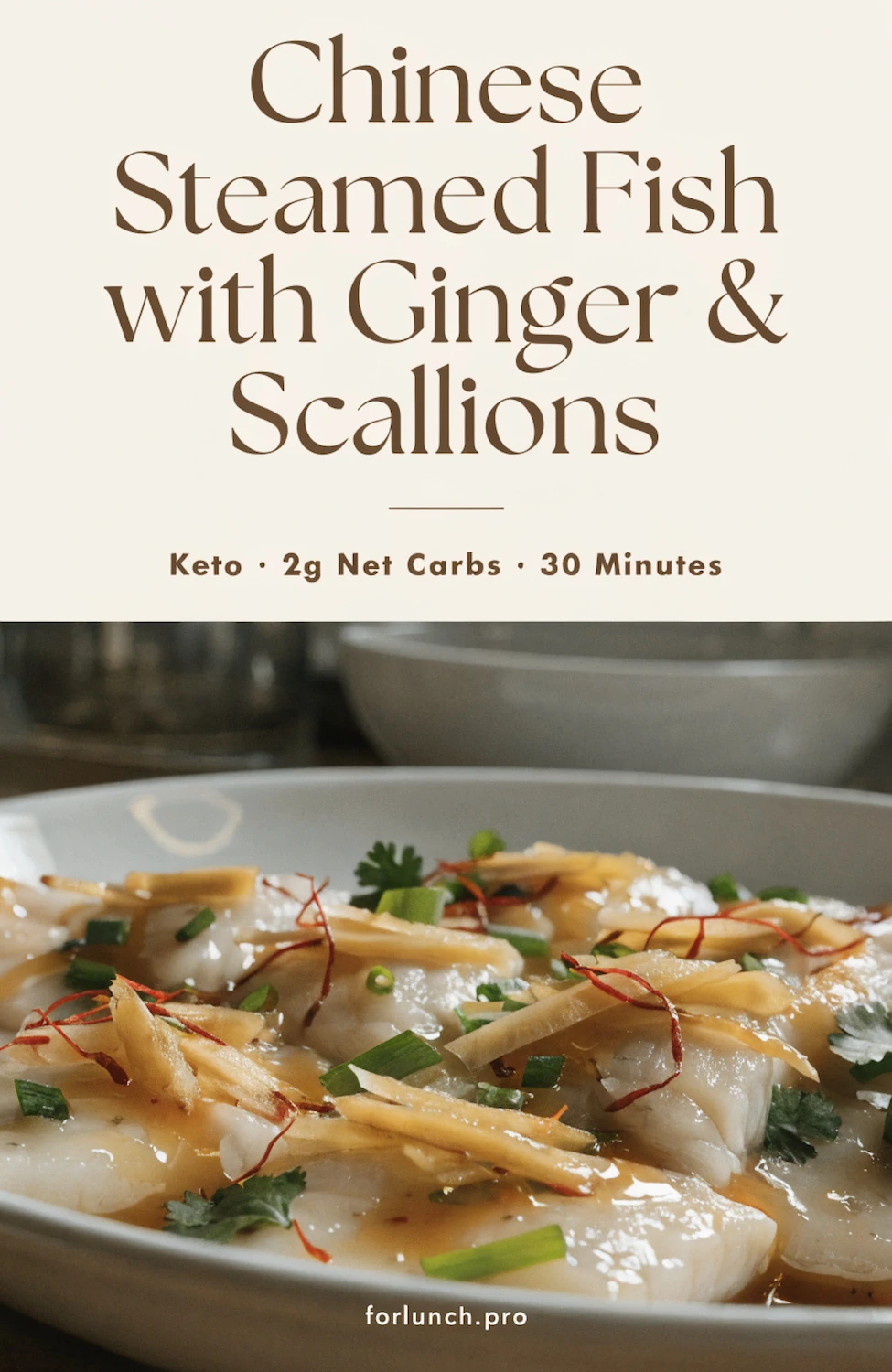
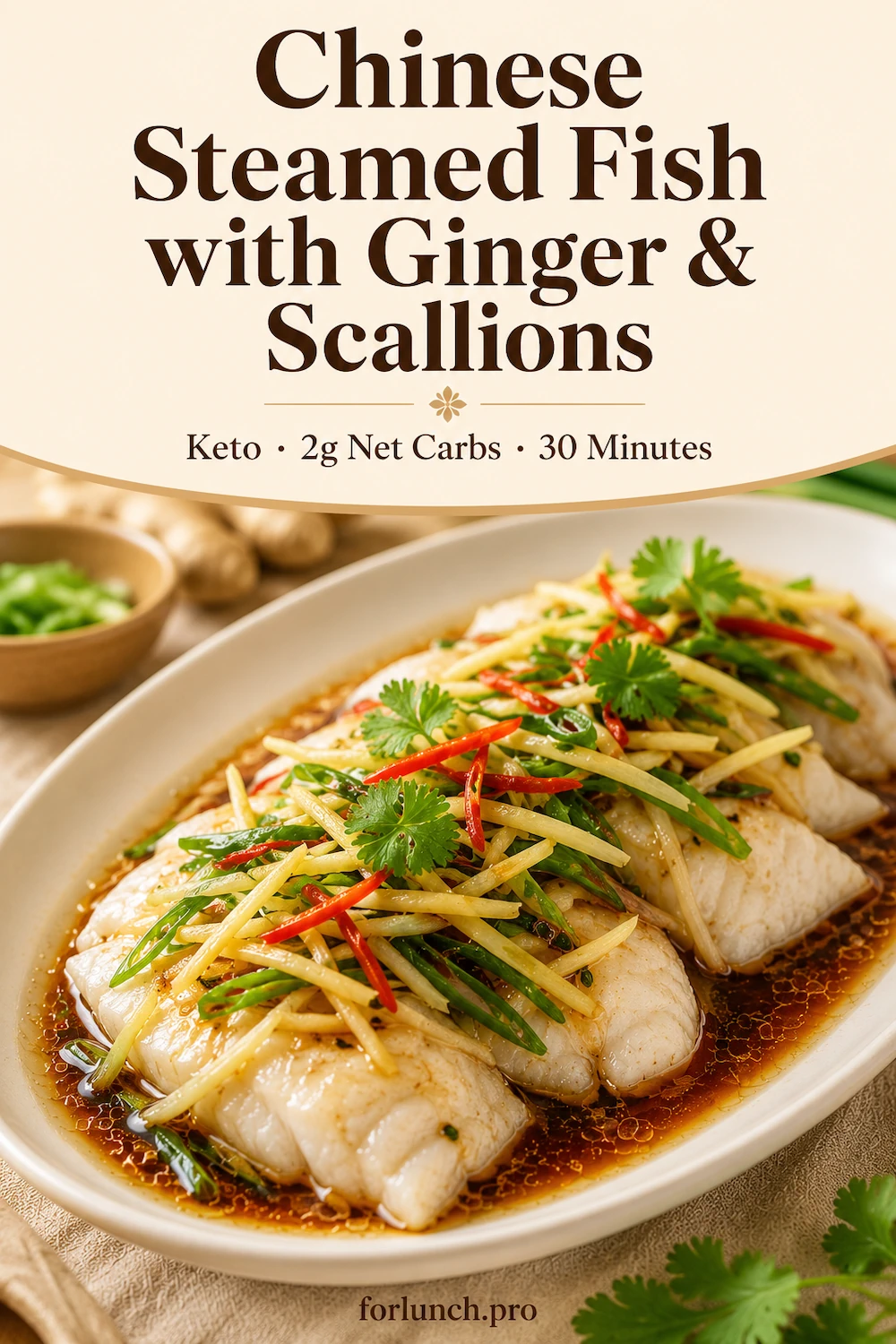
Traditional Chinese steaming technique. Fragrant ginger. A savory soy-sesame sauce is poured over the fish while it’s still piping hot. This Chinese steamed fish with ginger and scallions is one of the cleanest, most elegant dishes in Cantonese home cooking, and at 2 to 3g net carbs with 30g of protein per serving, it is also one of the best keto fish recipes you will make.
The technique is ancient, and the ingredient list is short. The result tastes like a restaurant spent considerably more time on it than 30 minutes.
⏱️ Quick Stats
Confirm exact macros against the WPRM recipe card (id: 158035). Net carbs come from the soy sauce and aromatics only.
🥑 Why This Steamed Fish with Ginger and Scallions Works for Keto
Practically zero net carbs from the fish itself: White fish such as cod, tilapia, halibut, and sea bass contains essentially zero carbohydrates. The 2 to 3g net carbs in this dish come entirely from the sauce and aromatics: a small amount of soy sauce, ginger, and scallions. You are getting 30g of clean protein for almost no carbohydrate cost.
Steaming is the leanest cooking method: No added fats during cooking. The fish steams in its own moisture, locking in the natural omega-3 fatty acids while adding nothing that would knock it off keto macros. The sesame oil comes in as a finishing drizzle, a teaspoon’s worth, contributing healthy monounsaturated fats and the flavor that makes this taste authentically Chinese rather than diet-adjacent.
Ginger works hard in this dish: Fresh ginger is not just aromatic. Studies suggest gingerols and shogaols may support healthy glucose metabolism and help reduce inflammation. In a keto dish built around blood sugar stability, ginger is doing real nutritional work alongside its flavor contribution. Julienne it thin so it softens during steaming rather than landing as a sharp bite.
Low-sodium soy sauce keeps this heart-smart: People managing blood sugar often also need to watch blood pressure. Using low-sodium soy sauce (or tamari for a gluten-free version) reduces sodium by roughly 40% versus regular soy sauce while maintaining the deep umami flavor the dish depends on. For the full collection of keto-friendly Chinese recipes built the same way, see the keto Chinese food guide.
High protein supports satiety and steady blood sugar: The 30g of protein per serving here is one of the best protein-to-calorie ratios in this cluster, about 180 calories for 30g of protein. That ratio supports muscle retention, afternoon satiety, and the kind of stable blood glucose that makes a 3pm snack unnecessary.
Restaurant Chinese Steamed Fish vs. Homemade
| Factor | Restaurant | This Recipe | Difference |
|---|---|---|---|
| Sodium | 900 to 1,400mg | ~380mg | ~65% less |
| Added Sauces | Often with sugar | None | 0g added sugar |
| Net Carbs | 4 to 8g | 2 to 3g | ~60% less |
| Protein | 20 to 25g | ~30g | +5 to 10g more |
| Keto-Friendly? | ⚠️ Sometimes | ✅ Yes | Consistent |
Here is the full Chinese steamed fish with ginger and scallions recipe, with ingredients, steps, and technique notes in one card:


Chinese Steamed Fish with Ginger & Scallions | Keto & Diabetic-Friendly
Ingredients
Equipment
Method
- Rinse the fish fillet under cold water and pat completely dry with paper towels. Remove any pin bones with tweezers if needed.
- Place the fish on a heat-safe plate or shallow dish that fits inside your steamer. Season both sides evenly with white pepper.

- Scatter half of the julienned ginger and the white parts of the scallions underneath and around the fish. Place the remaining ginger and scallion whites on top of the fish.
- In a small bowl, whisk together the low-sodium soy sauce, sesame oil, rice wine, and water until well combined. Set aside.
- Fill a large pot or wok with 2-3 inches of water and bring to a rolling boil over high heat. Place the steamer basket or rack inside.
- Carefully place the plate with the fish into the steamer. Cover with a tight-fitting lid and steam for 8-10 minutes, depending on the thickness of the fish. The fish is done when it flakes easily with a fork and reaches 145°F internally.
- Remove the plate from the steamer using oven mitts (it will be very hot). Immediately drizzle the sauce mixture evenly over the hot fish.
- Garnish with the green parts of the scallions and fresh cilantro leaves. Serve immediately while hot.


Nutrition
Notes
Tried this recipe?
Let us know how it was!Made this and want more in the same style? The keto Chinese food guide collects the whole low-carb series in one place, and a bowl of keto hot and sour soup turns this fish into a full restaurant-style spread for under 8g net carbs combined.
Chef’s Tips for Perfect Steamed Fish with Ginger
Choose the right fish: Opt for firm white fish such as cod, halibut, sea bass, or tilapia. These hold up well to steaming and have a mild flavor that pairs beautifully with ginger and scallions. Avoid flaky fish like sole, which tends to fall apart before the cooking time is up.
Don’t skip the ginger: Fresh ginger is essential for authentic flavor, and ground ginger is not a substitute here. Peel it with the edge of a spoon (less waste than a peeler), then julienne into thin matchsticks. Thin julienne softens during steaming, while thick chunks stay sharp and raw-tasting.
Rolling boil before the fish goes in: Make sure your steamer water is at a full rolling boil before adding the fish. Consistent high heat ensures even, quick cooking. Lowering the fish into a not-quite-boiling steamer produces uneven texture, with overcooked edges around an underdone center.
Check for doneness at 10 minutes: The fish is done when it flakes easily with a fork and reaches an internal temperature of 145°F, the safe minimum for fish per Health Canada. Overcooked steamed fish turns dry and rubbery fast, so check early and check often. Thicker cuts (1 inch or more) need 12 to 15 minutes, while thinner fillets may be done at 8.
Hot oil over the sauce is the finishing move: After pouring the soy-sesame sauce over the fish, some recipes call for drizzling a small amount of very hot oil on top. It sizzles, pops, and wakes up every aromatic in the dish. Optional, but worth doing once to see if it is your style.
No steamer? Use an air fryer: For a similar low-fat result without steaming equipment, an air fryer works well too. Brush the fish lightly with sesame oil, air fry at 375°F for 10 to 12 minutes, and finish with the ginger-scallion sauce after cooking.
📦 Steamed Fish with Ginger Storage and Serving Suggestions
Refrigerator Storage: Store leftover steamed fish in an airtight container in the refrigerator for up to 2 days. Reheat gently on the stovetop with a splash of water or broth. Steamed fish responds poorly to microwave reheating, which dries it out quickly. It also works cold, flaked over a salad with the reserved sauce as dressing.
Freezer Storage: Steamed fish is best enjoyed fresh and does not freeze well once cooked, as the texture turns watery on thawing. To get ahead, freeze the raw fish instead and prep the aromatics and sauce separately, then steam the day you plan to serve.
Meal Prep Strategy: Julienne the ginger and cut the scallions up to 3 days ahead and refrigerate them separately. The soy-sesame sauce can be mixed and stored for up to 3 days. When you are ready to cook, the active time is under 15 minutes.
Serving Suggestions: Pair with keto cauliflower fried rice for a complete Chinese-inspired meal at well under 10g net carbs total. A side of steamed bok choy or snap peas adds fiber without meaningfully affecting carbs. For a traditional presentation, serve family-style on a large platter with the sauce and garnishes arranged over the whole fish or fillets.
Complete the Meal: This steamed fish pairs naturally with a bowl of keto hot and sour soup for a full, restaurant-quality Chinese spread at under 8g net carbs combined. For more of the same low-carb Chinese approach, the chicken and broccoli stir-fry uses zero added sugar and 35g of protein per serving.
Chinese Steamed Fish: A Dish with 2,000 Years Behind It
Steaming fish has been a cornerstone of Chinese cooking since the Han Dynasty (206 BCE to 220 CE), when bamboo steamers were standard equipment in household kitchens. The technique spread across East and Southeast Asia, with each region developing its own aromatic variations, and the Cantonese version with ginger, scallions, and soy sauce is perhaps the most globally recognized.
What makes it endure is what makes it keto: the cooking method itself adds nothing. No batter, no sauce thickened with starch, no sugar. The fish steams in clean, hot moisture, and the aromatics do all the work. Ancient technique meets modern macros, and the two align perfectly here.
Steamed Fish with Ginger FAQs
What is the best fish for steaming with ginger?
Firm white fish work best: cod, halibut, sea bass, and tilapia are all excellent choices. They hold their shape during steaming, have a mild flavor that pairs naturally with ginger and soy sauce, and cook evenly in 10 to 15 minutes. Avoid delicate, flaky fish like sole or flounder, which tend to fall apart before they are fully cooked.
How do you know when steamed fish is done?
Steamed fish is done when it flakes easily with a fork at its thickest point and reaches an internal temperature of 145°F. Visually, the flesh turns from translucent to opaque white throughout. Check at 10 minutes for thinner fillets (under 3/4 inch) and at 12 to 15 minutes for thicker cuts. Overcooked steamed fish quickly becomes dry and rubbery, so check early rather than late.
Is steamed fish with ginger keto-friendly?
Yes. White fish itself contains essentially zero carbohydrates. This steamed fish recipe delivers 2-3g of net carbs per serving, all from the soy sauce and aromatics. With roughly 30g of protein and only 2 to 3g net carbs per serving, it is one of the most keto-efficient Chinese dishes available.
Can I make steamed fish without a steamer?
Yes. A large wok or deep skillet with a tight-fitting lid works well. Place a heatproof plate on a small trivet or an upturned bowl inside the wok, add 1 to 2 inches of water, and bring to a boil. Set the fish on the plate, cover, and steam as directed. An air fryer at 375°F for 10 to 12 minutes also yields a similarly low-fat result: brush lightly with sesame oil, then finish with the ginger-scallion sauce after cooking.
🍽️ You Might Also Like
5g net carbs, pairs perfectly with this fish for a full Chinese spread.
The perfect keto side for this steamed fish, a classic Chinese pairing.
5g net carbs and 28g protein, another seafood keto winner.
The complete collection of low-carb Chinese recipes in one place.
Chinese steamed fish with ginger and scallions is home cooking at its most honest: a technique and a handful of aromatics that have been trusted for two thousand years because they work. At 2-3g net carbs and 30g of protein, it also fits every modern low-carb framework without any adaptations. The dish did not need to change to become keto-friendly. It already was.
Medical Disclaimer: The nutritional information provided in this article is for informational purposes only. While we strive for accuracy, individual responses to foods vary. Always consult with your healthcare provider or registered dietitian about dietary changes, especially if you are managing diabetes or other health conditions.


