
⏱️ Quick Stats
💜 Looking for a Diabetic-Friendly Version?
Love sfogliatelle but managing blood sugar? We’ve created a low-carb sfogliatelle lobster tails recipe using almond flour and monk fruit sweetener. Same crispy-creamy magic—just 8g net carbs and 12g protein per pastry. All the Italian bakery joy without the glucose spike.
What Makes Sfogliatelle Lobster Tails Special
These aren’t your average pastries. The contrast is everything—crispy, flaky exterior giving way to smooth, creamy filling. Each bite delivers:
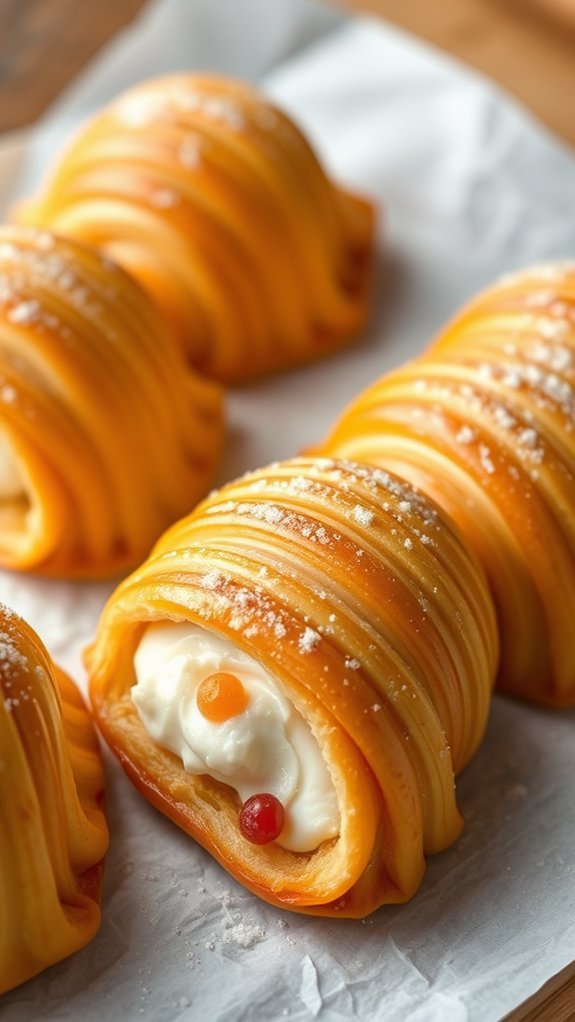
Paper-thin layers: The dough gets rolled translucent, then brushed with butter and rolled into a log. When sliced and shaped, those layers fan out into the signature shell pattern.
Sweet ricotta filling: Traditional sfogliatelle uses a semolina-ricotta mixture with candied citrus peel, cinnamon, and vanilla. The semolina adds body while the ricotta keeps things creamy.
That golden finish: An egg yolk wash before baking creates the gorgeous amber color that makes these pastries bakery-worthy.
The whole process takes about 4 hours (including 2 hours of chilling), but the actual hands-on time is manageable. And the payoff? Pastries that look like you attended culinary school.
Chef’s Tips for Perfect Sfogliatelle Lobster Tails
Chef’s Tips for Perfect Sfogliatelle Lobster Tails
Chill the Dough Thoroughly: Impatient pastry leads to tears—literally and figuratively. A full 2-hour chill (or overnight) makes rolling easier and creates better layers. If it springs back while rolling, rest it another 10 minutes.
Roll Paper-Thin: This is the secret to crispy sfogliatelle. Roll until you can nearly see through the dough—think pasta sheet, not pizza dough. Dust generously with flour to prevent sticking.
Don’t Overfill: Two to three tablespoons of filling per shell is plenty. Overfilled pastries burst during baking like gossip at a family dinner. Leave room for the filling to expand.
Seal with Care: Press edges firmly but gently with damp fingertips. Think loving embrace, not wrestling match. Good seals prevent filling from leaking.
Egg Yolk Wash is Essential: This creates that gorgeous golden color. Don’t skip it—it’s the difference between homemade-looking and bakery-worthy.
Cool Completely Before Dusting: Powdered sugar melts into a gooey mess on warm pastries. Wait until they’re fully cooled, then dust right before serving.
Storage & Serving Suggestions
📦 Storage & Serving Suggestions
Best Fresh: These sfogliatelle lobster tails are at their peak within hours of baking. The shells lose crispness quickly once cooled, so plan to serve same-day for maximum impact.
Make-Ahead Strategy: Prepare and chill the dough up to 2 days ahead (or freeze for a month). Make the filling a day ahead and refrigerate. Shape and bake the morning you plan to serve.
Storing Baked Pastries: If you must store them, keep unfilled shells in an airtight container at room temperature for up to 2 days. Refresh in a 300°F oven for 3-4 minutes before filling and serving.
The Filling: Store ricotta filling separately in the refrigerator for up to 3 days. Fill shells just before serving to maintain crispness.
Do Not Freeze Baked Pastries: The delicate layers become soggy when thawed. Freeze the dough instead and bake fresh when needed.
Serving Temperature: Best served slightly warm or at room temperature. The contrast between crisp shell and creamy filling is what makes these special.
Perfect Pairings
These sfogliatelle lobster tails deserve the right accompaniments:
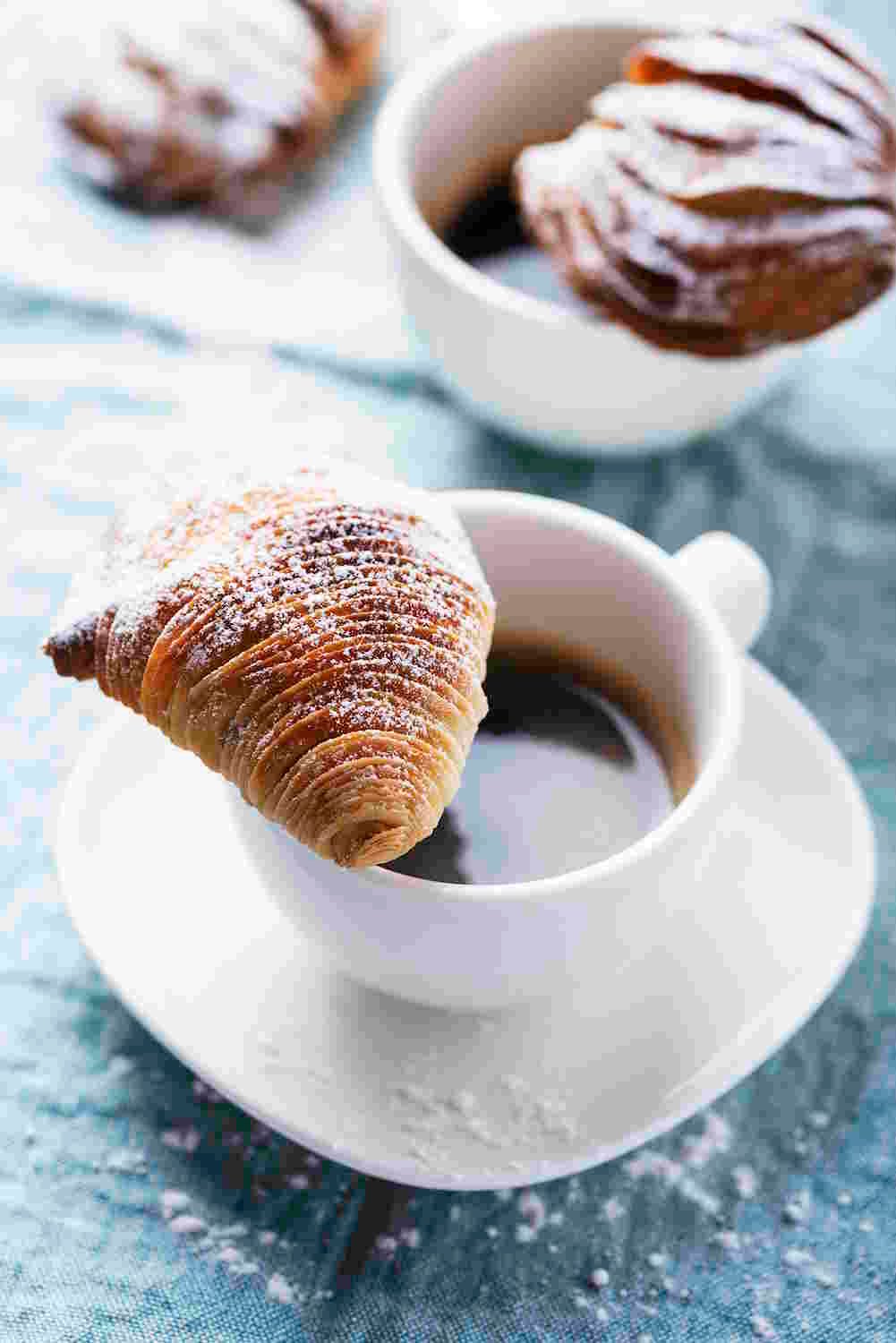
Coffee: A robust espresso or cappuccino is the classic pairing. The bitter notes cut through the sweetness beautifully.
Wine: Moscato d’Asti, Prosecco, or a late-harvest Riesling all complement the candied fruit notes. The bubbles in sparkling wines contrast nicely with the rich filling.
Non-alcoholic: Chai tea’s warming spices work surprisingly well. Or simply serve with fresh berries—the tartness balances the sweetness.
A light dusting of powdered sugar right before serving adds that final bakery touch.
🍽️ You Might Also Like
Diabetic-friendly version, 8g carbs
Similar filling, simpler prep
More Italian dessert magic
Easy Italian ricotta dessert

Sfogliatelle Lobster Tails | Classic Italian Pastry Recipe
Ingredients
Equipment
Method
- In a large bowl, combine the all-purpose flour, semolina flour, sugar, and salt. Mix well before adding the cold butter. Cut the butter into the flour mixture until it resembles coarse crumbs.
- Slowly add the cold water while mixing. Knead the mixture until it becomes firm. Form it into a ball, cover it, and let it chill in the refrigerator for 2 hours.
- While the dough chills, heat the milk in a saucepan over medium heat until it boils. Gradually whisk in the semolina flour, stirring constantly to avoid lumps. Simmer for 3-4 minutes, then remove from heat and let cool for 5 minutes. Fold in the sieved ricotta, egg, sugar, and candied fruit, beating until smooth.
- Remove the chilled dough from the refrigerator and divide it into two equal parts. On a dusted pastry board, roll each part into an 18-inch square, very thin. Brush with melted butter, roll like a jelly roll, and cut into 3-4 inch pieces. Press your thumb into the center of each piece to form a cup, fill with 2 tablespoons of the ricotta mixture, fold and seal the edges.
- Preheat the oven to 425°F (220°C). Line cookie sheets with parchment paper and place the shaped pastries on the sheets. Brush the tops with beaten egg yolk. Bake for 15 minutes or until golden brown. Let cool on the cookie sheet for 5 minutes before transferring to a cooling rack. Dust with confectioners sugar before serving.
Nutrition
Notes
Tried this recipe?
Let us know how it was!Why are they called lobster tails?
The American bakery name comes from their shape—the layered, curved shells resemble lobster tails. In Italy, they’re called sfogliatelle (sfoh-lyah-TEL-leh), meaning “many leaves” or “layers.”
Can I make the dough ahead of time?
Absolutely. The dough benefits from an overnight rest in the refrigerator—it makes rolling easier and improves flavor. Wrap tightly in plastic wrap. You can also freeze it for up to a month.
Why did my shells come out soft instead of crispy?
Usually, this means the dough wasn’t rolled thin enough, the oven temperature was too low, or the pastries were stored before fully cooling. Roll until nearly translucent, verify oven temp, and cool completely on a wire rack.
What can I substitute for candied fruit?
Mini chocolate chips, chopped pistachios, or orange zest work well. Some people prefer the filling without add-ins—just the creamy ricotta-semolina base.
Final Thoughts
Sfogliatelle lobster tails reward patience. Dough rolling takes time; your first few shells might look questionable, and you’ll probably dust your entire kitchen with flour. But when you pull those golden, layered pastries from the oven—and bite through that shatteringly crisp shell into creamy ricotta—you’ll understand why Italian bakeries have been making these for generations.
Whether you’re serving them with a crisp Prosecco or simply dusting them with powdered sugar for an afternoon treat, lobster tails represent everything I love about Italian pastry-making—they’re surprisingly approachable for home bakers yet impressive enough to make guests think you’ve been secretly attending culinary school. Sure, the dough rolling takes patience, and yes, you’ll probably create a few wonky shells before mastering the technique. But that’s half the fun! These delicate pastries reward your effort with crispy layers and creamy ricotta filling that’ll have everyone asking for your “secret recipe.
Even the imperfect ones taste fantastic. That’s the beauty of this recipe.


