Published February 15, 2026 · Updated June 26, 2026
Eating low carb Indian food doesn’t mean giving up the spices, the curries, or the depth of flavor — it means knowing which dishes already fit your macros and which ones to swap. Indian cuisine is naturally heavy on healthy fats (ghee, coconut milk), built around protein (tandoori meats, paneer, eggs), and seasoned with zero-carb spices. The carbs hide mostly in rice, breads, and a handful of sweetened sauces. This guide breaks down 25+ dishes, three sample meal plans, and the exact swaps to make at any restaurant table.
Guide at a Glance
Low-Carb
Diabetic-Friendly
Gluten-Free Options
Vegetarian Options
Why Indian Food Works for Low Carb
Naturally high in healthy fats: Ghee, coconut oil, and coconut milk are everyday Indian cooking fats. They help you hit keto macros without any recipe modifications — they’re already there.
Protein-rich traditions: Tandoori meats, paneer, eggs, and seekh kebabs are core to the cuisine. A satisfying serving of protein keeps you full for hours and keeps the carb math simple.
Spice-forward, not sugar-forward: Indian food gets its flavor from turmeric, cumin, coriander, garam masala, and cardamom — all zero carbs. Sweetness in traditional Indian cooking comes from caramelized onions and tomatoes, not added sugar.
Spices associated with metabolic support: Turmeric (curcumin), cinnamon, and fenugreek are commonly studied for their potential to support healthy blood sugar levels and overall metabolic function. They’re built into nearly every Indian dish.
Vegetable-forward by default: Cauliflower (gobi), spinach (palak), eggplant (baingan), okra (bhindi), and methi feature prominently. All are excellent low carb choices that double as the bulk of any plate when you skip the rice.
High-Carb Indian Staples vs. Low Carb Swaps
| Skip / Limit | Carbs | Swap For | Carbs |
|---|---|---|---|
| Basmati rice (1 cup) | 45g | Cauliflower rice | 3g |
| Naan (1 piece) | 40g | Cheese crisps or skip the bread | 0–1g |
| Aloo (potato) dishes | 30g+ | Gobi (cauliflower) dishes | 5g |
| Dal (lentils, 1 cup) | 20g | ¼-cup dal portion or palak | 5g |
| Mango lassi | 35g+ | Salted lassi (no sugar) | 8g |
| Gulab jamun (2 pieces) | 50g+ | Sugar-free Indian sweets | Varies |
Low Carb Indian Foods to Eat
Proteins (All Excellent Choices)
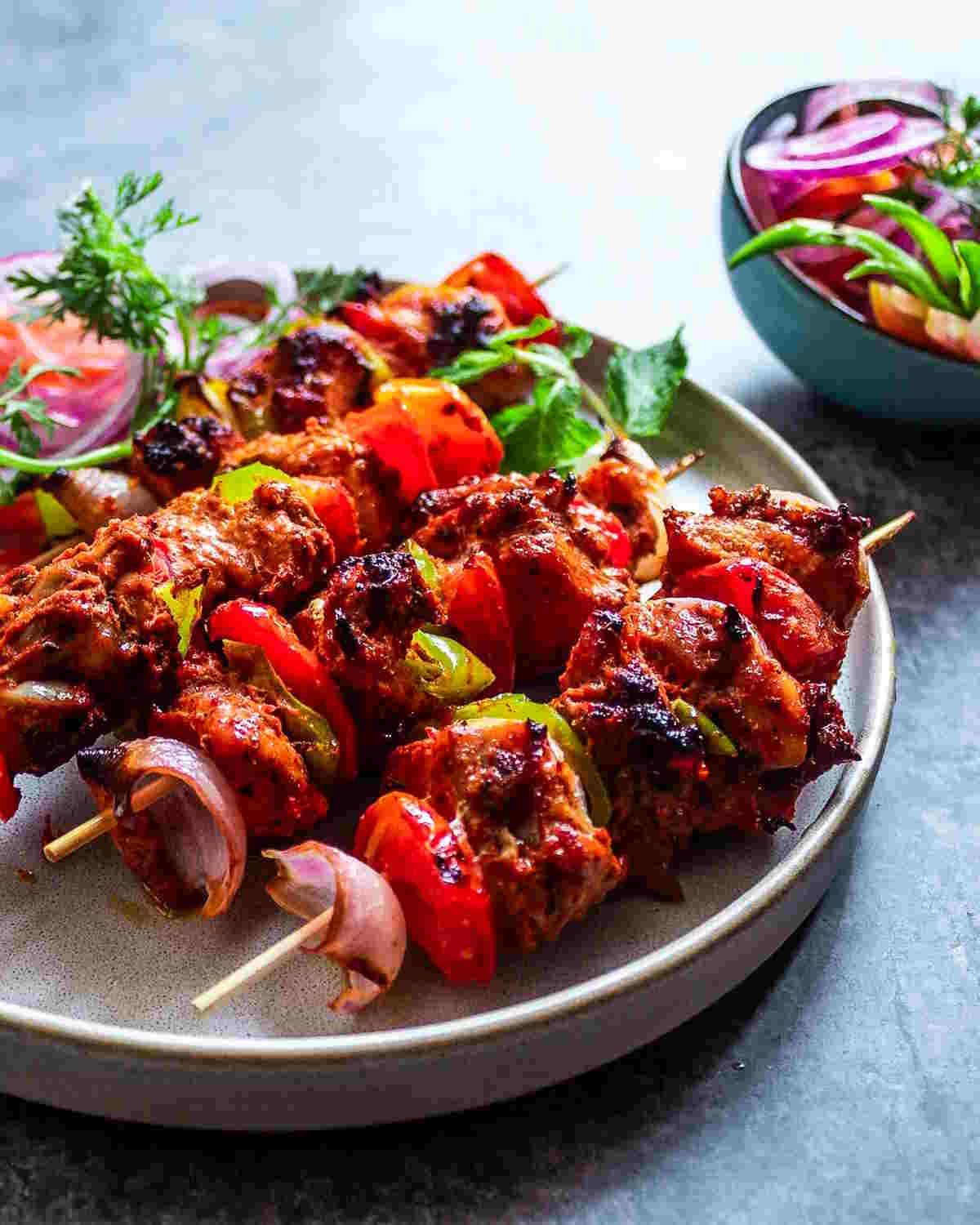
Tandoori chicken, lamb, or fish: Marinated in yogurt and spices, cooked in the tandoor without breading. Usually under 2g carbs per serving.
Chicken tikka: Boneless pieces in spiced yogurt. Order it without the tikka masala sauce (which often contains sugar) and you’re solidly low carb.
Seekh kebabs: Ground meat with spices, grilled on skewers. Zero carbs from the meat itself.
Egg curry: Eggs simmered in a tomato-based sauce. Budget-friendly and roughly 5–8g carbs per serving — see the Keto Egg Curry for an exact recipe.
Fish curries: Especially coconut-milk-based curries rather than tomato-heavy gravies — coconut adds fat and flavor without carbs.
Vegetables (Your Low Carb Stars)
Palak (spinach): Palak paneer and saag dishes add volume without meaningful carbs.
Gobi (cauliflower): The single most important low carb Indian vegetable. In aloo gobi, skip the aloo and keep the gobi.
Baingan (eggplant): Baingan bharta — roasted eggplant mash with spices — is creamy, satisfying, and naturally low carb.
Bhindi (okra): Stir-fried with spices, about 4g net carbs per cup.
Methi (fenugreek leaves): Bitter greens that pair beautifully with paneer or chicken.
Healthy Fats (Essential for Keto)
Ghee: Clarified butter used in almost everything. Pure fat, zero carbs.
Coconut milk and cream: The base of many South Indian curries. Rich and keto-perfect.
Paneer: Indian cottage cheese. About 1g carb per ounce with 7g protein — a keto vegetarian’s best friend.
Coconut oil: Used for frying and tempering spices.
Spices (All Zero Carb)
Use liberally: turmeric, cumin, coriander, garam masala, cardamom, cinnamon, mustard seeds, curry leaves, fenugreek seeds, red chili powder. Every one of them is essentially zero carb and packs the flavor that makes Indian food worth eating in the first place.
Hidden Carb Traps to Watch For
Tikka masala sauce: Often contains added sugar and is thickened with cream and flour. Ask the restaurant, or make your own.
Korma: Can be thickened with cashew paste (moderate carbs, acceptable) or flour (avoid).
Chutneys: Tamarind and mango chutneys are sugar bombs. Mint chutney is usually safe.
Samosas and pakoras: Deep-fried in a chickpea or wheat batter. Beautiful, but not low carb.
Sample Low Carb Indian Meal Plan
Breakfast options: Masala omelette with onions, tomatoes, and green chilies (~3g carbs) • Paneer bhurji — scrambled paneer with spices (~4g carbs) • Full-fat yogurt with chia seeds and cardamom.
Lunch ideas: Tandoori chicken with cucumber raita and a side of spiced soup • Palak paneer with cauliflower rice (under 10g net carbs) • Keto egg curry with sautéed bhindi.
Dinner suggestions: Lamb seekh kebabs with mint chutney and a side salad • Fish curry in coconut milk with steamed spinach • Chicken tikka (no masala sauce) with baingan bharta.
Snacks: Roasted spiced paneer cubes • Cucumber with mint raita • A small handful of roasted peanuts with chaat masala.
Restaurant tips: Ask about the sauce before ordering (creamy gravies can hide flour or cashew thickeners). Request extra vegetables in place of rice. Tandoori dishes are the safest bet — meat, yogurt, and spices, nothing else.
Batch-Cook and Storage Strategy
Batch proteins on Sunday: Make a big tray of tandoori chicken or seekh kebabs at the start of the week. They reheat beautifully for 4–5 days.
Prep your spice blends in advance: Mix garam masala, tandoori spice, and curry powder in jars. Flavor on demand, zero extra effort during the week.
Cauliflower rice in bulk: Rice or grate a whole head, store in 2-cup portions. Holds 5 days refrigerated.
Freeze curry bases: Onion-tomato-spice bases freeze perfectly. Thaw, add protein, and you have a 15-minute weeknight dinner.
Portion the paneer: Cut a block into cubes, store submerged in water in the fridge. Grab and cook as needed.
What to cook with this approach: Pair the batch-cooked proteins with broth-forward sides like the Indian Lentil Stew (Dal) (in ¼-cup portions for strict keto), the Keto Egg Curry, or sides from the Lentil Recipes batch-cook guide. For deeper context on lentil portioning, see the Lentil Benefits reference.
Low Carb Indian Food FAQs
Can I eat dal on a low carb Indian food diet?
In moderation. A quarter cup of cooked dal has about 5g of net carbs, which fits a strict keto day if you plan for it. For very low-carb days, swap to palak (spinach) dishes or paneer for your protein and save the carb budget for vegetables.
Is paneer keto-friendly?
Yes. Paneer carries about 1g of carbs per ounce, 7g of protein, and 6g of fat. It is one of the best vegetarian protein sources for a low carb Indian food approach and works in everything from palak paneer to scrambled paneer bhurji.
Which Indian breads work for keto?
Traditional Indian breads — naan, roti, paratha — are all high carb (30–45g each) and not keto-compatible. For keto, skip the bread basket entirely or look for almond-flour or coconut-flour keto naan recipes that some home cooks make with mozzarella.
Is chicken tikka masala low carb?
The chicken tikka itself is low carb, but the masala sauce can be problematic. Restaurant versions often include sugar, cream thickened with flour, or tomato paste with added sugars. Make it at home to control the ingredients, or ask the restaurant about their specific recipe before ordering.
You Might Also Like
Budget-friendly Indian lunch — the exact egg curry recipe referenced in this guide.
Vegan comfort food — eat in ¼-cup portions to stay within a low-carb budget.
The companion guide for low carb Japanese cuisine — same approach, different kitchen.
Low carb and diabetic-friendly Chinese options to round out your Asian cuisine rotation.
Low Carb Indian Food Final Thoughts
A low carb Indian food approach is one of the most flavorful ways to eat keto or low-carb. The spices do the heavy lifting, the fats are already built in, and the protein and vegetable options run deep. Skip the rice, embrace the cauliflower, and you keep every bite of flavor that brought you to the cuisine in the first place.
Medical Disclaimer: The nutritional information and dietary suggestions provided in this article are for informational purposes only. While we strive for accuracy, we are culinary experts, not medical doctors. Individual responses to foods vary, and you should always consult with your healthcare provider or registered dietitian about dietary changes, especially if you are managing diabetes or other health conditions.


