
Published May 28, 2026 · Updated August 18, 2026
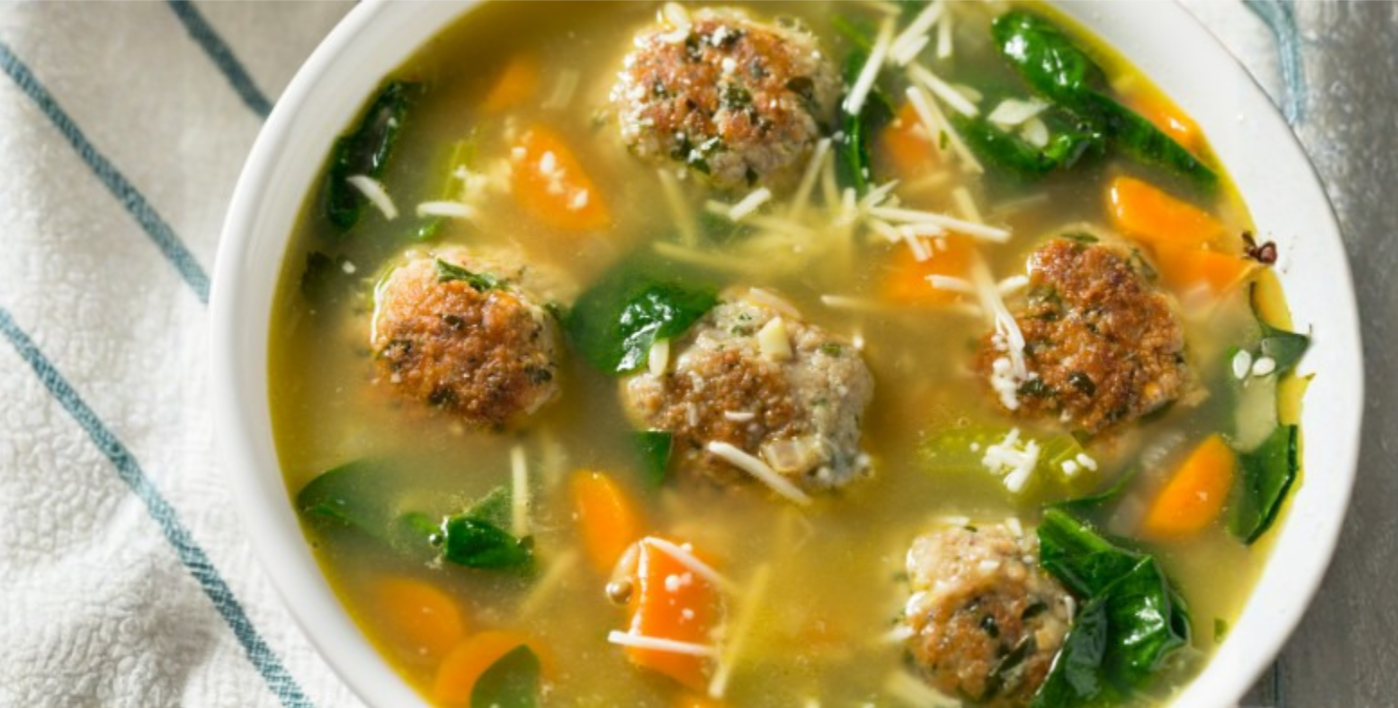
Italian Wedding Soup has nothing to do with weddings. The name is a translation mistake — the Italian original is minestra maritata, “married soup,” and the marriage is between meat and bitter greens simmered together in broth until each one tastes of the other. This is the version Neapolitan grandmothers have been making for generations: tender mini meatballs, tiny pasta, fresh greens, and silky ribbons of egg in a deeply savory broth.
It comes together in 45 minutes from a cold start, makes enough for six generous bowls, and tastes like it simmered all afternoon. A can of Progresso has nothing on it.
Quick Stats
Why This Italian Wedding Soup Recipe Works
It’s the real Neapolitan dish, not a watered-down imitation. Italian Wedding Soup originated in the Campania region of southern Italy — specifically around Naples — as a humble cucina povera peasant dish. The Italian name is minestra maritata, meaning “married soup,” and the marriage refers to the perfect pairing of meat and leafy bitter greens simmering together in the broth. In Naples it’s deeply tied to holiday traditions and classically served as a hearty comforting dish at Christmas and Easter. Keeping that pairing — meat and greens, joined in broth — is what makes this version taste like the original instead of a thin, salty supermarket impersonation.
Tiny meatballs cook fast and finish soft. Italian wedding soup meatballs are small on purpose — about the size of a marble, or roughly one teaspoon of mixture each. At that size they cook through in five minutes of gentle simmering, stay tender, and fit on a spoon next to the pasta and greens without crowding the bowl. The binder is a classic Italian panade — breadcrumbs briefly soaked in milk — which keeps the meatballs juicy by preventing the proteins from squeezing the moisture out as they cook.
The American adaptation makes it weeknight-friendly. When Neapolitans immigrated to the United States, they had to adapt the recipe due to the absence of southern Italian wild greens. They scaled back from the original dozen-plus foraged bitter greens to one or two reliable choices — escarole or spinach — and added smaller, lighter meatballs along with small pasta like acini di pepe. The result is the lighter, brothier version most North Americans know today. It still honours the maritata principle, but it comes together on a Tuesday night.
Egg ribbons add silk and protein. A slow stream of beaten egg into hot broth produces the same feathery ribbons you’ll find in Roman stracciatella, and several Naples-area cooks finish their minestra maritata this way. Each egg adds about 6g of protein, gives the broth a subtle richness, and signals — visually and texturally — that you’re eating something made by hand and not poured out of a can.
The broth carries everything else. A good chicken broth is what the entire bowl rests on; a thin watery one will sink the dish no matter how well the meatballs are made. Use a rich, low-sodium store-bought broth or — better — homemade chicken stock from a roasted carcass. Bone broth works too and adds extra body. This is one of those recipes where a small upgrade at the broth stage pays for itself in every spoonful.
Canned vs Homemade Italian Wedding Soup
The case for forty-five minutes of stove time is mostly written on the alternative’s can label.
| Per Serving | Canned (typical) | This Homemade Recipe |
|---|---|---|
| Sodium | ~1,400 mg | 720 mg ✓ |
| Protein | ~10g | 24g ✓ |
| Meatball quality | Mechanically formed, dense | Hand-rolled, tender ✓ |
| Greens | Sparse, overcooked | Fresh, bright, generous ✓ |
| Egg ribbons | Absent | Included ✓ |
| Preservatives | Yes | None ✓ |
| Cost per serving | ~$2.50 | ~$2.20 ✓ |
| Time investment | 5 minutes | 45 minutes |
Here is the full Italian Wedding Soup recipe — ingredients, method, and nutrition all in one place. Tap “Jump to Recipe” at the top of the page any time you want to skip back to it.
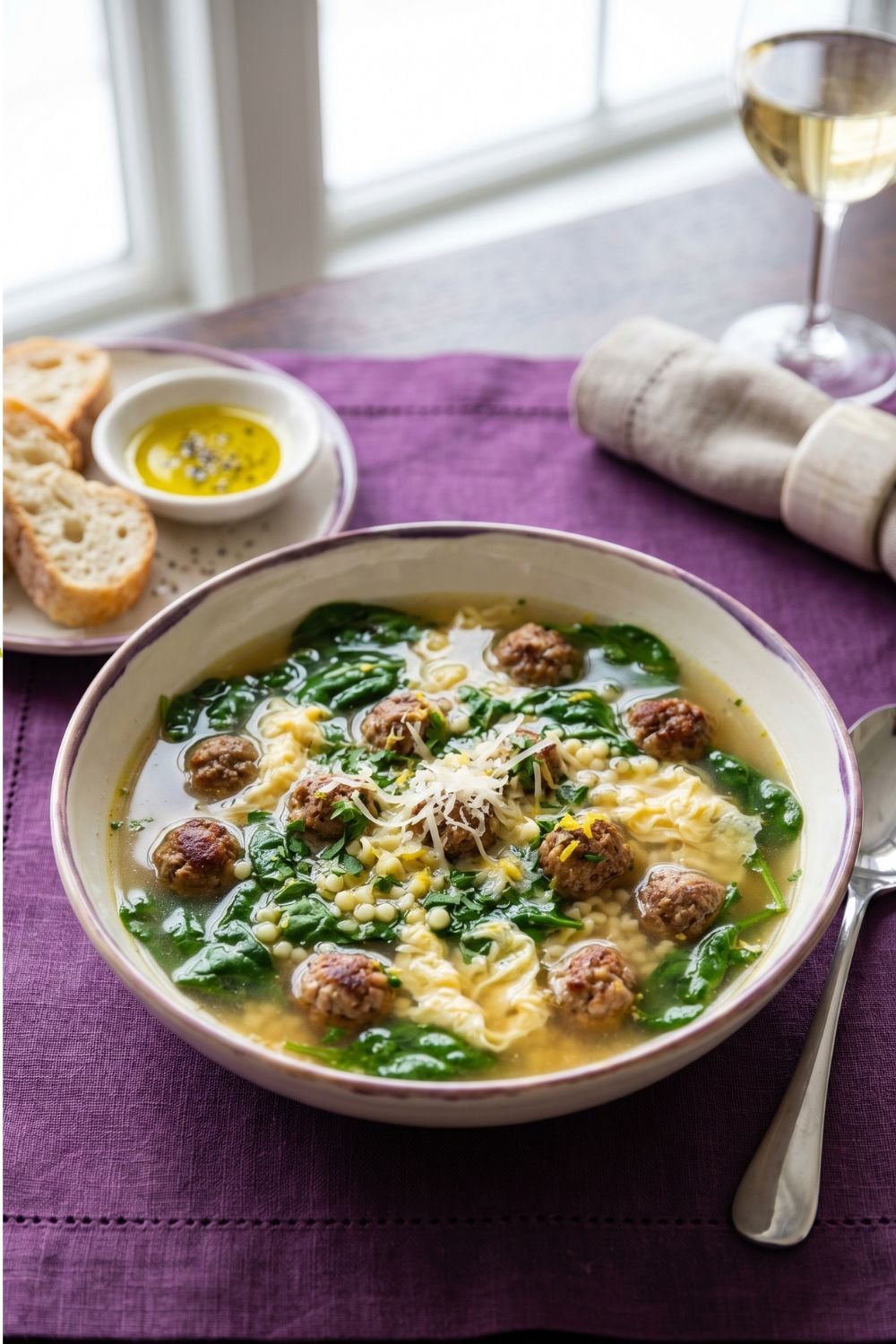

Italian Wedding Soup
Ingredients
Equipment
Method
- Preheat oven to 400°F (200°C) and line a rimmed baking sheet with parchment paper.
- In a small bowl, combine the breadcrumbs and milk and let sit for 2 minutes — the breadcrumbs should be fully moistened. This Italian panade is what keeps the meatballs tender.
- In a large mixing bowl, combine the ground beef, ground pork, soaked breadcrumbs, grated Parmesan, beaten egg, minced garlic, parsley, Italian seasoning, salt, pepper, and nutmeg. Mix with a fork — not your hands — just until the ingredients are evenly distributed, about 20 seconds. Overmixing makes the meatballs dense.
- Roll the mixture into marble-sized meatballs, about 1 teaspoon each — you should get 50 to 60 small meatballs. Place them on the prepared sheet with a little space between each. Bake for 10 to 12 minutes, until lightly browned and just cooked through. Set aside.
- While the meatballs bake, warm the olive oil in a large Dutch oven or soup pot over medium heat. Add the diced onion, carrot, and celery, and cook for 6 to 7 minutes, stirring occasionally, until the vegetables are soft and the onion is translucent.
- Stir in the minced garlic and cook for 30 seconds, until fragrant. Pour in the chicken broth, bring to a simmer, and let cook gently for 5 minutes to marry the flavours.
- Add the acini di pepe and the baked meatballs. Simmer for 8 to 10 minutes, or until the pasta is al dente. Stir occasionally to keep the pasta from sticking to the bottom of the pot.
- Reduce the heat so the broth is at the gentlest simmer (not a rolling boil). In a slow, steady stream, pour the beaten eggs into the broth while stirring slowly in one direction with a fork. The eggs will set into delicate ribbons within 30 seconds.
- Cut the heat. Stir in the baby spinach, ½ cup of grated Parmesan, the lemon zest, and lemon juice. The residual heat will wilt the spinach in under a minute. If using escarole, stir it in 2 minutes earlier so it tenderises.
- Taste and adjust salt and pepper. Ladle into warm bowls, top with extra grated Parmesan and a scatter of fresh parsley, and serve immediately with crusty Italian bread.
Nutrition
Notes
Tried this recipe?
Let us know how it was!Chef’s Tips
Keep the meatballs small — really small. Italian Wedding Soup meatballs are meant to be marble-sized, about one teaspoon of mixture each. A pound of meat should give you 50 to 60 meatballs, not 20. Small means they cook fast, sit on a spoon, and distribute through every bite of broth.
Soak the breadcrumbs in milk before mixing. This is the Italian panade technique and it’s the single most important step for tender meatballs. Two tablespoons of milk poured over the breadcrumbs, left to sit for two minutes, then mixed into the meat. Dry breadcrumbs absorb moisture from the meat as it cooks; soaked breadcrumbs release moisture back into it.
Mix gently — and barely. Compacted meatballs turn rubbery in the broth. Combine the meatball ingredients with a fork or your fingertips for about 20 seconds, just until you no longer see streaks of breadcrumb. Stop there.
Brown the meatballs first if you have ten extra minutes. A quick bake at 400°F for 10–12 minutes (or a sear in a hot pan) builds the surface flavor that broth-poaching alone can’t. They go into the soup pre-cooked, then warm through for the last five minutes. Skip this step if you’re in a hurry and just drop the raw meatballs into the simmering broth — they’ll poach through in 6–7 minutes.
Cook the pasta directly in the broth. Acini di pepe, ditalini, pastina, or orzo all work. The starch released as they cook thickens the broth slightly and gives it body. If you’re going to store leftovers, see the Storage section for the workaround — pasta cooked in broth keeps absorbing as it sits.
The egg ribbon needs a gentle simmer and a slow hand. Reduce the heat so the broth is barely moving, not boiling. Pour the beaten eggs in a thin steady stream while stirring slowly in one direction with a fork. The eggs set into delicate ribbons within 30 seconds. A rolling boil scrambles them into clumps.
Greens go in last, off the heat. Baby spinach wilts in under a minute from residual heat alone. Escarole — the more traditional choice — needs about 2 minutes in the hot broth but should still go in at the very end. Boiling either one drains the color and the iron straight into the broth.
Storage & Serving
Refrigerator (up to 4 days). Cool the soup within an hour of finishing, then store in an airtight container. The flavor deepens overnight as the broth pulls more from the meatballs and parmesan. Important caveat: the pasta will continue to absorb broth as it sits, so leftovers will be thicker on day two. If you want to store leftovers and keep them brothy, cook the pasta separately and combine portions on the plate.
Freezer (up to 3 months). Freeze the soup without the pasta and without the egg ribbon — both lose texture in the freeze-thaw cycle. Freeze the meatball-broth-greens base in portion-sized containers, and cook fresh pasta and stream in beaten eggs when you reheat. A vacuum-sealed batch gives you the cleanest long-term storage.
Reheating. Stovetop over gentle heat with the lid on, just until the meatballs are warmed through. Microwave at 60% power in 90-second bursts; full power will overcook the meatballs and turn the greens olive-brown. Stir well between bursts.
Meal prep. The meatballs can be rolled and refrigerated raw up to two days ahead, or formed and frozen on a tray before bagging (no thaw needed — drop them frozen straight into simmering broth). The broth base can be built up to a day ahead. Combine on serving day, finish with pasta, eggs, and greens, and dinner is on the table in fifteen minutes. The Instant Pot soup workflow has more make-ahead soup mechanics if you want a deeper dive.
What to serve with it. A piece of crusty Italian bread for sopping up the broth is the traditional answer. A simple arugula salad with shaved parmesan and lemon olive oil makes it a full dinner. If you’re cooking for a crowd and want a second Italian course, Marry Me Chicken on a sheet of arugula pairs beautifully — the creamy sun-dried tomato sauce is a counterweight to the clear broth of the soup. For dessert, keep it Italian: a small espresso, a few biscotti, and call it a night.
Italian Wedding Soup FAQs
Why is it called Italian Wedding Soup if it isn’t served at weddings?
The name is a translation mistake. The Italian original is <em>minestra maritata</em> — “married soup” — and the marriage refers to the pairing of meat and bitter greens cooked together in broth, not to a ceremony. The soup originated in Campania, the region around Naples, as a humble peasant dish. In Italy, it’s traditionally a Christmas and Easter dish, not a wedding one. The “wedding” name took hold in the United States in the early twentieth century and stuck.
What pasta is best for Italian Wedding Soup?
Acini di pepe is the classic — tiny pasta beads that scoop neatly onto a spoon. Pastina, ditalini, orzo, and small stelline all work just as well. The rule is small enough to fit comfortably on a spoon next to a mini meatball. Avoid larger shapes like elbow macaroni or shells — they overpower the rest of the bowl and break the visual balance the dish is known for.
Can I use spinach instead of escarole?
Yes — baby spinach is the most common substitute and what most North American home cooks reach for. Escarole has a mild, pleasant bitterness that holds up better in broth and stays closer to the Neapolitan original, but it’s harder to find. Lacinato kale also works if you want a sturdier bite — add it 2–3 minutes earlier than you would spinach, so it has time to tenderize.
Can I freeze Italian Wedding Soup?
Yes — but freeze it without the pasta and without the egg ribbon. Both lose texture in the freezer; pasta turns to mush, and egg ribbons go rubbery. Freeze the meatball-broth-greens base for up to 3 months, then cook fresh pasta and stream in beaten eggs when you reheat. The whole reheat-and-finish step takes about 15 minutes.
You Might Also Like
Bubbe’s Authentic Jewish Chicken Soup
The other great Old-World grandmother soup — long-simmered, golden-hued, and the benchmark for any homemade chicken broth.
Marry Me Chicken
Creamy sun-dried tomato chicken that pairs beautifully with the clear broth of the soup. The Italian dinner pairing of choice.
Beef Shank Soup with Vegetables
A heartier slow-built bowl for cold nights. Same family of Italian-style broth cookery, taken in a richer direction.
Leek and Potato Soup
A light creamy 35-minute soup for the nights you want comfort without the meatball commitment.
Final Thoughts
The grandmothers who first married meat to greens in a Neapolitan kitchen weren’t following a recipe — they were using what they had, stretching the protein, letting the broth do the heavy work. Centuries later, the dish still does the same thing: it warms the room, it stretches a pound of meat across six bowls, and it tastes like time was spent on it even when only forty-five minutes were. Make it once, and it’ll quietly slip into the rotation of soups your house turns to when the weather changes.
The information in this article is for general educational purposes only and is not medical or nutritional advice. Individual dietary needs vary, particularly for those managing diabetes, cardiovascular conditions, or other chronic health concerns. Always consult a qualified healthcare provider or registered dietitian before making significant changes to your diet.