
Published September 3, 2025 · Updated June 24, 2026
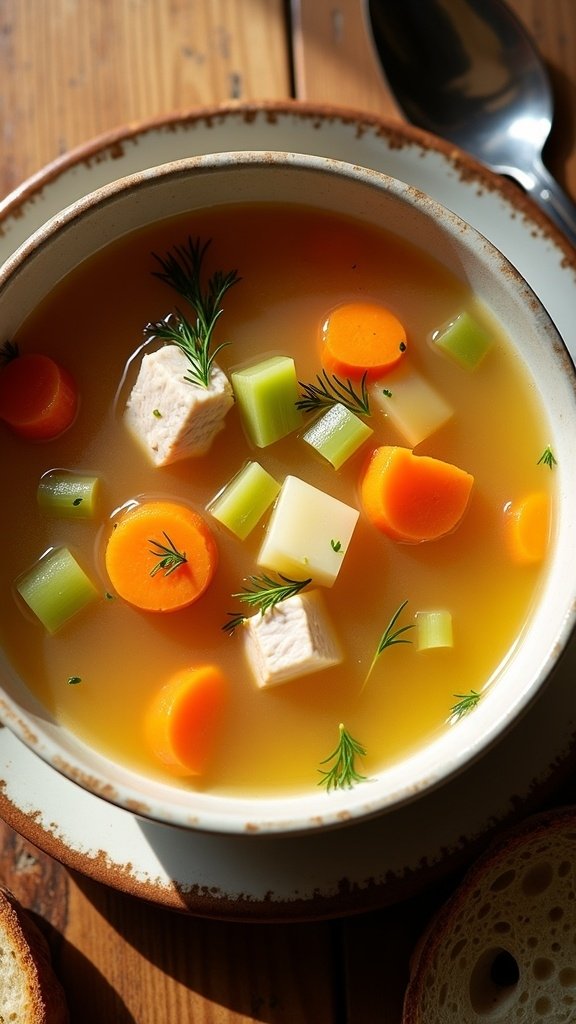
I’ve perfected Bubbe’s authentic Jewish chicken soup using one whole chicken, fresh vegetables like onions and carrots, and a rich golden broth built low and slow. After removing the skin and simmering everything for three hours, you’ll shred the tender chicken back into the aromatic broth. This liquid comfort delivers lean protein and steady energy with every spoonful, and it’s a natural fit for a low-carb, blood sugar-friendly lunch. The secret lies in patience and fresh dill added during those final thirty minutes.
⏱️ Quick Stats
Why You Will Love This Jewish Chicken Soup at Lunchtime (or Dinner)
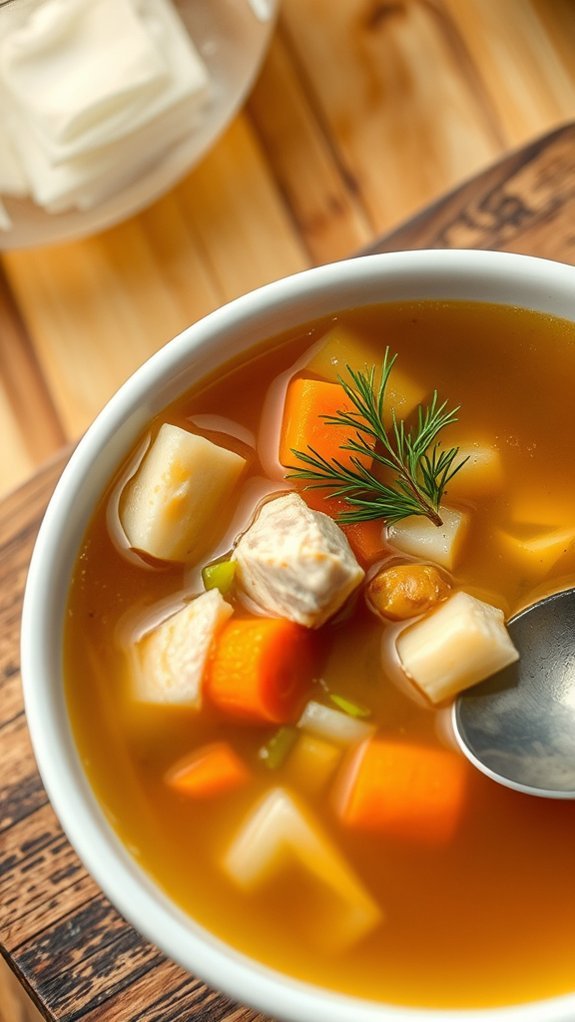
When that familiar rumble starts echoing from your stomach around noon, nothing quite hits the spot like a steaming bowl of this liquid gold. This isn’t just soup. It’s edible comfort that transforms any dreary Tuesday into something genuinely satisfying. Whether you’re battling Monday blues or celebrating Friday victories, this chicken soup delivers warmth that satisfies your taste buds. The rich, golden broth paired with tender chicken creates the perfect lunch, while those aromatic herbs transport you straight to Bubbe’s kitchen, where love was always the secret ingredient. Plus, this nourishing soup supports balanced meals for blood sugar control with lean protein and vegetables that help maintain steady energy throughout your afternoon.
🌿 Why This Soup Works for Blood Sugar
Lean Protein Base: A whole chicken (skin removed) delivers 28g protein per serving, enough to slow digestion and keep glucose levels steady for hours after your meal.
Low-Carb by Nature: Without egg noodles or matzo balls, this soup has just 8g net carbs per serving. Reduce to 2 carrots and omit the parsnip to bring that down to about 4g, fully keto territory.
Anti-Inflammatory Herbs: Fresh dill and parsley aren’t just flavor. Both contain flavonoids and antioxidants that may help support healthy blood sugar metabolism.
No Hidden Sugars: Unlike canned soups and store-bought broths, this recipe has zero added sugar, no cornstarch thickeners, and no mystery ingredients.
Deeply Satiating: The combination of lean protein, natural fat from the chicken, and fiber-rich vegetables keeps you satisfied well into the afternoon, with no 3pm energy crash.
Traditional Chicken Soup vs. This Low-Carb Version
| Nutrient (per serving) | With Egg Noodles | This Version | Difference |
|---|---|---|---|
| Net Carbs | 35g | 8g | -27g (77%) |
| Protein | 22g | 28g | +6g (27%) |
| Calories | 380 | 220 | -160 (42%) |
| Sugar | 4g | 3g | -1g |
| Diabetic-Friendly? | Borderline | Yes | Comparable |
Here is the full recipe card, with exact ingredient amounts, equipment, and the step-by-step method. The secret is patience: the longer it simmers, the better it gets. Keep it low-carb by skipping the egg noodles, or try our almond-flour matzo ball soup for a keto-friendly Passover option.

Bubbe’s Authentic Jewish Chicken Soup
Ingredients
Equipment
Method
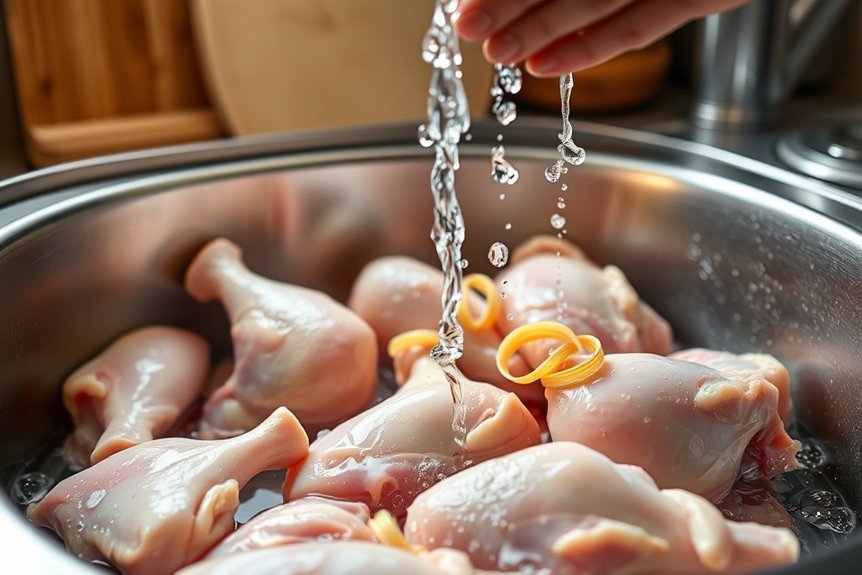
- Cut up the whole chicken into manageable pieces, rinse under cold water, and remove all the skin to achieve a clear broth. Place the cleaned chicken pieces into a large soup pot.

- Add the clear condensed chicken soup and water to the pot. Peel and add the onions, followed by the salt. Clean and chop the carrots, celery, and parsnip, and add them to the pot. Nestle in the fresh dill and parsley, then finish with pepper.
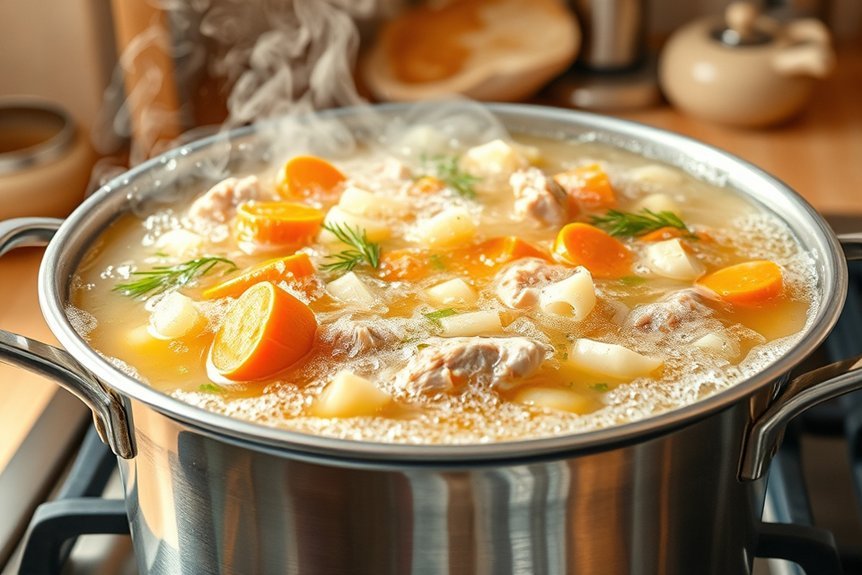
- Bring the mixture to a rolling boil over high heat, then reduce the heat to low and let it simmer partially covered for at least 3 hours.
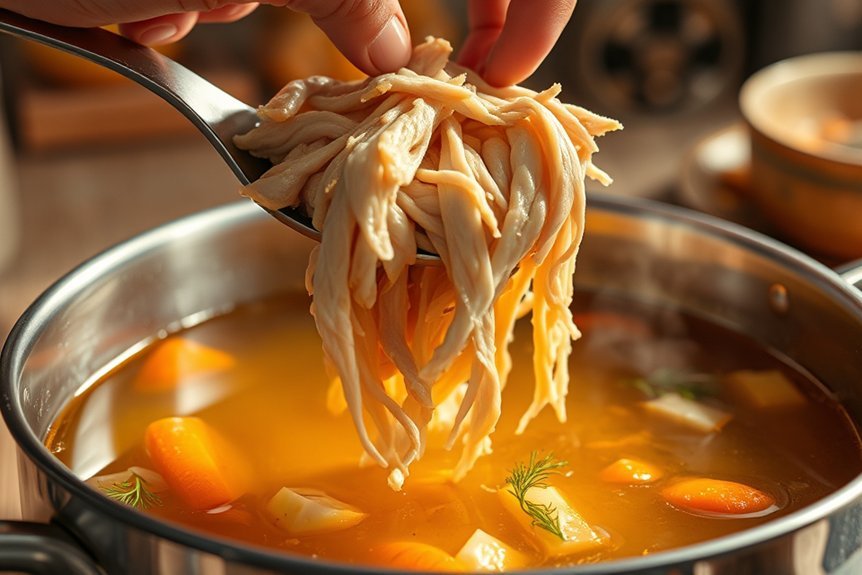
- After simmering, carefully remove the chicken pieces, shred them into bite-sized portions, and return them to the pot. Serve the soup in bowls with the rich broth and tender vegetables.
Nutrition
Notes
Tried this recipe?
Let us know how it was!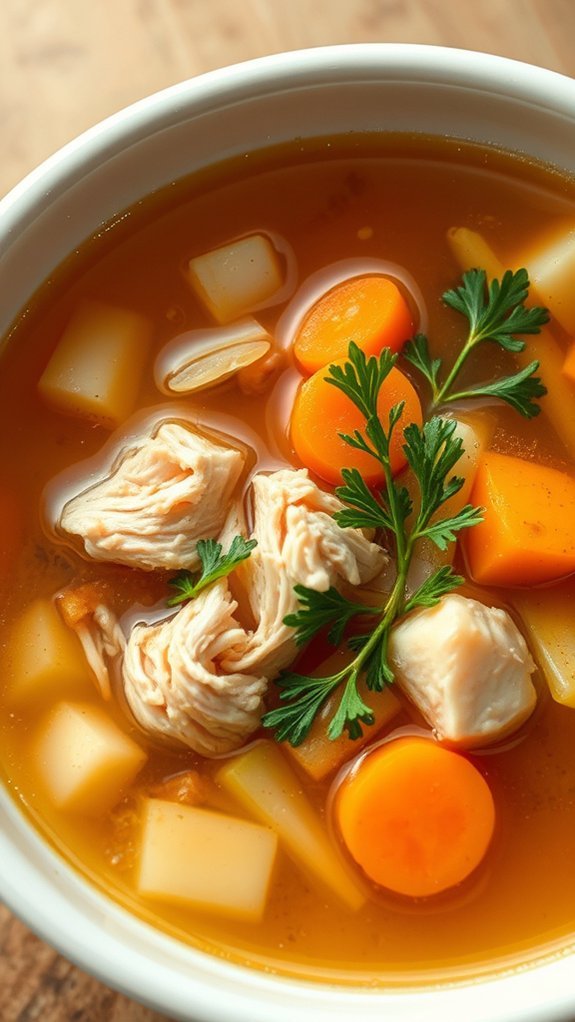
Chef’s Tips for Perfect Jewish Chicken Soup
Don’t Rush the Simmer: Three hours is the minimum. Patience is what separates good soup from unforgettable soup. The longer it goes, the richer the broth becomes.
Skim the Foam: During the first 30 minutes, skim the grey foam that rises to the surface. It’s the difference between cloudy disappointment and crystal-clear golden broth.
Add Dill Late: Add fresh dill only in the final 30 minutes of cooking. It preserves the bright, grassy flavor. Earlier, and it becomes muddy.
Swap Vegetables for the Bowl: The cooked vegetables give everything to the broth. If you want tender vegetables in the final bowl, add a fresh batch of carrots and celery in the last 45 minutes.
Make It Keto: Reduce to 2 carrots and omit the parsnip to bring net carbs down to about 4g per serving. Add extra celery for volume.
Taste Before Serving: Adjust salt and pepper after the full simmer, not before. The broth concentrates as it cooks.
📦 Storage & Serving Suggestions
Refrigerator Storage: Store in an airtight container for up to 4 days. The fat will solidify on top when chilled. Skim it off before reheating for a cleaner broth, or stir it back in for richer flavor.
Freezer Storage: Freezes beautifully for up to 3 months. Freeze broth and chicken together in portion-sized containers. Thaw overnight in the fridge and reheat gently on the stovetop.
Meal Prep Strategy: Make a double batch on Sunday. The soup genuinely improves overnight as flavors deepen. Portion into individual containers for the week, and it reheats in 5 minutes.
Pack for Work: Use a wide-mouth insulated thermos. Reheat fully before packing and it’ll stay hot for 4 to 5 hours.
Complete the Meal: Pair with our almond flour matzo balls for a Passover-ready low-carb version, or serve alongside low-carb charoset for a full Seder spread.
Pairings
For a low-carb Passover meal, serve alongside low-carb charoset and our almond flour matzo balls. A sprinkle of fresh dill brightens the rich broth, and a squeeze of lemon adds surprising lift. For a full Seder, this soup is the natural first course before moving to brisket. It also makes an ideal weekday lunch any time of year. Batch-cook on Sunday and enjoy all week long.
Summing It Up
There you have it: Bubbe’s time-tested recipe that’s been warming hearts for generations. This isn’t just soup. It’s liquid gold that transforms simple ingredients into something genuinely nourishing. Remove the skin for clarity, simmer low and slow for maximum flavor, add dill at the end. Whether you’re making it for Passover or a Tuesday lunch, serve it with love and watch it work its age-old magic on everyone lucky enough to taste it.
Frequently Asked Questions
Can I make this soup ahead of time?
Absolutely, and you should. Jewish chicken soup improves significantly overnight as the flavors meld. Make it 1 to 2 days ahead, refrigerate, skim the solidified fat off the top, and reheat gently. It’s genuinely better the next day.
How many carbs are in Jewish chicken soup?
This recipe has approximately 8g net carbs per serving without noodles or matzo balls. To reduce further to about 4g, use 2 carrots instead of 4 and omit the parsnip. Add extra celery to maintain volume.
Is Jewish chicken soup gluten-free?
Yes, the base soup is naturally gluten-free. Check the condensed chicken broth label for wheat-based thickeners. Serve without egg noodles or traditional matzo balls, or use our almond flour matzo ball recipe instead.
Can I use chicken breasts instead of a whole chicken?
You can, but a whole chicken produces a much richer, more flavorful broth. Bone-in chicken thighs are the best compromise. They add collagen and depth that boneless breasts simply can’t match.
🍽️ You Might Also Like
Keto-friendly Passover classic.
Fork-tender in 90 minutes.
Seder plate essential.
Every course, keto-adapted.
Medical Disclaimer: The nutritional information provided in this article is for informational purposes only. While we strive for accuracy, we are culinary experts, not medical doctors. Individual responses to foods vary, and you should always consult with your healthcare provider or registered dietitian about dietary changes, especially if you’re managing diabetes or other health conditions. Always monitor your blood sugar as recommended by your healthcare team.


