

Published May 11, 2026 · Updated September 25, 2026
Affiliate disclosure: As an Amazon Associate I earn from qualifying purchases.
Ever stared longingly at a platter of mithai at a celebration and wished you could dive in? Traditional Indian sweets are legendary for their rich flavor, but they usually come loaded with sugar and ghee. The good news: with a few smart swaps, your sweet tooth and your glucose levels can get along just fine.
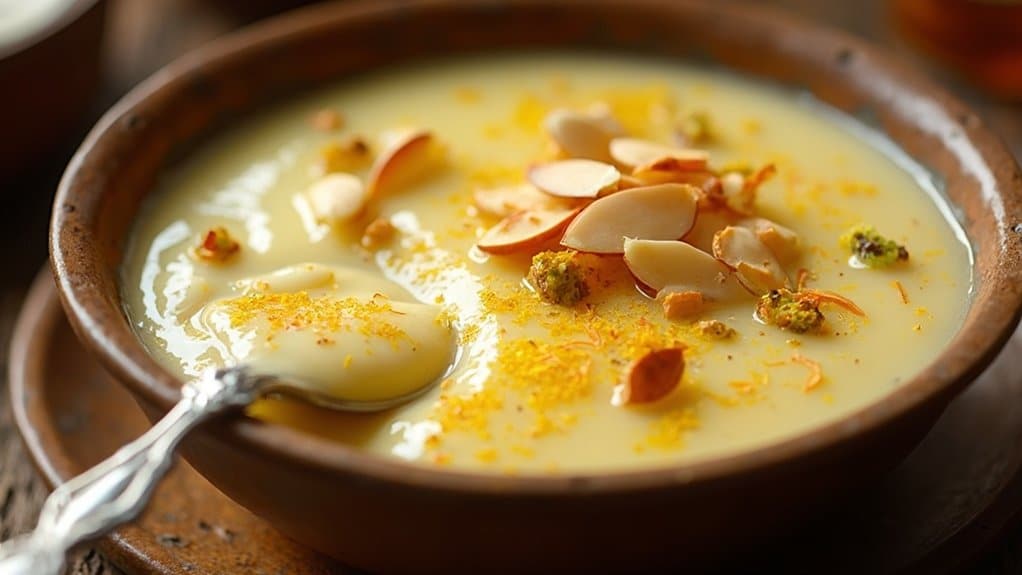
Quick Stats: All 5 Recipes
Indian Desserts for Diabetics
Some of us at The Lunch Pro stick to the classics while others love to experiment, and together we gave these beloved sweets a diabetes-friendly makeover. Here is why the approach works.
Why These Indian Desserts for Diabetics Work
Low-glycemic sweeteners: Swapping refined sugar for stevia, monk fruit, or naturally sweet fruit keeps the flavor while being designed to be gentler on blood sugar.
Fiber and healthy fats: Nuts, quinoa, and oats add fiber and fat that help slow how the body absorbs sugar, which may support steadier energy after a treat.
Smart base swaps: Trading white rice for quinoa or oats, and sugar syrup for nut flours, lowers the refined-carb load without losing the creamy, rich texture.
Built for real life: These are familiar favorites like gajar ka halwa, kheer, and barfi, reimagined so you can still join the celebration. For another sweet option, see our diabetes-friendly Boston cream pie.
Traditional Mithai vs. These Made-Over Versions
| Factor | Traditional Mithai | These Made-Over Versions |
|---|---|---|
| Sweetener | Refined sugar, sugar syrup | Stevia, monk fruit, dates |
| Added sugar | High | Little to none |
| Base | White rice, sugar syrup | Almond flour, quinoa, oats, nuts |
| Fiber and fat | Low | Higher, from nuts and whole grains |
| Portion | Generous servings | Mindful mini-portions |
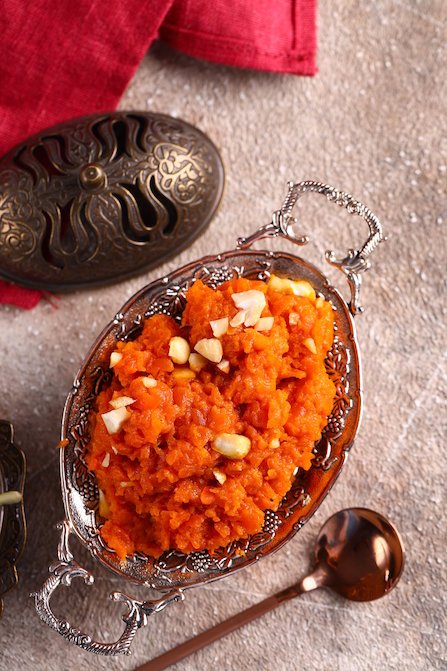
Diabetes-Friendly Gajar Ka Halwa (Stevia-Sweetened)
This warm, nutty carrot halwa retains all the comfort and swaps sugar for stevia, a natural zero-calorie sweetener.

Diabetes-Friendly Gajar Ka Halwa
Ingredients
Equipment
Method
- In a heavy-bottomed pan or a large skillet, melt the ghee over medium heat.
- Add the grated carrots and sauté for about 10-15 minutes, until the carrots are softened and have reduced in volume.
- Pour in the milk and bring to a gentle simmer. Continue cooking and stirring occasionally for 20-25 minutes, or until the milk has been fully absorbed. This step is key to that creamy texture!
- Stir in the cardamom powder, saffron threads, and stevia. Mix well. Taste and adjust the stevia if you want it sweeter.
- Cook for another 2-3 minutes to allow the flavors to meld together.
- Remove from the heat. Garnish with chopped nuts before serving warm.
Notes
Tried this recipe?
Let us know how it was!Low-Sugar Kheer with Quinoa or Oats
Kheer is the ultimate creamy comfort pudding, and swapping white rice for quinoa or steel-cut oats brings extra fiber for a gentler impact on blood sugar.
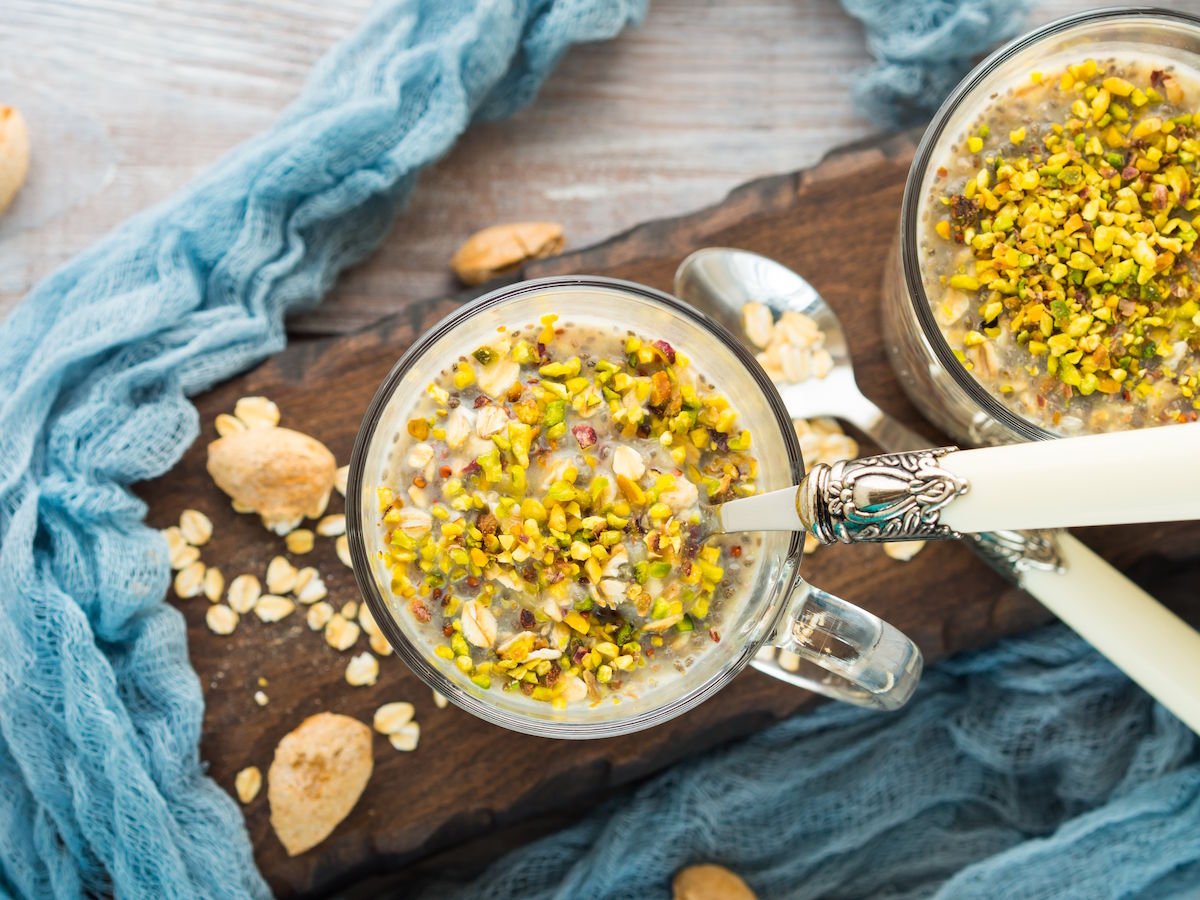
Low-Sugar Kheer with Quinoa or Oats
Ingredients
Equipment
Method
- Rinse the quinoa thoroughly in a fine-mesh sieve. Skip this step if you’re using steel-cut oats.
- In a saucepan, combine the quinoa (or oats) and milk. Bring to a boil, then reduce the heat to a low simmer.
- Cook for 20-30 minutes, stirring often, until the quinoa or oats are cooked and the mixture has thickened into a creamy pudding consistency.
- Remove from the heat. Stir in the cardamom, saffron, and your chosen sweetener until fully dissolved.
- Ladle the kheer into bowls and garnish with chopped nuts. Serve warm or chilled.
Nutrition
Notes
Tried this recipe?
Let us know how it was!A Trio of Diabetic-Friendly Nut Barfi
Nuts make an excellent base for barfi: their healthy fats and protein help slow sugar absorption, so the next three versions skip the sugar syrup entirely in favour of low-glycemic sweeteners.
Almond Barfi (Badam Barfi)
Rich, fragrant with cardamom, and naturally low in carbs thanks to almond flour (affiliate link) standing in for the usual sugar syrup.
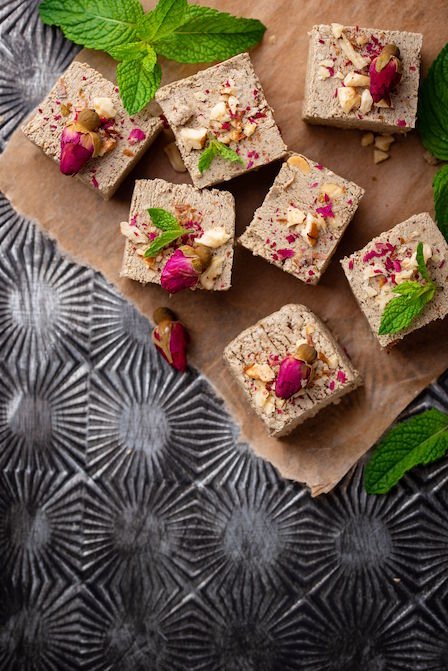
Almond Barfi
Ingredients
Equipment
Method
- Roast the Flour: In a non-stick pan over low heat, gently roast the almond flour for about 5-7 minutes. Stir continuously until it becomes fragrant and turns a light golden color. Be careful not to burn it! This step enhances the nutty flavor.
- Make the Dough: Remove the pan from the heat. In a small bowl, combine the almond milk, ghee, cardamom, and stevia. Mix well.
- Combine & Knead: Add the wet mixture to the roasted almond flour. Mix with a spoon until a crumbly dough forms. If it feels too dry, you can add a tiny bit more almond milk, a teaspoon at a time.
- Shape the Barfi: Transfer the warm dough onto a piece of parchment paper. Knead it gently with your hands to form a smooth ball. Place another piece of parchment paper on top and use a rolling pin to flatten it to about 1/2 inch thick.
- Garnish & Set: Sprinkle the sliced nuts on top and gently press them into the barfi. Let the barfi cool completely at room temperature, which will take about 30 minutes to an hour.
- Cut and Serve: Once firm, use a sharp knife to cut the barfi into squares or diamonds.
Nutrition
Notes
Tried this recipe?
Let us know how it was!Pistachio Barfi (Pista Barfi)
Pistachios lend a beautiful green color and a buttery flavor, paired with a low-sugar sweetener for a decadent yet lighter treat.
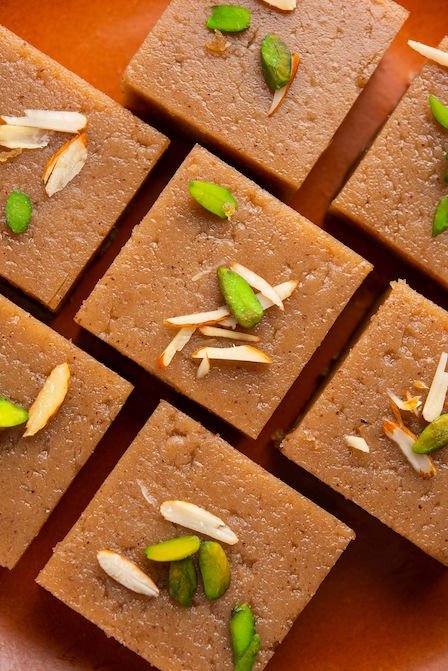
Pistachio Barfi
Ingredients
Equipment
Method
- Prepare the Pistachio Flour: In a food processor, pulse the raw, shelled pistachios until they form a fine powder. Be careful not to over-process, or it will turn into a paste!
- Cook the Base: In a non-stick pan over low heat, add the ghee, milk, and your chosen sweetener. Stir until the sweetener has dissolved.
- Mix the Dry Ingredients: In a separate bowl, combine the pistachio flour and milk powder.
- Combine & Cook: Slowly add the dry ingredients to the wet mixture in the pan, stirring constantly to avoid lumps. Continue to cook on low heat, stirring continuously for about 5-7 minutes, until the mixture starts to come together and leave the sides of the pan. You’re looking for a thick, dough-like consistency.
- Shape & Garnish: Transfer the hot mixture onto a parchment-lined tray. Press it down with a spatula or the back of a spoon to create a flat, even layer. Sprinkle with chopped pistachios and gently press them into the surface.
- Cool & Slice: Let the barfi cool completely to room temperature before cutting into your desired shapes.
Nutrition
Notes
Tried this recipe?
Let us know how it was!Walnut Barfi (Akhrot Barfi)
Walnuts provide omega-3s and antioxidants, and a touch of date paste naturally sweetens this one for a guilt-free indulgence.
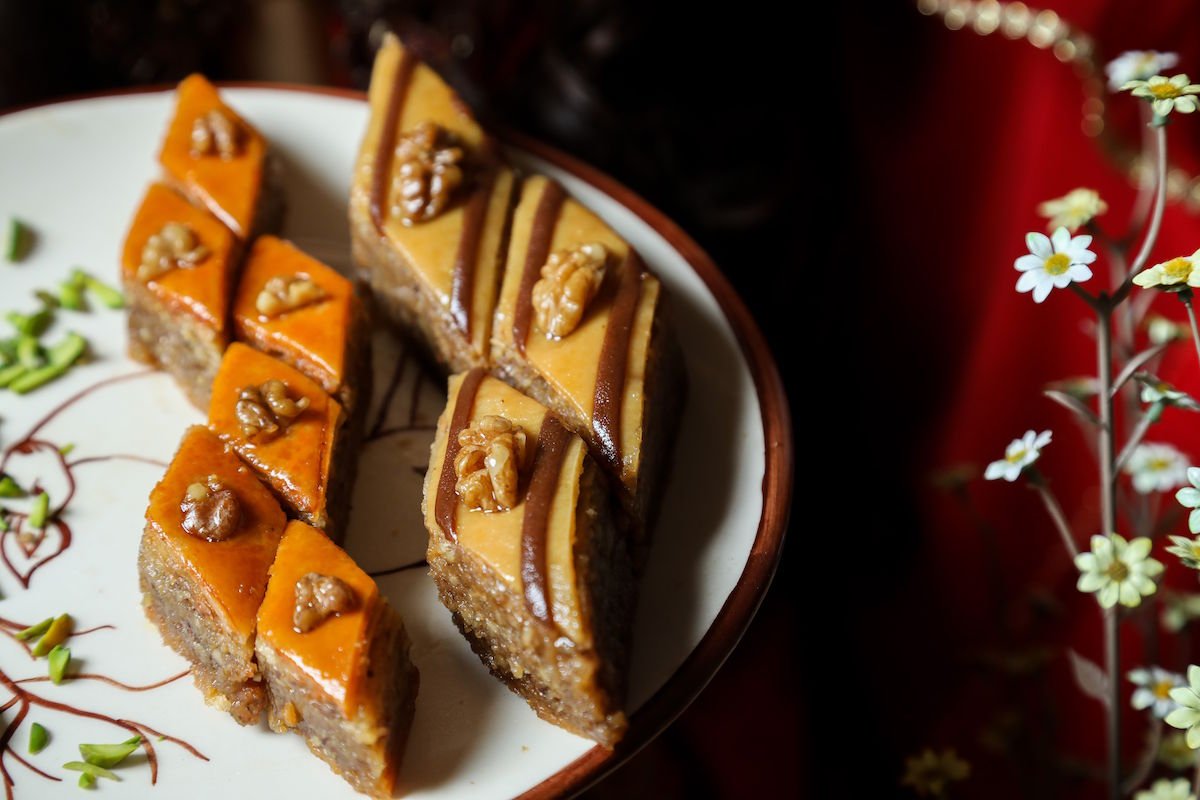
Walnut Barfi
Ingredients
Equipment
Method
- Roast the Walnuts: Toast the walnuts in a dry pan over medium heat for about 5 minutes, until fragrant. Let them cool, then chop them coarsely.
- Create the Base: In a non-stick pan over low heat, melt the ghee. Add the date paste and stir until it becomes soft and pliable.
- Mix It All: Add the roasted walnuts, milk powder, cardamom, and cinnamon to the pan. Mix well until all the ingredients are thoroughly combined and the mixture forms a thick dough. This will take about 3-5 minutes.
- Shape and Set: Press the warm dough into a parchment-lined pan. Press down firmly to create a smooth, even surface. Garnish with walnut halves.
- Cool and Serve: Let the barfi cool completely at room temperature, then cut into pieces and enjoy!
Nutrition
Notes
Tried this recipe?
Let us know how it was!Choosing the Best Low-Glycemic Sweeteners
When you are managing diabetes, the sweetener you reach for matters as much as the recipe. Traditional options vary widely in glycemic impact. Jaggery (gur) sits around a moderate glycemic index of 65, slightly better than white sugar and richer in minerals, though still best used sparingly. For a deeper look at how this works, the science of jaggery and its glycemic impact is a useful read, and our own guide to sugar substitutes for baking breaks down the best options for desserts.
Date paste offers natural sweetness with fiber that slows sugar absorption, a trick many grandmothers used in halwa long before glycemic index was a household phrase. For everyday diabetic-friendly baking, stevia and monk fruit extracts shine because they add no carbohydrate and blend beautifully with Indian flavors like cardamom and saffron. The same low-glycemic thinking carries across to savory cooking, as you can see in our Indian lentil recipes for diabetics and these 6 Indian curries for diabetics.
Fruit is another natural ally. Mashed ripe banana can bind a ladoo, ripe mango can sweeten shrikhand, and grated apple folded into gajar halwa adds sweetness with extra fiber. These swaps turn mithai into something a little more mindful while honouring the flavors that make it special.
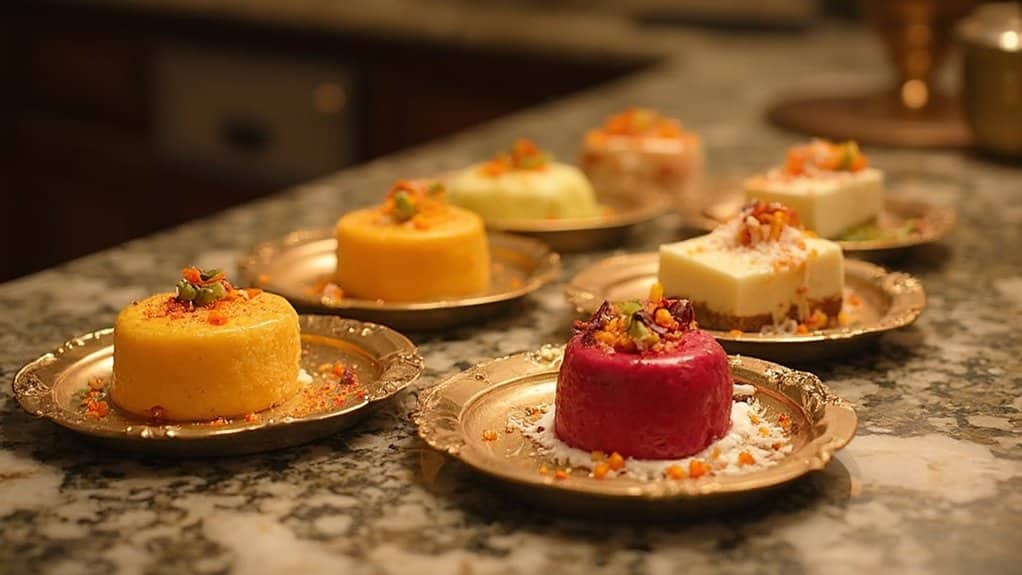
Chef Tips for Diabetes-Friendly Indian Sweets
Go non-stick: A good non-stick pan lets you use less ghee or oil, which keeps each piece lighter.
Cook low and slow: Gentle, longer cooking deepens and concentrates flavor naturally, so you need less sweetener to get there.
Control the portion: Mini-molds and smaller dishes make a treat feel complete; a small, perfect bite satisfies as much as a giant spoonful.
Lean on natural sweetness: Do not rely on stevia alone. Mashed banana or date paste add sweetness plus fiber and a lovely texture.
Toast your nuts and flours: A few minutes of dry roasting before mixing brings out the nutty depth that makes barfi taste indulgent.
Made a batch? Here is how to keep these sweets fresh.
Storage and Serving Suggestions
Refrigerator Storage: Keep barfi and halwa in an airtight container in the fridge for up to 5 days. Kheer is best within 3 days and may thicken as it chills, so loosen it with a splash of milk.
Freezer Storage: The nut barfis freeze well for up to 2 months. Separate layers with parchment and thaw in the fridge overnight before serving.
Make-Ahead Strategy: Barfi is ideal for prepping ahead of a festival; cut it once set and store in a single layer so the pieces keep their shape.
Serving and Pairing: Serve halwa and kheer warm, and barfi at room temperature with chai. Round out a festive spread with more diabetic-friendly options like our Indian curries for diabetics or another sweet finish such as our diabetes-friendly Boston cream pie.
What makes these Indian desserts diabetic-friendly?
What are the best low-glycemic sweeteners for Indian sweets?
How often can diabetics enjoy these Indian desserts?
Can you make diabetic-friendly Indian desserts for festivals like Diwali?
Looking for more sweet ideas that play nicely with blood sugar? Start here.
You Might Also Like
Four easy ways, including no-bake and diabetic-friendly versions.
Gluten-free and easy, with the same nut-flour trick as the barfi.
A classic dessert reworked to be gentler on blood sugar.
Build the rest of the meal around these diabetic-friendly mains.
Final Thoughts
Traditional Indian desserts can get a thoughtful makeover with natural sweeteners, mindful portions, and a few clever swaps, so the flavors that define mithai stay on the table. It is not about sacrifice, it is about rediscovery. For more low-carb ideas across the cuisine, see our complete low-carb Indian food guide and swaps.
Medical Disclaimer: The nutritional information provided in this article is for informational purposes only. While we strive for accuracy, individual responses to foods vary. Always consult with your healthcare provider or registered dietitian about dietary changes.


