

The last Murray’s closed in 2009. This recipe almost went with it.
Thanks to food columnist Johanna Burkhard and a 1994 newspaper clipping, you can make the exact steamed fruit pudding that graced Canadian tables from Thanksgiving through Mother’s Day. After 30 years of home cooks testing and perfecting it, this recipe is as close to the original as you’ll ever get.
I’ll be honest — I thought the whole idea of steamed fruit pudding was disgusting. Steamed fruit? Why would anyone do that to perfectly good fruit? But my friend Stephen kept ordering it on our downtown movie trips to Murray’s, and eventually curiosity got the better of me. One bite of that warm, impossibly moist cake drenched in vanilla sauce, and I understood. After that, it became our staple — right alongside the Rice Custard Pudding we never skipped. In Murray’s earlier years, the Steamed Fruit Pudding was strictly a cold-weather dessert, appearing on the seasonal side of those little table-top dessert cards sometime around Thanksgiving and disappearing by spring. But it proved so popular that Murray’s kept extending its run, until in the restaurant’s final years it was on the menu year-round.
⏱️ Quick Stats
🍮 What Makes Murray’s Steamed Fruit Pudding Special
Not Your Typical “Pudding”: In British tradition, “pudding” refers to a wide range of desserts. This steamed fruit pudding is essentially a warm, moist cake infused with rich mincemeat—nothing like instant pudding from a box.
The Suet Secret: The magic lies in the suet (or butter), which melts during steaming to create steam pockets. This produces an incredibly tender, moist texture that’s impossible to achieve through regular baking.
A Canadian Institution: From Montreal to Toronto, Ottawa to Sudbury, Murray’s served this dessert from Canadian Thanksgiving through Mother’s Day. It became a beloved seasonal tradition for generations.
Preserved by Home Cooks: When the last Murray’s closed in 2009, the recipe lived on through Johanna Burkhard’s 1994 newspaper column and decades of home cooks who perfected it in their own kitchens.
The Complete Murray’s Steamed Fruit Pudding Recipe
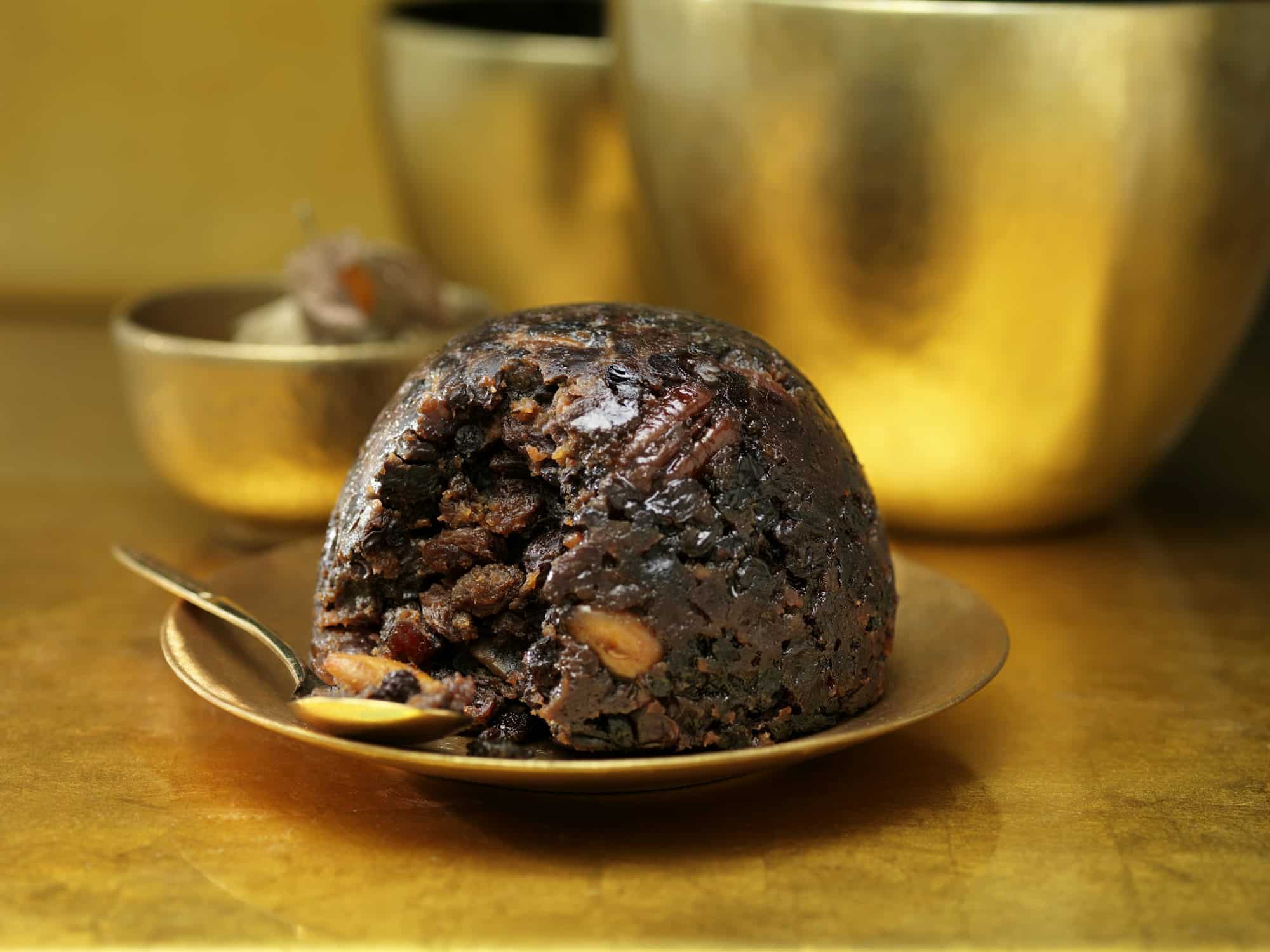
Murray’s Steamed Fruit Pudding (Traditional Method)
Ingredients
Equipment
Method
- In a bowl, whisk together milk and stir in mincemeat until evenly blended250 ml Mincemeat
- In another bowl, combine bread crumbs, flour, sugar, baking soda and salt125 ml fine bread crumbs
- Add the suet, or cut in the butter using a pastry blender or two knives to make fine crumbs50 ml Atora Vegetable Shredded Suet
- Stir in the mincemeat mixture until combined250 ml Mincemeat
- Pour into a well-greased 1.5 l pudding mould or heat-proof bowl
- Pour in boiling water to reach two-thirds up
- Take a large sheet of aluminum foil and a piece of parchment and cut them large enough to cover the bowl fully with some overhang. Place the parchment (I spray it with cooking spray on both sides to avoid sticking) under the foil and press the foil around the sides of the bowl
- Tie a string around the foil to reduce the moisture getting into the bowl. Leave no more than about two inches of overhang of foil and parchment
- I use a pasta pot that has a removable strainer that I can use to extract the bowl when the pudding is fully steamed. You can use string, silicone grabbers or a foil sling
- Cover and steam for about 2.25 hours, adding water (check every 20-25 minutes) to maintain the level or until the tester comes out clean
- When ready, cut the string around the bowl. Wrap well and store in the refrigerator (pudding can be made ahead and frozen)
Nutrition
Video
Notes
Tried this recipe?
Let us know how it was!Quick Instant Pot Method
For a modern twist that dramatically cuts cooking time, the Instant Pot produces identical results in a fraction of the time.
- Follow steps 1-5 of the traditional preparation
- Place the covered pudding basin on the Instant Pot trivet
- Add 2 cups of hot water to the pot
- Pressure cook on high for 45 minutes
- Allow natural pressure release
The texture and flavor are indistinguishable from the traditional 2-hour method—we’ve tested both side by side.
Chef’s Tips for Perfect Steamed Pudding
Suet Options: The original recipe calls for beef suet, but vegetable suet (such as Atora) or butter works equally well. I’ve tested all three and couldn’t detect any difference in taste or texture.
Mincemeat Matters: Robertson’s is ideal, but any high-quality mincemeat will do. Murray’s originally used the Rose and Laflamme brand, which is no longer available.
Scaling Up: This recipe doubles beautifully. Use a 2L mold and add one hour to steaming time for the traditional method, or 20 additional minutes for Instant Pot.
Individual Portions: For restaurant-style presentation, use individual pudding molds. Steam for 45 minutes in an Instant Pot or 1.5 hours traditionally.
The Water Check: For stovetop steaming, check the water level every 30 minutes. The pot should never boil dry—keep a kettle of hot water ready to top up as needed.
Test for Doneness: The pudding is ready when it’s firm to the touch and a skewer inserted comes out clean. Don’t worry if the top looks slightly moist—that’s normal.
📦 Storage & Serving Suggestions
Serving: Serve warm with hot Murray’s vanilla custard sauce (the authentic pairing), fresh cream, or whipped cream. Garnish with fresh berries and a dusting of powdered sugar for elegant presentation.
Room Temperature Storage: Cool completely, then wrap tightly in parchment paper and foil. Keeps 2 weeks at room temperature—the flavors actually improve after a few days.
Refrigerator Storage: Wrapped properly, the pudding keeps up to a month refrigerated. Bring to room temperature before reheating for best results.
Reheating: Steam again for 30 minutes (traditional) or microwave covered at 50% power for 5-7 minutes until heated through. The steaming method produces better texture.
Make It Ahead: This is the perfect make-ahead dessert. Prepare up to a month in advance and store properly. Many cooks insist the flavor improves with age—traditional British puddings are often made weeks before serving.
The Story Behind the Murray’s Steamed Fruit Pudding Recipe
Murray’s Restaurants held a special place in Canadian dining culture. With locations across Montreal, Toronto, Ottawa, and Sudbury, they served comfort food that became part of family traditions for generations.
This recipe came to light when a devoted reader contacted Johanna Burkhard’s “What’s Cooking” column in The Montreal Star, desperate to recreate the dessert that had become a family tradition. In her November 2, 1994 column, Burkhard answered with the complete recipe—and unknowingly preserved a piece of Canadian culinary history.

Since that 1994 article appeared, countless home cooks have successfully recreated this pudding. Even before the restaurant’s closure in 2009, many found their homemade versions indistinguishable from the original. The key difference? Murray’s steamed individual portions, while the home version uses a single large mold, but the taste remains identical.
Understanding Suet in Traditional British Puddings
If “steamed pudding” sounds intimidating, don’t worry—it’s simply a traditional cooking method that produces incredibly moist, tender results impossible to achieve through conventional baking.
Suet is the secret to authentic British steamed puddings. This hard fat (found around cattle kidneys) has a high melting point, creating steam pockets as it melts. The result is that signature light, moist texture that defines classic steamed puddings.
Vegetable suet, developed for vegetarian cooking, performs identically while being more widely available. And butter? It works just as well—we’ve tested all three options extensively.


❓ Frequently Asked Questions
Can I make this gluten-free?
Yes! Replace regular flour with a rice-flour and almond-flour blend (equal parts work well), and use gluten-free breadcrumbs. The texture will be slightly denser but still delicious.
Why does my pudding turn out darker than Murray’s original?
This typically occurs due to caramelization during prolonged cooking times. Try reducing the heat slightly and using lighter golden syrup instead of dark.
Can I use silicone molds instead of traditional pudding basins?
Traditional metal or ceramic basins are more effective at conducting heat evenly. Silicone can work but may require longer cooking times and produce less consistent results.
How do I adjust for high altitude?
Increase steaming time by 10% for every 1,000 feet above sea level. The lower air pressure at altitude means moisture evaporates faster.
Can I make this without suet?
Absolutely. Cold butter, grated on a box grater, produces nearly identical results. The key is keeping the fat cold until it goes into the batter.
Here are some pudding steaming tips from Gemma’s Bigger Bolder Baking (one of my go-to recipe sources)
Final Thoughts
I never would have tried this if Stephen hadn’t kept ordering it while I sat there judging him. That’s the thing about Murray’s — it had a way of turning reluctance into ritual. If you’ve made this recipe and it brought back something for you, or if you have your own story about discovering the Steamed Fruit Pudding for the first time, head over to our Murray’s Restaurants page and add your memory to the Wall.
🍽️ You Might Also Like
The authentic accompaniment
More nostalgic Canadian favorites
Equipment recommendations
Another Canadian classic
Editorial Note: This recipe was originally published by Johanna Burkhard in The Montreal Star on November 2, 1994, in response to a reader request. We have tested and adapted it for modern kitchens while preserving its authenticity. Recipe testing and nutritional information are approximate.