
Five grams of net carbs. Twenty-eight grams of protein. Twenty-five minutes start to finish. This shrimp and asparagus stir-fry is one of the cleanest keto meals you can pull from a wok — and it tastes like it was made in a restaurant.
The technique is classic Chinese stir-fry: screaming-hot pan, aromatics first, protein and vegetables in sequence, sauce thickened and glossy in the final 90 seconds. Get that order right, and the dish essentially makes itself.
⏱️ Quick Stats
✓ Low-Carb
✓ Diabetic-Friendly
✓ Gluten-Free Option
✓ Dairy-Free
✓ Pescatarian
🥑 Why This Shrimp and Asparagus Stir-Fry Recipe Works for Keto
Shrimp is essentially zero carbs: One pound of shrimp contains less than 1g of carbohydrates. All the protein, none of the carb budget — it’s one of the most keto-efficient proteins you can cook with, and at 28g protein per serving, this dish keeps you full for hours.
Asparagus is a keto vegetable: A full cup of asparagus contains just 2–3g net carbs and delivers 3g of fiber per serving here. It also brings folate, vitamins K and E, and inulin — a prebiotic fiber that supports gut health without impacting blood sugar.
Light sauce, not a sugar bomb: Restaurant Chinese stir-fry sauces often contain 8–15g of added sugar per serving. This version uses low-sodium soy sauce, fresh ginger, garlic, and chicken broth — deep savory flavor with 2g of naturally occurring sugar and nothing added.
High heat preserves nutrients: Stir-frying over high heat for a short time is one of the best cooking methods for retaining water-soluble vitamins. The asparagus stays crisp-tender rather than boiling away its nutrients into cooking water.
Blood sugar stable, energy sustained: The protein-to-carb ratio here — 28g protein to 5g net carbs — is as favorable as it gets for steady blood sugar. The ginger also contains gingerols and shogaols, compounds associated with supporting healthy glucose metabolism.
Restaurant Shrimp Stir-Fry vs. This Recipe
| Nutrient | Restaurant | This Recipe | Difference |
|---|---|---|---|
| Net Carbs | 18–25g | 5g | ~75% less |
| Added Sugar | 8–15g | 0g | None added |
| Sodium | 900–1,400mg | 450mg | ~60% less |
| Protein | 18–22g | 28g | +6–10g more |
| Calories | 280–380 | 185 | ~100–200 fewer |
| Keto-Friendly? | ❌ No | ✅ Yes | — |
Here’s the full Shrimp and Asparagus Stir-fry recipe — ingredients, steps, and notes in one card:
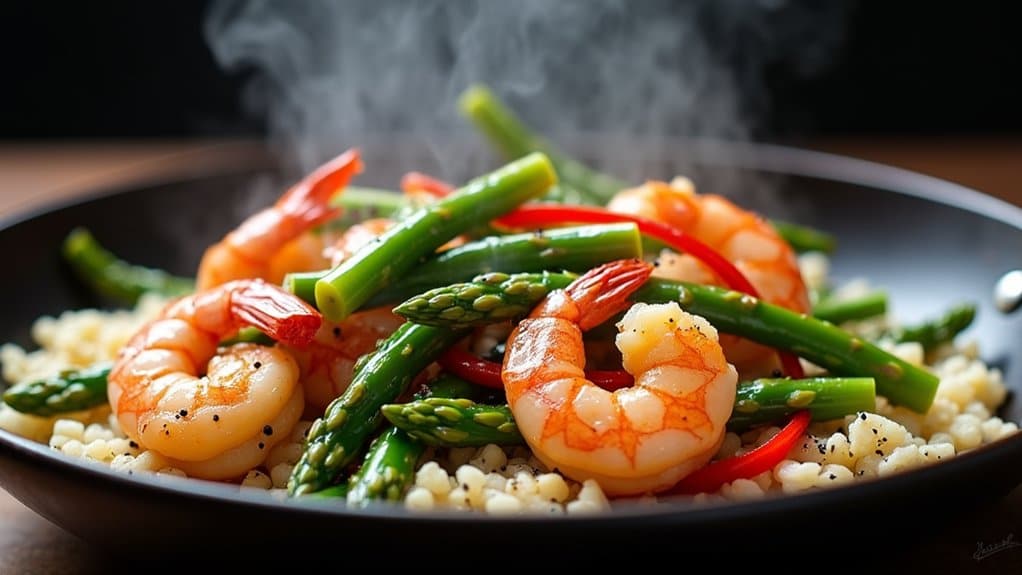

Shrimp and Asparagus Stir-Fry | Keto, 5g Net Carbs
Ingredients
Equipment
Method
- Mix the cornstarch slurry: combine 1 tablespoon cornstarch with 2 tablespoons cold water in a small bowl and stir until dissolved. In a separate small bowl, combine the soy sauce and chicken broth. Set both aside — once the wok is hot, everything moves fast.
- Pat the shrimp thoroughly dry with paper towels and set aside. Prep all vegetables: mince garlic and ginger, trim and cut asparagus into 2-inch pieces. Have everything within arm’s reach of the wok before turning on the heat.
- Heat a large wok or deep skillet over high heat for 1–2 minutes until very hot. Add the oil and swirl to coat. Add the garlic and ginger and stir-fry for 30 seconds, keeping them moving constantly. The kitchen should smell intensely aromatic — this is right.
- Add the asparagus to the wok. Stir-fry over high heat for 3 minutes, tossing frequently, until the asparagus is bright green and crisp-tender with slight char at the edges. Do not reduce the heat — the char is flavor.
- Add the shrimp to the wok. Spread them in a single layer and cook for 1 minute without stirring, then toss and cook for another 1–2 minutes until shrimp are pink and curl into a C-shape. Do not overcook — an O-shape means rubbery.
- Pour in the soy sauce and broth mixture. Stir the cornstarch slurry once more (it settles) and pour it in. Toss everything together and cook for 90 seconds until the sauce thickens and turns glossy. Season with black pepper, taste, and adjust salt if needed. Serve immediately.
Nutrition
Notes
Tried this recipe?
Let us know how it was!Chef’s Tips for Perfect Shrimp and Asparagus Stir-Fry
Dry the shrimp before cooking: Pat shrimp thoroughly dry with paper towels before they hit the wok. Wet shrimp steam rather than sear, and you lose the slight caramelization on the exterior that makes restaurant stir-fry taste different from home cooking.
Choose medium-thick asparagus: Pencil-thin asparagus overcooks too fast in a hot wok; very thick spears don’t cook through in time. Medium thickness — about the diameter of a pencil — cooks evenly in the 3-minute window.
Arrowroot instead of cornstarch for strict keto: One tablespoon of cornstarch across 4 servings adds roughly 1.5g carbs total — well within keto limits. But if you want to eliminate it entirely, substitute arrowroot powder 1:1. It thickens at a lower temperature and produces a slightly clearer sauce.
Make it gluten-free: Swap regular soy sauce for tamari — same flavor, no gluten. Confirm your chicken broth is also gluten-free (most are, but check the label).
Don’t crowd the wok: If doubling the recipe, cook in two batches. Overcrowding drops the wok temperature and steams everything instead of stir-frying — you’ll get grey vegetables and rubbery shrimp instead of the char and snap you’re after.
Pair with cauliflower fried rice for a complete keto Chinese meal: The stir-fry on its own is a full meal with 185 calories. Served over cauliflower rice, it stretches to 5–6 servings and adds volume without meaningfully affecting the carb count.
📦 Shrimp and Asparagus Stir-Fry Storage and Serving Suggestions
Refrigerator Storage: Store in an airtight container for up to 2 days. Shrimp texture deteriorates faster than chicken or beef — 2 days is the limit before they become rubbery when reheated. The asparagus softens slightly but holds reasonably well.
Freezer Storage: Not recommended for this dish. Shrimp and asparagus both suffer significant texture loss when frozen and thawed.
Reheating: Reheat in a hot skillet over medium-high heat with a splash of chicken broth for 2–3 minutes. Avoid the microwave — it steams the shrimp and makes them tough.
Meal Prep Strategy: The best approach for meal prep is to prep all ingredients (peel shrimp, cut asparagus, mince aromatics, mix sauce) up to 2 days ahead and cook fresh each time. The active cook time is only 10 minutes, making it one of the fastest genuine meal-prep-friendly dinners in the rotation.
Complete the Meal: Serve over keto cauliflower fried rice for a full Chinese-inspired spread. For more high-protein keto Chinese options, the Chicken and Broccoli Stir-Fry uses the same wok technique with 35g protein and zero added sugar. Or try garlic ginger shrimp for a variation on the same aromatics with a different texture profile.
Shrimp and Asparagus Stir-Fry FAQs
Is shrimp and asparagus stir-fry keto?
Yes — this is one of the most keto-friendly Chinese stir-fry dishes you can make. Shrimp contains less than 1g of carbohydrates per serving, and asparagus contributes just 2–3g net carbs per cup. The total comes to 5g net carbs per serving with 28g of protein, well within strict keto macros.
Can I make this gluten-free?
Yes. Substitute tamari for the low-sodium soy sauce — it has the same flavor profile and is gluten-free. Check that your chicken broth is also gluten-free (most are). The rest of the recipe is naturally gluten-free.
What can I serve with shrimp and asparagus stir-fry on a keto diet?
Cauliflower rice is the classic pairing — it absorbs the sauce and adds volume without meaningfully increasing carbs. The dish also works well on its own as a complete protein-forward meal at 185 calories per serving. Zucchini noodles or shirataki noodles are other low-carb options if you want more substance.
Can I substitute the shrimp?
Yes. Sliced chicken breast works well — add it in place of the shrimp and cook for 4–5 minutes instead of 2–3. Firm tofu (pressed and dry-fried first) makes this dish vegan. Sea scallops are a particularly good swap — sear them separately for 2 minutes per side, then fold into the sauce at the end.
🍽️ You Might Also Like
Zero added sugar, 35g protein, same wok technique.
7g net carbs, better than takeout, built for the wok.
All the takeout flavors, none of the wrapper or the carbs.
The full low-carb Chinese recipe collection in one place.
Stir-frying has been a Chinese cooking technique for over 1,500 years — the Han Dynasty version involved wood-fired woks and much less precise timing, but the logic was the same: high heat, short time, maximum flavor. This shrimp and asparagus version is simply that tradition adapted for a keto kitchen, with the sugar-heavy sauce traded for something cleaner and the result, honestly, better.
Keep shrimp in your freezer and asparagus in your fridge, and you’re 25 minutes from one of the best keto meals in the rotation. Check the full keto Chinese food guide for more dishes built on the same principles.
Medical Disclaimer: The nutritional information provided in this article is for informational purposes only. While we strive for accuracy, individual responses to foods vary. Always consult with your healthcare provider or registered dietitian about dietary changes, especially if you’re managing diabetes or other health conditions.


