
Published March 10, 2026 · Updated June 26, 2026
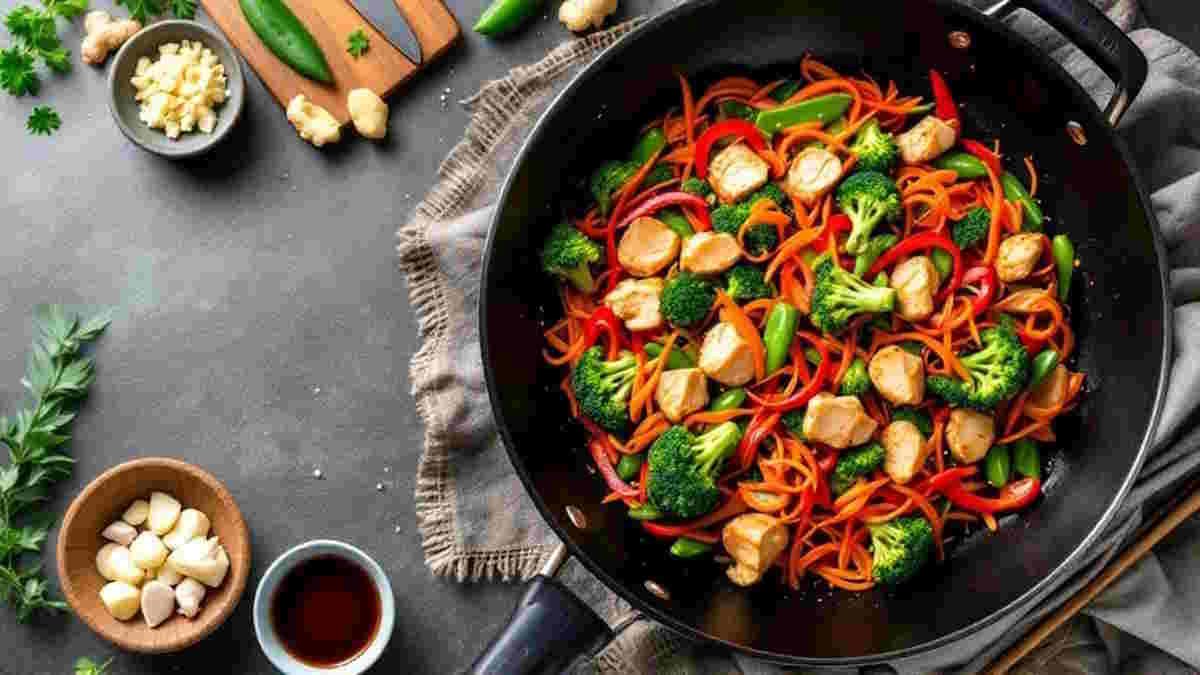
Seven grams of net carbs. Twenty-eight grams of protein. Zero sugar-laden takeout sauce. This keto chicken stir-fry delivers everything you love about Chinese takeout, the sizzle, the glossy sauce, the colorful vegetables, in 35 minutes flat, without the carb overload. A 2,000-year-old cooking technique turns out to be remarkably well-suited to modern keto and low-carb macros.
Keto Chicken Stir-Fry Quick Stats
Why This Low-Carb Chicken Stir-Fry Works
Ultra-Low Net Carbs: At just 7g net carbs per serving, this keto chicken stir fry fits comfortably within a strict 20g daily keto limit, leaving plenty of room for the rest of your day. Most restaurant versions clock in at 30 to 45g carbs before you even pick up your chopsticks.
High Protein for Satiety: Lean chicken breast delivers 28g of protein per serving, which is exactly the kind of macro that keeps afternoon hunger at bay. Pair it with the healthy fat from sesame oil and you have a meal that keeps you full for hours.
Vegetable Volume Without the Carb Tax: Broccoli, snow peas, bell peppers, and carrots add genuine filling fiber, 3g per serving, without pushing net carbs into problem territory. You are getting nutrients and bulk, not just empty macros.
No Hidden Sugars: Takeout stir-fry sauces are loaded with sugar, sometimes 8 to 12g per serving. This version uses low-sodium soy sauce, fresh ginger, and garlic. The sauce gets its gloss from the natural starch in the vegetables, not a sugar syrup.
Blood Sugar Stability: The protein-fat-fiber combination in this dish slows glucose absorption, which means a gentler rise after eating, something worth noting if you are managing blood sugar alongside your keto goals.
Takeout Chicken Stir-Fry vs. This Keto Version
| Nutrient | Takeout (per serving) | This Recipe | Difference |
|---|---|---|---|
| Net Carbs | 38g | 7g | -31g (82%) |
| Sugar | 10g | 2g | -8g (80%) |
| Protein | 22g | 28g | +6g (27%) |
| Calories | 560 | 285 | -275 cal (49%) |
| Sodium | 1,800mg | 680mg | -1,120mg (62%) |
| Cost | ~$14 to 18 | ~$4 to 5 | ~75% less |
| Keto-Friendly? | No | Yes | n/a |
Here is the full keto chicken stir-fry recipe, ready to print or save.


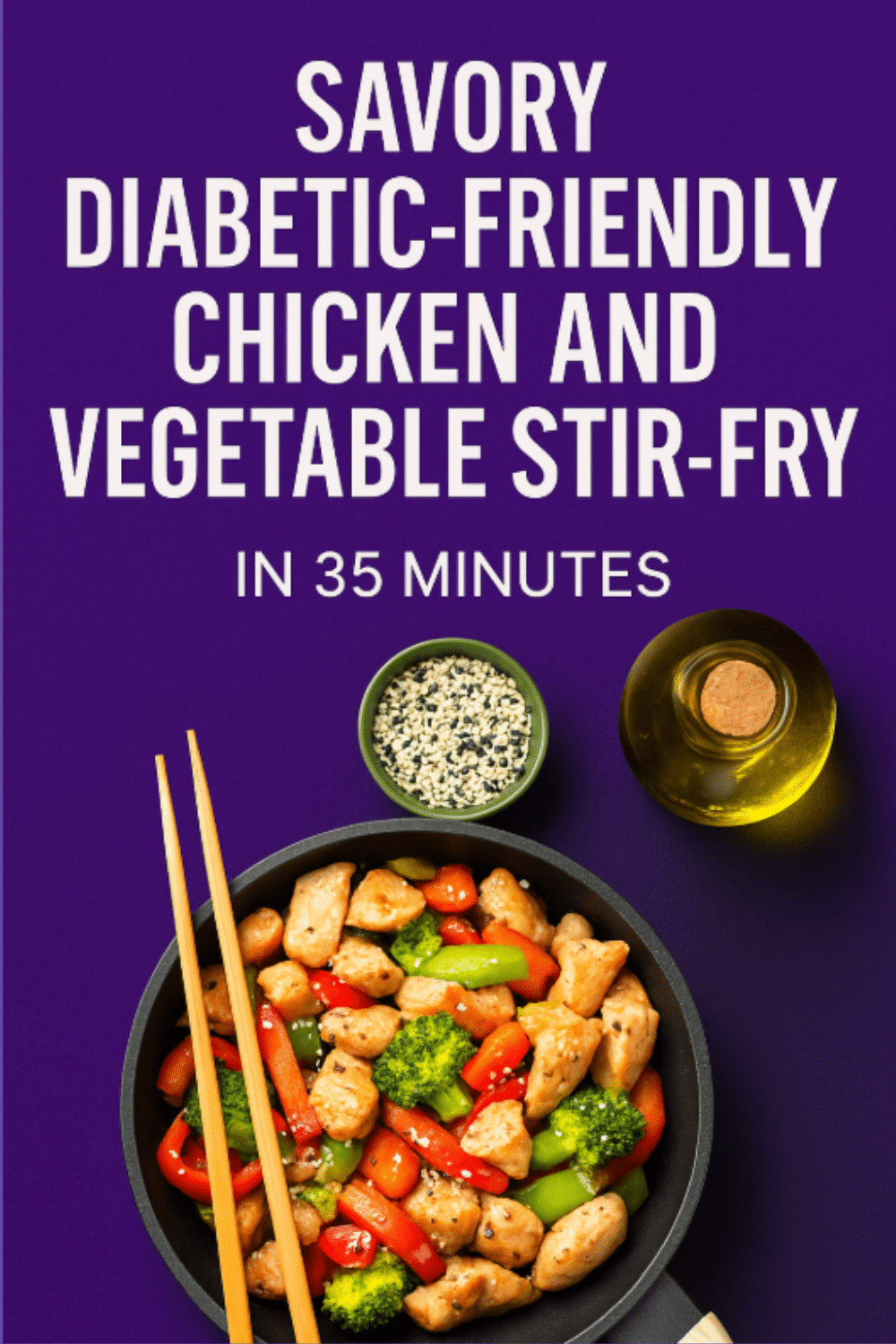
Savory Diabetic-Friendly Chicken and Vegetable Stir-Fry in 35 Minutes
Ingredients
Equipment
Method
- Prepare Your Cooking Station:
- Clear and sanitize your workspace.
- Arrange all pre-measured ingredients in small bowls for quick access.
- Slice Chicken and Vegetables:
- Slice chicken breast into uniform 1-inch pieces.
- Chop all vegetables into similar-sized pieces for even cooking.
- Make the Sauce:
- In a small bowl, whisk together chicken broth and cornstarch until smooth.
- Stir in soy sauce and rice vinegar.
- Stir-Fry the Chicken:
- Heat 1 tablespoon olive oil in the wok over medium-high heat.
- Add chicken and cook until golden brown and cooked through, about 5–7 minutes.
- Remove chicken from the wok and set aside.
- Stir-Fry the Vegetables:
- Add remaining olive oil to the wok.
- Add garlic and ginger, stir for 30 seconds until fragrant.
- Add broccoli, bell pepper, snap peas, and carrots. Stir-fry for 3–4 minutes until vegetables are crisp-tender.
- Combine and Finish:
- Return chicken to the wok.
- Pour in the sauce mixture.
- Stir-fry for 2–3 minutes, or until the sauce thickens and everything is well coated.
- Season with salt and pepper to taste.
- Serve:
- Serve immediately. For a lower-carb meal, enjoy as is or pair with cauliflower rice.
Nutrition
Notes
- Use low-sodium soy sauce to reduce sodium content.
- Avoid adding sugar; if a sweeter sauce is desired, use a sugar substitute like stevia or erythritol.
- Focus on non-starchy vegetables to keep carbohydrates low.
- Monitor portion sizes to help manage blood glucose.
- Serve with cauliflower rice or a small portion of brown rice for extra fiber and lower glycemic impact.
Tried this recipe?
Let us know how it was!How the Keto Chicken Stir-Fry Comes Together
Stir-frying is a technique that rewards preparation. Before the wok gets hot, you want every ingredient measured, cut, and arranged within arm’s reach. Once things start sizzling, there is no time to dig through the fridge.
Thin, uniform strips of chicken are the secret to even cooking. Slightly chilled chicken, not fully frozen but cold, holds its shape better under the knife, giving you cleaner cuts. Aim for about 1/4 inch thick, sliced slightly against the grain.
Vegetable size matters more than you would think. Cut everything to roughly the same dimensions, and they will all be done at the right moment. Dense vegetables like broccoli and carrots go in first; tender snow peas and bell peppers follow near the end. The order makes the dish.
The wok needs to be genuinely hot, not warm, not medium-high, but smoking hot. A properly heated wok sears the chicken rather than steaming it, creating those slightly caramelized edges that give the dish its depth of flavor. The water-drop test tells you when you are ready: if a drop evaporates in under a second, you are there.
The sauce takes about 30 seconds to go from liquid to glossy. Keep stirring. The moment it clings to the chicken and vegetables and catches the light, it is done. Plate immediately over cauliflower fried rice for a fully keto meal, or over brown rice if you have a bit more room for carbs.
Want more takeout-style keto for the week? Try our keto kung pao chicken at 7g net carbs, or a bowl of keto hot and sour soup to round out the meal.
Chef’s Tips for Perfect Keto Chicken Stir-Fry
Hot wok, then oil: Get the wok smoking before you add the oil. Adding oil to a cold wok means the chicken sticks. Add oil only after the wok is already hot, swirl to coat, and immediately add the chicken.
Don’t crowd the pan: Too much chicken at once drops the wok temperature, and the chicken steams instead of sears. If you are doubling the recipe, cook the chicken in two batches. The extra three minutes are worth it.
Skip the cornstarch for stricter keto: The original recipe uses a small amount of cornstarch to thicken the sauce. It adds about 1 to 2g of carbs per serving, low but not zero. Omit it entirely, or swap in 1/4 teaspoon of arrowroot powder for the same gloss at a lower-carb cost.
Make it gluten-free: Standard soy sauce contains wheat. Swap it 1:1 for tamari (gluten-free soy sauce) or coconut aminos. Coconut aminos have a slightly sweeter, milder flavor, so adjust salt slightly if using it. The dish becomes fully gluten-free with this single swap.
Sauce variety: The base sauce takes well to small tweaks. A teaspoon of rice vinegar adds brightness. A few drops of chili oil add heat. A small amount of fresh orange zest with sesame seeds turns it into something closer to orange chicken, without the sugar-bomb coating.
Keto Chicken Stir-Fry Storage and Serving Suggestions
Refrigerator Storage: Store in an airtight container for up to 3 days. The flavors actually improve overnight as the sauce permeates the chicken. Reheat in a hot skillet for 2 to 3 minutes rather than the microwave, which turns the vegetables soggy.
Freezer Storage: Not recommended. The vegetables lose their texture when thawed and reheat as mush. This dish is best made fresh or kept refrigerated.
Meal Prep Strategy: Make a double batch of the sauce ahead and store it in a jar in the fridge for up to a week. Chop the vegetables the night before, then refrigerate them in a covered bowl. Weeknight dinner becomes a 15-minute affair.
Complete the Meal: Pack the stir-fry separately from your cauliflower rice and combine at the office to keep the textures right. This keto chicken stir fry is also part of a broader world of low-carb Chinese cooking, and our keto Chinese meals guide has everything you need to build a full week of takeout-inspired lunches without the carb hit.
Keto Chicken Stir-Fry FAQs
Is keto chicken stir fry actually low-carb?
Yes. This keto chicken stir fry clocks in at just 7g net carbs per serving. The key is to skip the sugar-heavy takeout sauces and use low-sodium soy sauce, fresh ginger, and garlic instead. The sauce gets its gloss from the vegetables themselves, not a sugar syrup.
Can I make this stir-fry gluten-free?
Easily. Standard soy sauce contains wheat, so swap it for tamari or coconut aminos at a 1:1 ratio. The flavor is nearly identical, and the dish becomes fully gluten-free. Coconut aminos add a slightly sweeter note and have a touch less sodium, so adjust to taste.
Which vegetables are lowest in carbs for stir-fry?
Broccoli, bok choy, snow peas, bell peppers, and zucchini are all great low-carb picks for a keto stir-fry. Carrots are slightly higher in carbs, but still reasonable in small amounts. Skip corn, peas, and water chestnuts if you are strictly tracking net carbs.
How do I store and reheat keto chicken stir-fry?
Store in an airtight container in the fridge for up to 3 days. Reheat in a hot skillet for 2 to 3 minutes rather than the microwave, which turns the vegetables soggy. Freezing is not recommended since the vegetables lose their texture when thawed.
You Might Also Like
A 5-step keto Chinese classic.
Better than takeout, no sugar.
Restaurant-quality in 20 minutes.
16 smart dishes to order or cook.
Keto Chicken Stir-Fry Last Words
This keto chicken stir-fry proves that a takeout craving does not require a takeout order. Once you have the hot wok technique down, the whole framework opens up. Swap the vegetables, adjust the heat, and try different sauce angles. The 7g net carbs stay the same regardless of how you customize it. Healthy eating really does not have to be boring.
Medical Disclaimer: The nutritional information provided in this article is for informational purposes only. While we strive for accuracy, individual responses to foods vary. Always consult with your healthcare provider or registered dietitian about dietary changes, especially if you are managing diabetes or another health condition.


