Published October 11, 2024 · Updated June 26, 2026
Le 9e Montreal, the legendary Eaton’s 9th floor restaurant, is open again after a quarter-century behind closed doors. The 1931 Art Deco dining room inspired by the S.S. Île-de-France now serves lunch, dinner, and cocktails as a living heritage venue, not a museum piece. Here is the story of the room, why it matters to Montreal, and how to experience it today.
Editor’s note: This article has been updated to reflect Le 9e as an active, revived heritage restaurant and cultural venue, rather than a reopening announcement.
Le 9e at a Glance
Le 9e Montreal
Why Le 9e Matters
A landmark reborn: Le 9e is the revived version of Eaton’s legendary Ninth Floor Restaurant in downtown Montreal, renowned for its Art Deco elegance and historical significance.
Ocean-liner glamour: The original room opened in 1931, designed by French architect Jacques Carlu and commissioned under Lady Flora Eaton, whose travels aboard the S.S. Île-de-France inspired its first-class, ship-like sophistication.
Protected heritage: The space is classified as a Québec heritage site and has been restored with careful attention to its Art Deco character.
More than nostalgia: Today Le 9e operates as a restaurant, cocktail bar, and event venue. It is no longer just a memory, and its revival shows how a heritage restaurant can return to public life without losing its sense of history.
Eaton’s Ninth Floor (1931 to 1999) vs. Le 9e Today
| Aspect | Eaton’s Ninth Floor | Le 9e Today |
|---|---|---|
| Role | Department store dining room | Restaurant, bar, and event venue |
| Dining | Refined lunches for shoppers | Restaurant Île de France |
| Drinks | Tearoom-era service | Le French Line cocktail bar |
| Access | Closed to the public after 1999 | Open with reservations and events |
| The room | Carlu’s original Art Deco design | Same room, carefully restored |
From Department Store Dining Room to Montreal Landmark
Eaton’s Ninth Floor Restaurant opened in 1931, during an era when large department stores were not only places to shop. They were social worlds.
A major downtown store could include tearooms, salons, special-event spaces, fashion shows, and restaurants where people dressed properly, lingered over lunch, and turned a shopping trip into an occasion. The ninth-floor restaurant at Eaton’s Montreal was part of that tradition, but it was never ordinary department-store dining.
It was designed to impress.
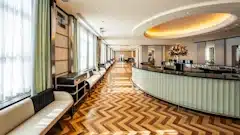
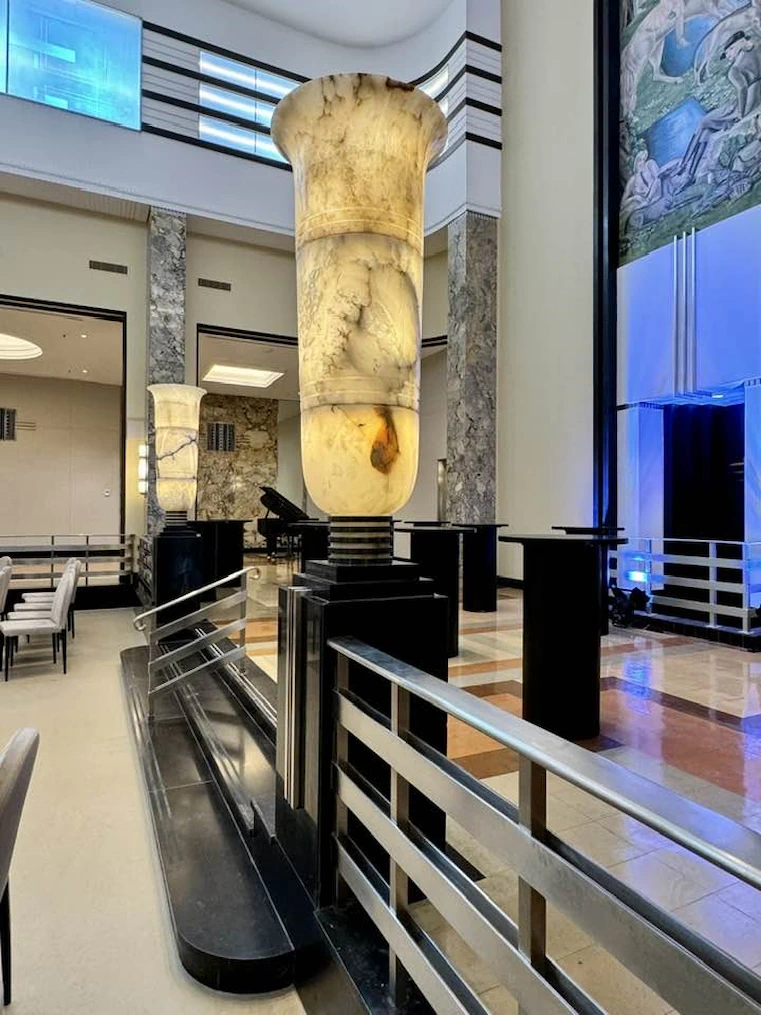
The space was commissioned under Lady Flora Eaton and designed by Jacques Carlu, the French architect associated with grand Art Deco design. The restaurant’s look drew inspiration from the first-class dining room of the S.S. Île-de-France, the famous French ocean liner. That influence gave the room its polished, ship-like sophistication: clean lines, elegant proportions, reflective surfaces, and a sense of travel without leaving downtown Montreal.
In plain lunch-break language: this was not a quick sandwich counter. This was a “sit up straighter and maybe don’t spill soup on yourself” room.
The Revived Le 9e Experience
The best way to grasp the scale and glamour of the restored room is to see it in motion.
Why Le 9e Became So Important to Montreal Memory
Many restaurants become beloved for their food. Others, because of the people who gathered there. Le 9e had both, but its architecture gave it another layer of significance.
For generations of Montrealers, Eaton’s Ninth Floor was tied to family outings, downtown shopping days, special lunches, and a version of Montreal that felt polished and grand. It holds the same kind of place in the city’s heart that all great comfort food institutions do: even after the restaurant closed, people remembered the room. They remembered the feeling of being there.
That is why the space did not disappear from public imagination after Eaton’s closed in 1999. Instead, it became a preservation story.
The restaurant was designated a heritage site by the Québec government in 2000, helping protect its architectural value. But protection is not the same as daily life. For years, Le 9e was preserved but inaccessible to most people. The room existed, but its public role was suspended.
That long pause is part of what makes the revival so meaningful.
The 2024 Reopening Was the Beginning, Not the Whole Story
When Le 9e reopened in 2024, it was easy to treat the event as a comeback headline. And fair enough. After roughly 25 years of closure, reopening the space was big news.
But now that the reopening itself is no longer new, the better question is: what is Le 9e today?
The answer is more interesting than a simple “historic restaurant reopens” story.
Le 9e has returned as a multi-use heritage destination. The revived space includes Restaurant Île de France, the Le French Line cocktail bar, private rooms, and event spaces. It can serve as a dining room, a cocktail bar, a venue for cultural programming, and a setting for private events.
That flexibility is important. A heritage restaurant does not survive on nostalgia alone. People may visit once for the memory, but a revived landmark needs a reason to be part of the city’s present.
Le 9e now has that chance.
Restaurant Île de France: Heritage Dining Without Freezing Time
Restaurant Île de France gives the revived Le 9e its dining identity.
The restaurant’s name connects directly to the ocean liner inspiration behind the original room. But the current experience is not simply an attempt to recreate a 1930s menu plate-for-plate. That would be charming for about seven minutes, and then someone would inevitably ask where the modern wine list is.
Instead, the revived restaurant blends old-world French influence with contemporary Montreal dining. The room carries the heritage. The menu and service have to work for today.
That balance is exactly what makes a restored restaurant interesting. The point is not to pretend the past never ended. The point is to let the past shape a place that still feels alive now.
For lunch, dinner, brunch, cocktails, or a special downtown meal, Le 9e offers something rare: a dining experience where the room itself is part of the reason to go.
Le 9e is not the only Montreal dining institution with a story worth telling. Revisit the memories of Piazza Tomasso or step back into the Woolworth’s lunch counter era for more of the city’s table-side history.
The Art Deco Design: Why the Room Still Matters
Le 9e is one of Montreal’s great Art Deco interiors.
Art Deco design often combines glamour, geometry, symmetry, and modern materials. In Le 9e, those qualities are tied to the ocean liner inspiration behind the room. The result is elegant without being fussy, dramatic without being ridiculous, and historic without feeling dusty.
The restoration, led by heritage specialists EVOQ Architecture, had to respect the space’s original identity while also making it safe, comfortable, and practical for modern use. That is not easy work. Heritage restaurants are complicated because they must satisfy two very different demands simultaneously.
They need to preserve what makes the room special.
They also need to function as actual restaurants.
That means modern building codes, ventilation, lighting, accessibility considerations, kitchen requirements, event logistics, guest comfort, and all the invisible systems diners rarely think about unless something goes wrong. Nobody says, “What a magical evening, the electrical upgrades were exquisite,” but without that work, the room cannot operate.
The success of Le 9e lies in the restoration, which allows people to experience the architecture again without turning the space into a sealed display case.
Why This Revival Feels Positive
Not every restaurant revival works.
Some return as theme-park versions of themselves. Some trade too heavily on nostalgia. Some preserve the shell but lose the spirit. Others chase modernity so aggressively that the old name becomes little more than a logo.
Le 9e has a better opportunity because its greatest asset is not a single dish or a celebrity association. Its greatest asset is the room itself.
The revived Le 9e gives Montrealers and visitors a chance to use a landmark again. That is a positive development for heritage preservation because buildings and interiors are easier to care about when people can experience them directly.
A restored dining room that welcomes guests, hosts events, serves meals, and appears in the city’s cultural calendar is more than a memory. It becomes part of daily urban life again.
That is the real story now.
A Heritage Restaurant Site That Came Back to Life
Le 9e is especially interesting from the standpoint of heritage restaurants because it shows one possible future for historic dining spaces.
Many old restaurants vanish completely. Others survive only in photographs, menus, postcards, or family stories. A few are preserved architecturally but lose their original public function.
Le 9e has taken a different path.
It was protected, restored, and reopened in a way that allows people to return not only as observers, but as diners, guests, and eventgoers. That makes it one of the stronger examples of restaurant heritage revival in Montreal.
The room’s value is not only in what it was. Its value is also in what it can now become.
Visiting Le 9e Today
Le 9e is located on the ninth floor of the Centre Eaton de Montréal in downtown Montreal.
Visitors can experience the space through Restaurant Île de France, the Le French Line cocktail bar, and events held in the larger venue areas. Because hours, menus, private events, and programming can change, it is best to check the official Le 9e website or reservation platforms before planning a visit.
That is especially true if your main goal is to see a specific room, attend an event, or dine at a particular time. Heritage spaces are wonderful, but they do not always run on “I wandered in because the elevator looked promising” logic. If you are coming mainly for the architecture, a reservation or a seat at the bar is the most reliable way in, and guided tours should not be assumed unless they are listed by Le 9e, Centre Eaton, or another official cultural organization.
For Montrealers, Le 9e offers a chance to reconnect with a landmark that many thought they might never properly experience again. For visitors, it offers a rare combination: a meal, a drink, and a significant piece of Montreal architectural history in one place.
Visitor Tips for Le 9e
Reserve ahead: Le 9e is a working restaurant and event venue, and private functions can limit access to parts of the space. A reservation at Restaurant Île de France is the surest way to experience the room.
The bar is the low-commitment option: A cocktail at Le French Line lets you take in the Art Deco interior without booking a full dinner.
Check the calendar before you go: Hours, menus, and cultural programming change. Confirm details on the official Le 9e website or a reservation platform, especially for a specific date or room.
Look up and around: The ship-like proportions, clean Carlu lines, and reflective surfaces reward slow attention. The room is the headline attraction, so give it time.
Pair the visit with the history: Reading about the original Ninth Floor before you go makes the restored details far more meaningful when you are standing in the room.
Planning Your Visit
Location: Ninth floor of the Centre Eaton de Montréal, in the heart of downtown Montreal.
Reservations: Book through the official Le 9e website or major reservation platforms for Restaurant Île de France.
Events and Programming: The venue hosts cocktails, private functions, and cultural events. Check current programming if your visit depends on seeing a particular space.
Make It a Heritage Day: Cannot get a table yet? Bake a piece of Eaton’s history at home with this Eaton’s wheat germ muffins copycat recipe while you plan the trip.
Le 9e Frequently Asked Questions
Is Le 9e open now?
Yes. Le 9e reopened to the public in 2024 and now operates as a revived restaurant, cocktail, and event destination in downtown Montreal. Because hours can change, visitors should check the official Le 9e website or current reservation listings before going.
When did Eaton’s 9th floor restaurant open?
Eaton’s Ninth Floor Restaurant opened in 1931 on the top floor of the Eaton’s department store in downtown Montreal. Commissioned under Lady Flora Eaton and designed by French architect Jacques Carlu, it served generations of Montrealers until the store closed in 1999.
Is Le 9e the same as Eaton’s Ninth Floor Restaurant?
Le 9e occupies the historic ninth-floor space of the former Eaton’s restaurant. Today’s revived venue includes Restaurant Île de France, cocktail and event spaces, and modern operations, so it is both a continuation of the historic site and a contemporary reinterpretation.
What is Restaurant Île de France?
Restaurant Île de France is the dining room within Le 9e. Its name reflects the original inspiration for the space: the S.S. Île-de-France, the French ocean liner whose first-class elegance influenced the design of Eaton’s Ninth Floor Restaurant.
You Might Also Like
Another beloved Montreal-born dining institution, remembered course by course.
Recreate the most famous muffin in Montreal restaurant history at home.
A taste of the five-and-dime lunch counter, rebuilt for your kitchen.
Why the meals we remember best were rarely about the food alone.
Conclusion: Le 9e Is No Longer Just a Comeback Story
Le 9e’s reopening was important, but the stronger story now is its return to relevance.
This is a heritage restaurant site that has been positively revived. It honors the glamour of Eaton’s Ninth Floor without asking the space to remain frozen in 1931. It gives Montrealers and visitors access to an Art Deco landmark that has been out of reach for too long. And it proves that restaurant history does not always have to end as nostalgia.
Sometimes, with enough patience, preservation, money, stubbornness, and probably a terrifying number of building-code meetings, the room gets another service.
Le 9e is one of those rare cases.
A landmark remembered.
A restaurant revived.
A piece of Montreal’s dining history, back in use.
Medical Disclaimer: The nutritional information provided in this article is for informational purposes only. While we strive for accuracy, individual responses to foods vary. Always consult with your healthcare provider or registered dietitian about dietary changes.