
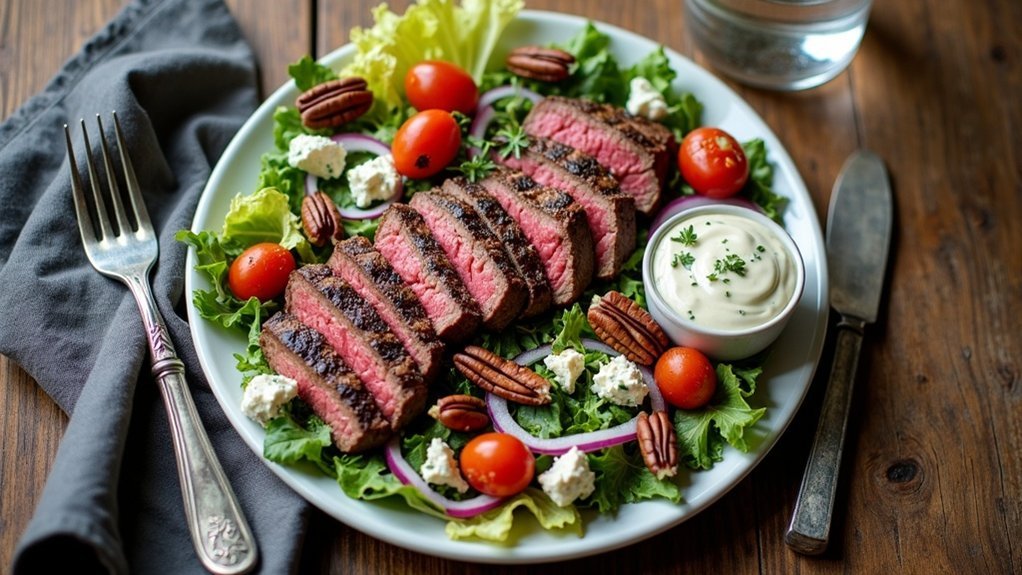
A great steak salad doesn’t start at the grocery store — it starts in your fridge, with last night’s leftover steak sitting in foil, looking slightly less impressive than it did twelve hours ago. Slice it thin against the grain, toss it with crisp greens and a two-minute homemade blue cheese dressing, and you’ve got a lunch that tastes like a steakhouse detour on a Tuesday afternoon. Ten minutes, one bowl, 32 grams of protein, 7 grams of net carbs.
⏱️ Quick Stats
Why This Steak Salad Works
Protein-forward and genuinely filling: At 32g of protein per serving, this steak salad keeps you satisfied through the afternoon without the energy crash that follows a carb-heavy lunch. The combination of red meat protein with the healthy fats in blue cheese dressing creates a high-satiety meal that controls appetite naturally.
Under 10g net carbs without trying: Mixed greens, cherry tomatoes, and cucumber are some of the lowest-carb vegetables available. Combined with zero-carb steak and a dressing built on mayo, sour cream, and cheese, this entire plate lands at roughly 7g net carbs — well within keto range without any special ingredients or substitutions.
Anti-waste cooking at its best: Leftover steak is one of the most underused proteins in the average fridge. Cold sliced steak actually works better in a salad than freshly grilled — it’s firmer, easier to slice thin, and the flavors have had time to concentrate. This steak salad turns yesterday’s dinner into today’s best meal.
Omega-rich, nutrient-dense greens: Mixed spring greens deliver folate, vitamin K, and iron. Cherry tomatoes add lycopene and vitamin C. Cucumber contributes hydration and silica. The blue cheese dressing brings calcium and probiotics from the fermented cheese cultures. Nothing on this plate is filler.
Ten minutes, no cooking required: The steak is already cooked. The dressing is five ingredients whisked together. The salad is assembled, not constructed. This is legitimately one of the fastest high-protein lunches you can make — faster than ordering delivery, and dramatically better for you.
Restaurant Steak Salad vs. This Homemade Version
| Metric | Typical Restaurant | This Recipe | Difference |
|---|---|---|---|
| Net Carbs | 18–25g | 7g | -11 to -18g |
| Sugar | 8–12g | 4g | -4 to -8g |
| Protein | 28–35g | 32g | Comparable |
| Sodium | 900–1,400mg | ~480mg | -420 to -920mg |
| Calories | 550–750 | 410 | -140 to -340 cal |
| Hidden Sugars? | Often (bottled dressing) | None | — |
| Cost | $18–28 | ~$5 (using leftovers) | -$13 to -$23 |
| Prep Time | 15–20 min (restaurant wait) | 10 min | Faster |
Restaurant values based on typical steakhouse salad with house blue cheese dressing, croutons, and candied nuts. Homemade version eliminates croutons, candied toppings, and bottled dressing sugars.
Here’s everything you need to turn leftover steak into a proper steak salad with homemade blue cheese dressing — scroll down for the full recipe card with quantities, nutrition, and step-by-step instructions.
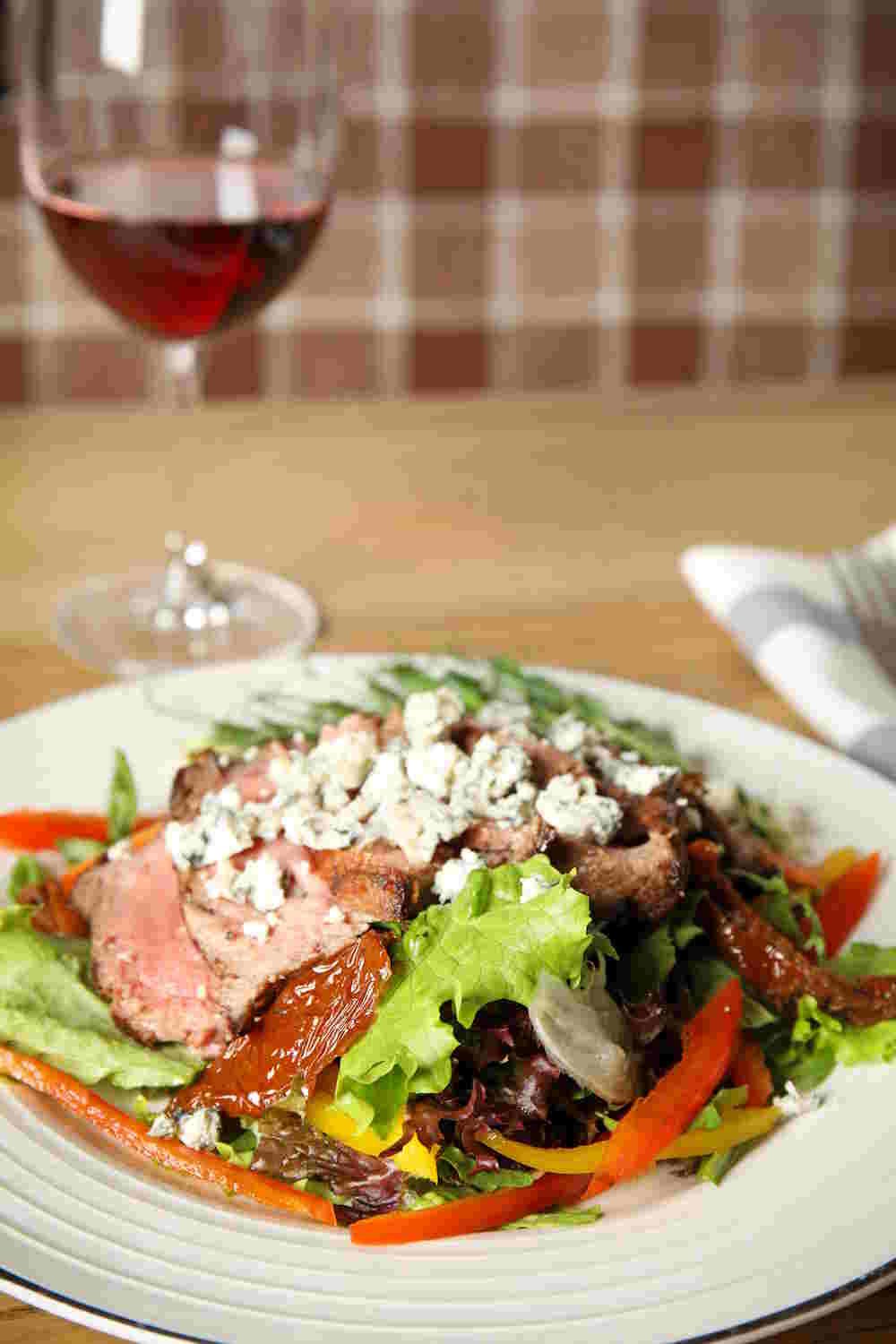

Steak Salad with Blue Cheese Dressing | Keto & Diabetic-Friendly
Ingredients
Equipment
Method
- Make the dressing: In a small bowl, whisk together the mayonnaise, sour cream, crumbled blue cheese, lemon juice, and minced garlic until combined. Some chunks of blue cheese should remain — that’s the texture you want. Season with salt and pepper to taste. Set aside. (Dressing can be made up to 7 days ahead and stored in a sealed jar in the fridge.)
- Prep the steak: Remove the leftover steak from the fridge and let it sit at room temperature for about 10 minutes. Identify the grain — the parallel muscle fibers running through the meat — and slice perpendicular to them in thin strips, roughly ¼-inch thick. This breaks the fibers and ensures tender bites.
- Build the salad base: In a large bowl, combine the mixed greens, halved cherry tomatoes, sliced cucumber, and red onion if using. Add about half the dressing and toss gently until the greens are lightly coated — not drenched.
- Assemble and serve: Divide the dressed greens between two plates or bowls. Arrange the sliced steak on top in a single layer. Drizzle the remaining dressing over the steak. Serve immediately.
Nutrition
Notes
Tried this recipe?
Let us know how it was!Chef’s Tips for the Perfect Steak Salad
Slice against the grain — always: Find the parallel muscle fibers running through the meat and cut perpendicular to them in strips about ¼-inch thick. This breaks up the fibers so each bite is tender rather than chewy. This matters even more with leftover steak, which firms up in the fridge overnight.
Let the steak temper before slicing: Pull the steak from the fridge 10 minutes before you plan to slice it. Room-temperature meat slices more cleanly and tastes better in a salad than ice-cold beef straight from the fridge. The slight warmth also helps the steak absorb the dressing flavors.
Control the funk-to-cream ratio: The beauty of homemade blue cheese dressing is calibration. Like a milder dressing? Use more mayo and sour cream, less crumbled cheese. Want it pungent? Increase the blue cheese and add a splash of white wine vinegar. Nobody at your table needs to negotiate — make it your way.
Don’t overdress the greens: Toss the greens with about half the dressing first, then drizzle the rest over the sliced steak on top. This keeps the greens lightly coated rather than drowning, and lets the steak carry its own flavor with a separate dressing accent.
Use any leftover steak cut: Ribeye, strip, flank, sirloin, tenderloin — they all work. Fattier cuts (ribeye, strip) bring more richness. Leaner cuts (flank, sirloin) let the blue cheese dressing do the heavy lifting. There’s no wrong answer here.
Upgrade with simple additions: A handful of thinly sliced red onion adds bite. A few shavings of Parmesan deepen the umami. Toasted walnuts (if not nut-free) add crunch. Sliced radishes bring peppery contrast. None of these are required, but any of them elevates the plate.
📦 Storage & Serving Suggestions
Refrigerator Storage: Store the dressing and the salad components separately — dressing keeps 5–7 days in a sealed jar in the fridge, and dressed salad goes soggy within hours. Sliced steak stores well for 3–4 days refrigerated in an airtight container.
Meal Prep Strategy: Make the blue cheese dressing on Sunday and portion it into small containers. Slice your leftover steak and store it separately. Each morning, grab greens, steak, and dressing — assemble at lunch. This is one of the fastest protein-packed office lunch salads you can prep.
Pack for Work: Layer it smart — dressing on the bottom of a mason jar or sealed container, then tomatoes and cucumber, then steak, greens on top. Flip and shake at lunch. Keep an ice pack in your lunch bag if you won’t have fridge access. For better greens, a quality salad spinner at home makes a noticeable difference in crispness.
Complete the Meal: This steak salad is substantial on its own, but if you want more volume, add half an avocado (3g net carbs) or a handful of marinated artichoke hearts. For a lighter pairing, a cup of bone broth on the side adds collagen and warmth without carbs. On warmer days, pair it with sparkling water and lemon for a proper lunch experience.
Dairy-Free Swap: Replace the blue cheese dressing with a simple red wine vinaigrette — 2 tablespoons olive oil, 1 tablespoon red wine vinegar, 1 teaspoon Dijon mustard, salt and pepper. Different character, still excellent with steak, and fully dairy-free.
Frequently Asked Questions
Can I use any cut of leftover steak for steak salad?
Yes — ribeye, strip, flank, sirloin, and tenderloin all work well. Fattier cuts like ribeye bring more richness on their own, while leaner cuts like flank or sirloin let the dressing carry more of the flavor. The key technique is to slice thin against the grain, regardless of the cut, which keeps every bite tender rather than chewy.
Do I have to use leftover steak, or can I cook it fresh?
Either works. If cooking fresh, grill or pan-sear your steak to medium or medium-rare, let it rest for 5 minutes, then slice it thin against the grain. The salad comes together in the time it takes the steak to rest. Leftover steak has one advantage — it’s firmer from refrigeration, which makes it easier to slice into clean, thin strips.
How long does homemade blue cheese dressing last?
Stored in a sealed jar or airtight container in the fridge, homemade blue cheese dressing keeps for 5–7 days. The flavor actually improves after a day as the blue cheese mellows into the mayo and sour cream base. Give it a stir before using — separation is normal and doesn’t mean it’s gone bad.
Is steak salad keto-friendly?
This steak salad comes in at roughly 7g net carbs per serving — well within standard keto macros of under 20g net carbs daily. The protein and fat from the steak and blue cheese dressing provide high satiety, making it an ideal keto lunch that keeps you full without the afternoon energy crash.
🍽️ You Might Also Like
High-protein, packable picks
Seasonal salads you’ll crave
Another great way to use steak
A steak salad is one of those meals that punches well above its effort level. Ten minutes of slicing and whisking turns a fridge leftover into something you’d happily pay twenty dollars for at a restaurant. The blue cheese dressing is the bridge — tangy and rich enough to stand up to charred beef, creamy enough to coat the greens, and simple enough that you’ll stop buying bottles. Make it once, and it’ll become your default answer to “what do I do with this leftover steak?”
Medical Disclaimer: The nutritional information and diabetic-friendly adaptations provided in this article are for informational purposes only. While we strive for accuracy, we are culinary experts, not medical doctors. Individual responses to foods vary, and you should always consult with your healthcare provider or registered dietitian about dietary changes, especially if you’re managing diabetes or other health conditions. Always monitor your blood sugar as recommended by your healthcare team.


