
Sweet, crunchy, spiced—and just 5g net carbs. This low-carb charoset uses tart Granny Smith apples and toasted walnuts to create the essential Seder plate dish without the sugar spike.
⏱️ Quick Stats
✓ Gluten-Free
✓ Diabetic-Friendly
✓ Dairy-Free
✓ Vegan
Charoset is the sweet, chunky mixture on every Seder plate—symbolizing the mortar Jewish slaves used to build in ancient Egypt. Traditional recipes often use honey, dates, and sweet wine, which can cause blood sugar spikes.
This version retains the flavor and most of the sweetness, using naturally tart green apples and a dry red wine instead. The result tastes authentic but won’t derail your keto or diabetic meal plan.
🥑 Why This Recipe Works for Keto
Green Apples Over Red: Granny Smith apples have fewer natural sugars and more tartness than sweet varieties like Fuji or Honeycrisp.
Walnuts Add Healthy Fats: Heart-healthy omega-3s from walnuts improve the fat-to-carb ratio while adding satisfying crunch.
Dry Wine, Not Sweet: Dry red wine has roughly 4g carbs per glass versus 10-14g for sweet kosher wines.
No Added Sweeteners: The natural sweetness from apples and cinnamon is enough—no honey or sugar needed.
Portion-Friendly: Charoset is traditionally eaten in small amounts, making it naturally low-impact even with some carbs.
The History Behind Charoset
Charoset appears on every Seder plate alongside bitter herbs, a roasted egg, and the shank bone. It represents the mortar used by Jewish slaves to build structures in ancient Egypt—a sweet reminder of bitter times.
Different Jewish communities have their own versions. Ashkenazi charoset (Eastern European) typically features apples and walnuts. Sephardic versions (Mediterranean and Middle Eastern) often use dates, figs, and different spice blends. Both traditions share the same symbolic purpose.
During the Seder, charoset is eaten with bitter herbs in what’s called the Hillel sandwich—the sweetness balancing the bitterness, representing the contrast between suffering and redemption.
Traditional vs. Low-Carb Charoset
| Ingredient | Traditional | Low-Carb (This Recipe) |
|---|---|---|
| Apples | Sweet (Fuji, Gala) | Tart (Granny Smith) |
| Sweetener | Honey (1-2 tbsp) | None needed |
| Wine | Sweet Manischewitz | Dry red wine |
| Dried Fruit | Dates, raisins | Optional (small amount) |
| Net Carbs (2 tbsp) | 12-15g | 5g |
How to Make Low-Carb Charoset
This recipe comes together in about 15 minutes with no cooking required. The key is chopping everything to the right texture—fine enough to spread but chunky enough to have character.
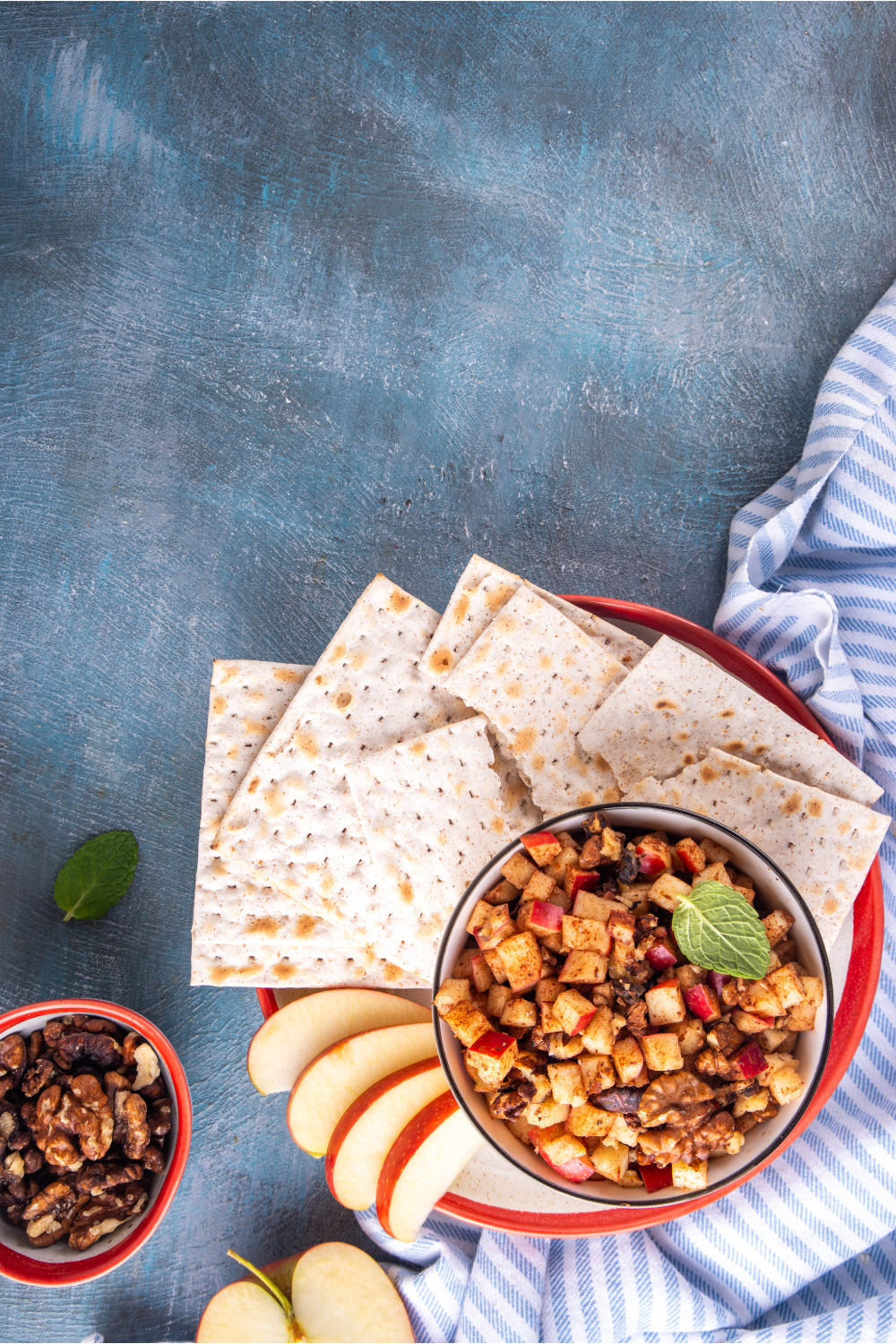

Low-Carb Charoset
Ingredients
Equipment
Method
- Toast the nuts: Add walnuts and almonds to a dry skillet over medium heat. Stir frequently for 3-4 minutes until fragrant and lightly golden. Transfer to a plate to cool, then chop.
- Prep the apples: Core the Granny Smith apples (no need to peel). Finely dice into approximately 1/4-inch pieces. Place in a medium bowl and toss with lemon juice to prevent browning.
- Combine everything: Add the toasted nuts, cinnamon, ginger (if using), salt, and nutmeg to the apples. Pour in 2 tablespoons of dry red wine and toss to combine.
- Adjust and rest: Taste and add more wine if needed—you want the mixture to just hold together without being soggy. Cover and refrigerate for at least 30 minutes (or up to 2 days) to let flavors meld.
- Serve: Bring to room temperature 30 minutes before serving. Give a gentle stir and serve on the Seder plate, alongside matzo, or as a condiment with roasted meats.
Nutrition
Notes
Tried this recipe?
Let us know how it was!Chef’s Tips for Perfect Charoset
Toast Those Walnuts: Raw walnuts taste flat. A few minutes in a dry pan transforms them—deeper flavor, better crunch.
Dice Small, Don’t Mush: You want texture, not applesauce. Aim for pieces about the size of a pea.
Make It Ahead: Charoset improves as it sits. Make it 1-2 days before the Seder for best flavor.
Adjust the Wine: Start with less wine than you think—you can always add more. Too much makes it soggy.
Keep the Skin On: Apple skin adds fiber, color, and a bit of tartness. No need to peel.
📦 Storage & Serving Suggestions
Refrigerator Storage: Store in an airtight glass container for up to 3 days. Flavors improve after 24 hours.
Freezer Storage: Freezes well for up to 3 months. Thaw overnight in the refrigerator.
Serving Temperature: Best at room temperature. Remove from fridge 30 minutes before serving.
Beyond the Seder: Use leftover charoset as a topping for Greek yogurt, spread on almond flour crackers, or alongside roasted chicken.
Complete the Meal: Pair with gluten-free matzo ball soup for the full Passover experience. Find more ideas in our keto Passover guide.
Frequently Asked Questions
What is charoset made of?
Traditional charoset contains chopped apples, walnuts, cinnamon, and sweet wine. This low-carb version uses tart Granny Smith apples and dry red wine to reduce sugar while keeping the authentic flavor.
Is charoset keto-friendly?
Traditional charoset with honey and sweet wine is not keto-friendly. This low-carb version has just 5g net carbs per 2-tablespoon serving, making it suitable for keto and diabetic meal plans.
Can I make charoset without wine?
Yes. Substitute unsweetened grape juice or pomegranate juice for a similar flavor. For completely alcohol-free charoset, use a splash of apple cider vinegar mixed with water.
How far in advance can I make charoset?
Charoset can be made 2-3 days ahead and stored in the refrigerator. The flavors improve as the ingredients meld. Stir gently before serving.
🍽️ You Might Also Like
Gluten-free with almond flour
Complete keto Seder menu
4-ingredient Passover classic
Your matzo meal replacement
Charoset is one of those dishes where small changes make a big difference for blood sugar. Swap the sweet wine for dry, skip the honey, and choose tart apples—you’ll still have a dish that honors tradition and tastes like Passover.
Medical Disclaimer: The nutritional information and diabetic-friendly adaptations provided in this article are for informational purposes only. While we strive for accuracy, we are culinary experts, not medical doctors. Individual responses to foods vary, and you should always consult with your healthcare provider or registered dietitian about dietary changes, especially if you’re managing diabetes or other health conditions. Always monitor your blood sugar as recommended by your healthcare team.


