
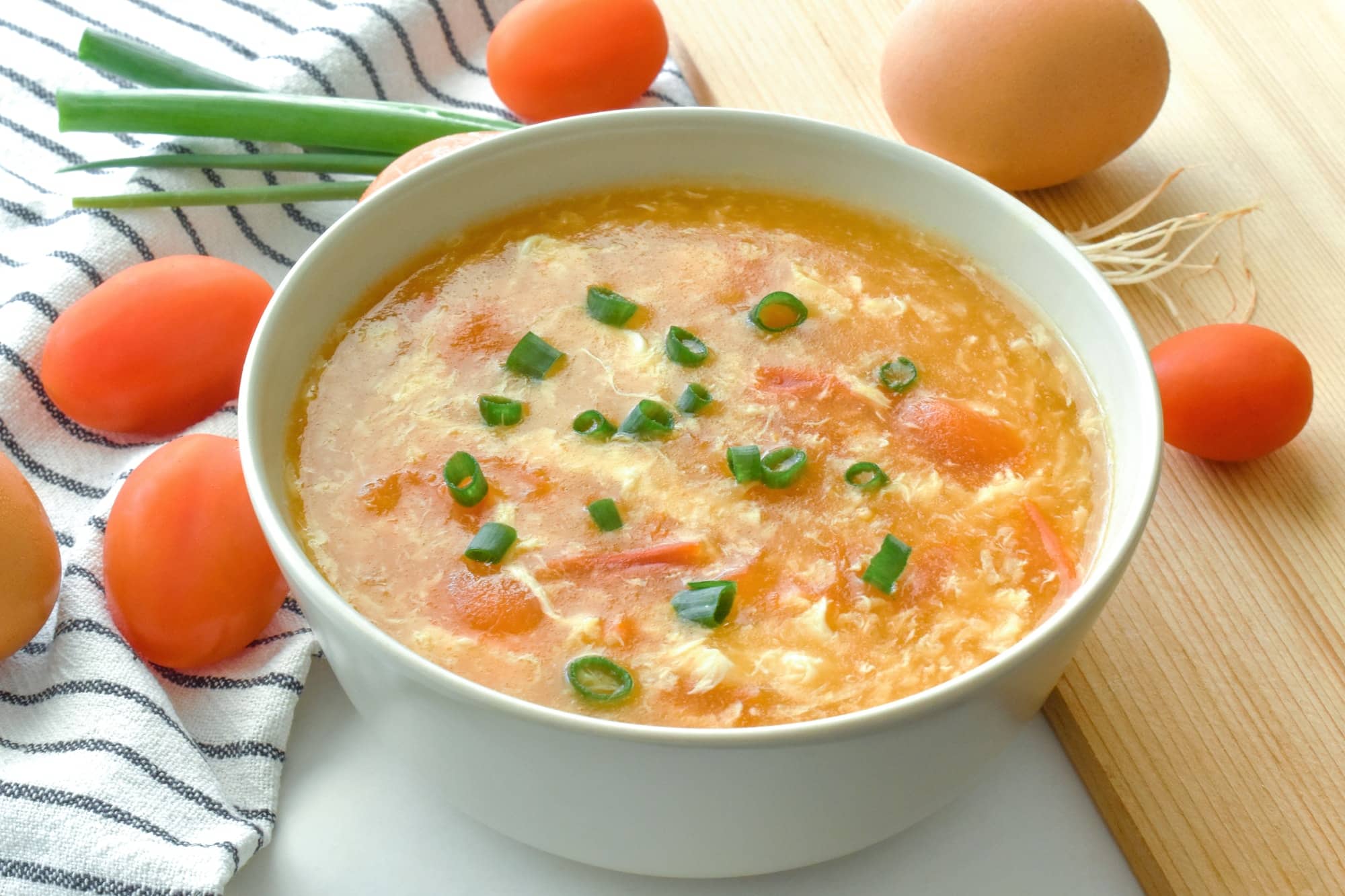
Ten minutes. One pot. Restaurant egg drop soup that’s better than takeout and costs a fraction of the price. The secret is in the pour—a slow, steady stream of beaten egg creating those signature silky ribbons.
⏱️ Quick Stats
Chinese restaurant egg drop soup sounds deceptively simple—and it is, once you understand two things: the broth must be at a rolling boil, and the eggs go in slowly. Rush either step, and you get scrambled egg soup instead of those delicate, feathery ribbons. Get it right, and you have a bowl that’s light, warming, and endlessly satisfying.
🥚 Why This Egg Drop Soup Recipe Works
Naturally Light on Carbs: Just 3g net carbs per bowl—mostly from the small amount of cornstarch used to give the broth that characteristic glossy body. Swap it for ¼ tsp xanthan gum to drop that to near zero.
Complete Protein in Every Bowl: Two whole eggs across four servings deliver high-quality complete protein with all essential amino acids. Eggs also contain choline, which supports brain function and liver health.
Sodium Awareness: At 890mg sodium per serving, the broth contributes the most. Using low-sodium chicken broth brings that down to approximately 350–400mg—a meaningful difference if you’re watching your intake.
Nothing Hidden: Takeout egg drop soup often contains MSG, artificial colour, and thickeners you wouldn’t choose yourself. This version uses five clean ingredients. You control everything that goes in the pot.
Ready in 15 Minutes: Few hot meals come together this fast. It works as a starter, a light lunch on its own, or a side alongside a protein when you need something warm without effort.
Restaurant Takeout vs. Homemade Egg Drop Soup
Same comfort, very different story on what’s actually in the bowl:
| Factor | Restaurant Takeout | This Recipe | Advantage |
|---|---|---|---|
| Total Time | 20–30 min (delivery) | 15 min | Homemade wins |
| Sodium | 1,100–1,400mg | 890mg | Homemade wins |
| Net Carbs | 8–12g | 3g | Homemade wins |
| Additives | MSG, artificial colour | None | Homemade wins |
| Cost per Serving | $3–5 | ~$0.60 | Homemade wins |
| Egg Ribbon Quality | Consistent | Excellent once practiced | Tie |
The only place restaurant egg drop soup wins is consistency—they’ve made it a thousand times. After your second attempt at home, you’ll be there too.
Chef’s Tips for Perfect Egg Drop Soup
Temperature Is Everything: The broth must be at a full rolling boil when the eggs go in. A gentle simmer gives you cloudy, wispy bits. A proper boil gives you distinct, silky ribbons. Don’t rush the preheat.
Pour Height Matters: Hold the bowl of beaten egg about six inches above the pot as you pour. The fall stretches the egg stream thinner, creating longer, more delicate ribbons. Pour from the rim of the pot and you get thick clumps.
The Whirlpool Technique: Stirring in a circular motion before pouring the eggs creates a current that wraps and stretches the ribbons as they set. Stir slowly—a fast spin creates turbulence that breaks the ribbons apart.
Sesame Oil Off Heat: Add sesame oil after removing the pot from the burner. High heat volatilizes the aromatic compounds that make it smell like restaurant soup. Off heat, those aromas stay in the bowl.
Serve Immediately: This soup does not hold. The eggs continue cooking in the hot broth and the ribbons tighten and toughen within minutes. Make it last and serve it first.
Customize Freely: Tofu cubes, frozen corn, a handful of baby spinach, thinly sliced mushrooms—all work beautifully. Add them to the boiling broth before the cornstarch slurry step so they have time to heat through.
The Egg Drop Soup Recipe
Here’s the complete recipe with precise measurements and timing:
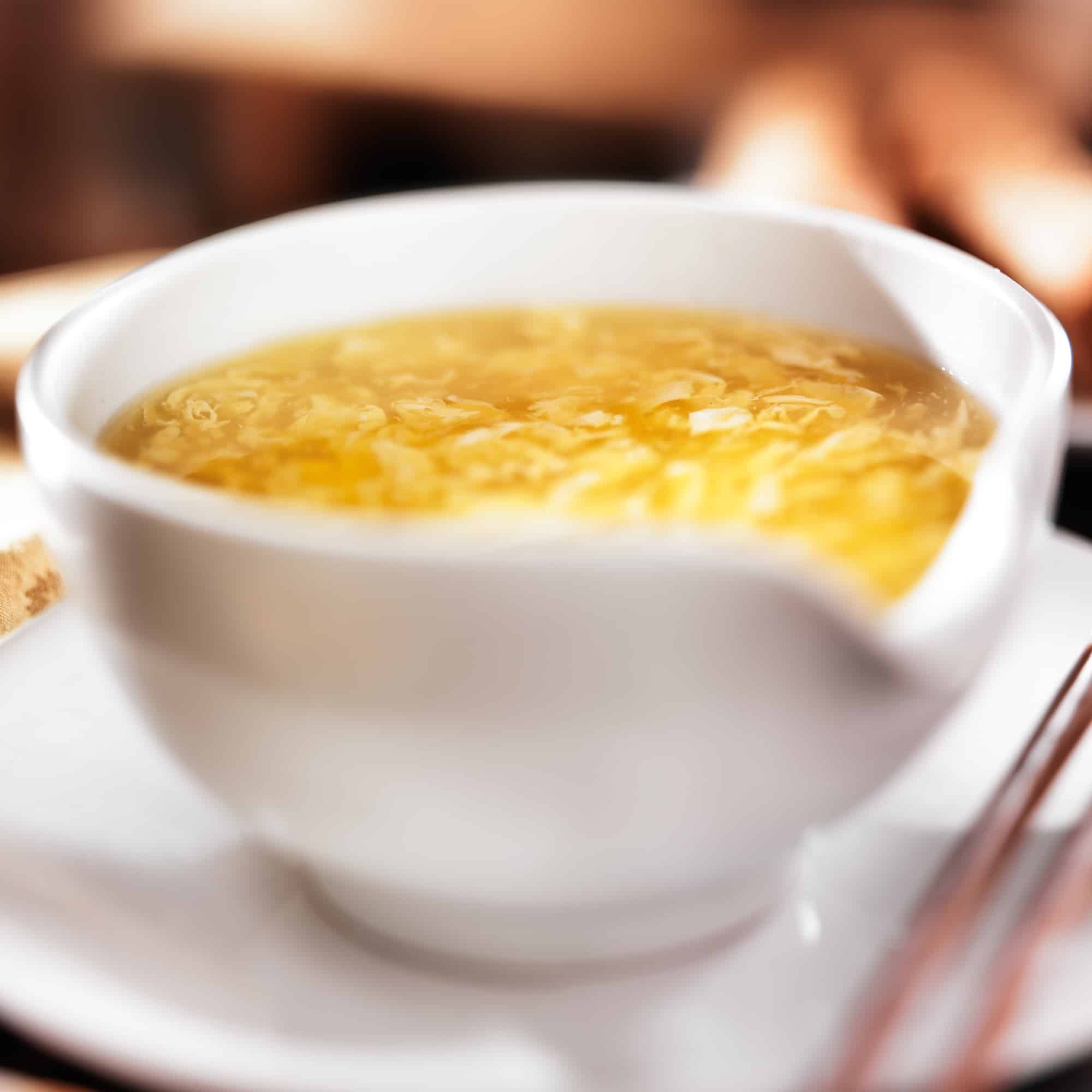

Egg Drop Soup Recipe | Keto & Diabetic-Friendly
Ingredients
Equipment
Method
- Bring chicken broth to a boil in a medium pot over high heat. Watch for large bubbles breaking the surface, then reduce heat slightly to maintain a vigorous but controlled simmer.
- In a small bowl, whisk cornstarch with cold water until completely smooth with no lumps — the mixture should look like thin white cream. Always use cold water; hot water will cook the starch and create clumps.
- Stir the cornstarch slurry into the simmering broth. Stir continuously until the broth thickens slightly, about 1 minute. Reduce heat to medium.
- Beat eggs vigorously in a small bowl until pale yellow and frothy, about 1–2 minutes. The frothy texture is what creates delicate ribbons rather than clumps.
- Using a fork or chopsticks, stir the broth in a slow circular motion. Hold the beaten eggs about 6 inches above the pot and pour in a thin, steady stream. Continue stirring gently. Let the eggs set for 30 seconds without stirring — they will separate into silky, cloud-like ribbons.
- Remove from heat. Stir in sesame oil, white pepper, and salt. Taste and adjust seasoning. Ladle into bowls, garnish generously with sliced green onions, and serve immediately.
Nutrition
Notes
Tried this recipe?
Let us know how it was!📦 Storage & Serving Suggestions
Refrigerator Storage: Store leftover soup in an airtight container for up to 2 days. The egg ribbons will tighten considerably as they cool—this is normal. The flavour holds well even if the texture changes.
Reheating: Warm gently over medium-low heat. Don’t boil—high heat toughens the cooked egg. A microwave on 50% power works well. Give it a stir before serving.
Freezer: Not recommended. Cooked eggs become rubbery after freezing and thawing. The broth itself freezes fine—freeze the base without eggs and add fresh eggs when reheating.
Meal Prep Strategy: Make the broth base (with slurry) ahead of time and refrigerate. When ready to serve, bring to a full boil and add fresh beaten eggs. Takes two minutes and tastes just-made.
Complete the Meal: Serve alongside cauliflower fried rice for a full Chinese-inspired lunch under 400 calories. Also works as a starter before cucumber sushi rolls or alongside any Asian-style protein.
Egg Drop Soup FAQs
Why did my egg drop soup turn out cloudy instead of clear?
Cloudy broth usually means the eggs went in before the broth reached a full boil, or they were poured too fast. The boiling temperature sets the egg proteins almost instantly, creating distinct ribbons. A simmer cooks them slowly and diffuses egg throughout the broth, turning it opaque. Start over with a proper rolling boil and pour the eggs in a slow, thin stream.
Can I make egg drop soup without cornstarch?
Yes. The cornstarch creates the glossy, slightly thickened broth you get at restaurants, but the soup works without it—it will just be thinner and clearer. For a keto-friendly alternative, use ¼ teaspoon xanthan gum mixed into the cold water instead. It behaves similarly and adds virtually zero carbs.
Is egg drop soup gluten-free?
It can be. The only ingredient to watch is soy sauce, which is typically made with wheat. Substitute tamari (which is naturally gluten-free) in equal amounts, and the rest of the recipe is completely gluten-free. Check your chicken broth label as well—some brands add flavourings that contain gluten.
Can I add vegetables or protein to egg drop soup?
Absolutely. Mushrooms, baby spinach, frozen peas, silken tofu, or thinly sliced green onions all work well. Add firm vegetables to the broth before the cornstarch slurry so they have time to soften. Delicate greens like spinach can go in right after the eggs—they wilt in seconds from the residual heat.
🍽️ You Might Also Like
Japanese-style, 5 ingredients
Low-carb Chinese takeout favourite
No rice, all the flavour
Rich, satisfying, 20 minutes
Fifteen minutes, one pot, five ingredients. Egg drop soup is proof that a simple technique beats complicated recipes every time. Master the pour, and you’ll never order it for delivery again.
Medical Disclaimer: The nutritional information provided in this article is for informational purposes only. While we strive for accuracy, we are culinary experts, not medical doctors. Individual responses to foods vary, and you should always consult with your healthcare provider or registered dietitian about dietary changes, especially if you’re managing a health condition.


