
Published May 11, 2026 · Updated June 26, 2026
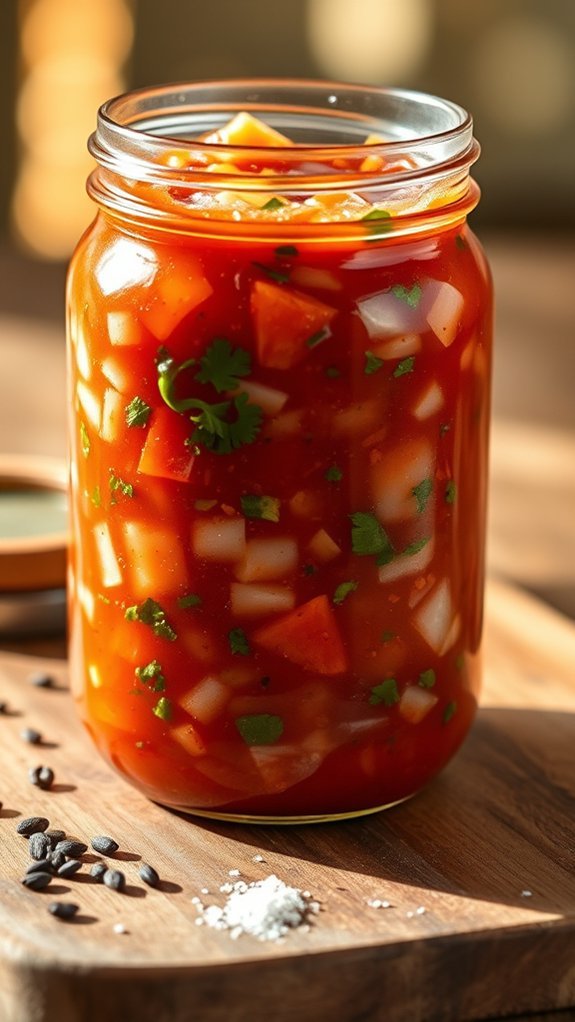
This canning salsa recipe turns 16 cups of fresh tomatoes, onions, and jalapeños into eight pints of bold, shelf-stable flavor that crushes anything in the grocery aisle. The two-hour simmer concentrates everything down, and the 15-minute water bath locks it in for months of pantry-ready salsa. Make one batch in late summer, and you’ll be opening jars of sunshine well into February.
Quick Stats
Gluten-Free
Vegan
Dairy-Free
Nut-Free
Why This Recipe Works
Concentrated tomato flavor: The two-hour uncovered simmer drives off excess water and intensifies the natural sweetness of the tomatoes. Store-bought salsa skips this step, which is why most jars taste watery and flat by comparison.
Safe acid balance: 2.5 cups of white vinegar plus a tablespoon of lime juice per jar bring the pH below 4.6, the tested threshold for safe water bath canning of tomato-based salsa. This is not a place to freelance with ratios.
Vegetable-forward nutrition: Each serving is built on tomatoes, onions, and peppers — naturally low in fat, rich in lycopene, and a source of vitamin C. The cooking process makes the lycopene more bioavailable than raw tomatoes.
Customizable heat: Jalapeños do the baseline work, and the optional red chili peppers let you dial the heat up without changing the acid balance or processing time.
Pantry-stable for months: A proper 15-minute water bath, sterilized jars, and tested headspace mean these jars sit on the shelf — no fridge space lost, no freezer juggling.
Store-Bought Jarred Salsa vs. This Canning Salsa Recipe
| Nutrient (per ¼ cup) | Typical Store-Bought | This Canning Salsa | Difference |
|---|---|---|---|
| Calories | 25 | 61 | +36 (concentrated) |
| Sodium | 240 mg | 8 mg | -232 mg (-97%) |
| Preservatives | Yes (sodium benzoate) | None | Clean label |
| Tomato concentration | Watery | 2-hour reduction | Thicker, bolder |
| Heat control | Fixed | Adjustable | Mild → hot |
Here is the full canning salsa recipe with exact measurements, processing times, and equipment.

Canning Salsa | Small-Batch Water Bath Recipe
Ingredients
Equipment
Method
- Peel and quarter the tomatoes (16 cups). Chop the onions (6 cups), jalapeños (2 cups), and red chili peppers (2 cups) if making the hot version. For milder salsa, remove the jalapeño seeds.
- In a blender, combine the prepared tomatoes, onions, jalapeños, and red chili peppers with the white vinegar, sugar, pickling salt, garlic powder, chili powder, black pepper, cumin seeds, and tomato paste. Blend in batches until you reach your preferred consistency — chunky or smooth.
- Pour the blended mixture into a large heavy-bottomed pot. Bring to a gentle boil over medium-high heat, then reduce heat and simmer uncovered for exactly 2 hours, stirring occasionally to prevent sticking. The salsa should reduce noticeably and thicken.
- While the salsa simmers, sterilize the canning jars, lids, and rings. Run them through the dishwasher’s sanitize cycle, or submerge in boiling water for 10 minutes. Keep everything hot until you are ready to fill.
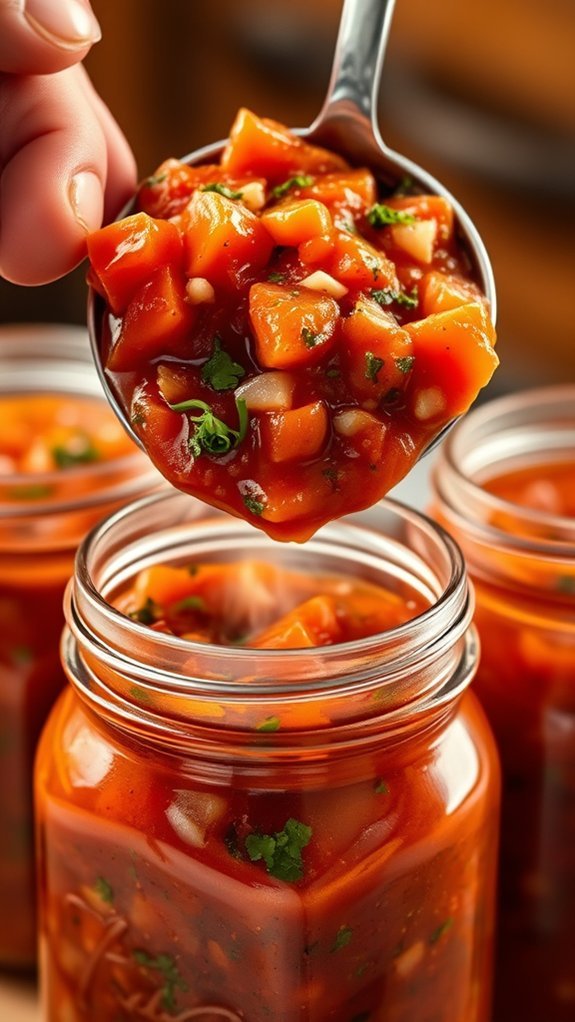
- Once the salsa has cooked down, ladle it into the hot sterilized jars, leaving ½ inch of headspace at the top. Evenly distribute the chopped cilantro across the jars and add 1 tablespoon of lime juice to each.
- Wipe each jar rim clean with a damp cloth, apply the lids, and screw on the rings finger-tight. Do not over-tighten — air needs to escape during processing.
- Submerge the filled jars in a boiling water bath, making sure they are covered by at least 1 inch of water. Process for 15 minutes, starting the timer once the water returns to a rolling boil. Adjust processing time for altitude if needed.
- Carefully remove the jars with a jar lifter and place on a towel-lined counter. Let cool undisturbed for 12–24 hours. Listen for the satisfying pop of each lid sealing. Test seals by pressing the center of each lid — it should not flex.
Nutrition
Notes
Tried this recipe?
Let us know how it was!Chef Tips for Perfect Canning Salsa
Drain your tomatoes before blending: Salt the quartered tomatoes lightly and let them drain in a colander for 30 minutes before going into the blender. This is the single biggest fix for watery salsa.
Do not shortcut the two-hour simmer: The reduction is what separates restaurant-grade salsa from grocery store sludge. Cutting it to 90 minutes leaves you with thin, vinegar-forward salsa that never recovers in the jar.
Roast peppers for depth: Char the jalapeños and red chilies over an open flame for 2–3 minutes before chopping. The smoky undertone you get is the difference between “good homemade salsa” and “the jar your friends fight over.”
Use fresh-squeezed lime juice in the jar: One tablespoon of fresh lime per pint, not bottled. Bottled lime is acceptable for safety, but fresh juice carries aromatic oils that survive processing and brighten the finished salsa.
Taste and adjust in the final 30 minutes: Seasonings concentrate as the salsa reduces. Hold off on big adjustments until the last half hour of simmering, then tweak salt and chili powder to taste.
Stick to tested ratios for canning safety: The vinegar volume in this canning salsa recipe is calibrated for safe water bath processing. Do not swap white vinegar for a lower-acid vinegar, and do not reduce the amount.
Storage and Serving Suggestions
Pantry Storage (Sealed): Properly sealed jars store in a cool, dark pantry for up to 12 months. Check seals after 24 hours — the lid should be concave and not flex when pressed.
Refrigerator Storage (Opened): Once opened, refrigerate the jar and use within 2 weeks. Transfer to a clean glass container if you notice any residue on the rim.
Freezer Storage: Not recommended in glass canning jars due to expansion. If you want a freezer version, ladle cooled salsa into freezer-safe plastic containers, leaving 1 inch of headspace, and freeze for up to 6 months.
Meal Prep Strategy: Process the full 8-pint batch in late summer when tomatoes peak. Label each jar with the date and give 2–3 jars away as gifts — they’ll be expected back the next year.
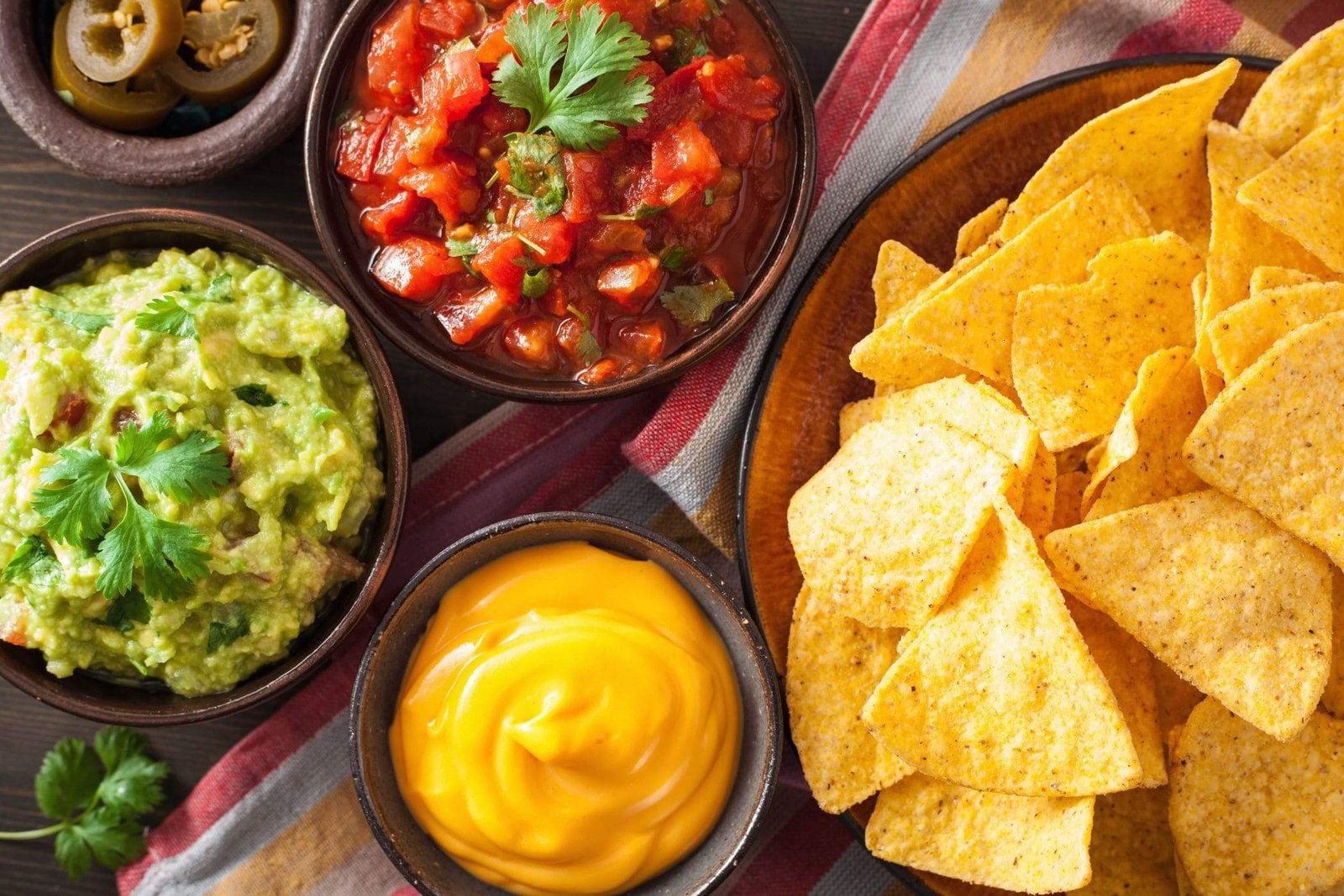
Complete the Meal: Spoon over the Cheeseburger Salad Bowl for a Tex-Mex twist, layer into Chicken and Avocado Lettuce Wraps, or add a scoop to Sausage and Peppers. It also pairs naturally with the Mediterranean Diet Lunch Ideas rotation when you need a high-acid kick.
Frequently Asked Questions
Is this canning salsa recipe safe for water bath canning?
Yes. The 2.5 cups of white vinegar plus 1 tablespoon of lime juice per jar bring the pH below 4.6, which is the tested threshold for safe water bath processing of tomato-based salsa. Do not reduce the vinegar or substitute a lower-acid vinegar — the acid level is what keeps the recipe shelf-stable.
How long does homemade canning salsa last on the shelf?
Properly sealed jars stored in a cool, dark pantry will keep for up to 12 months. After opening, refrigerate the jar and use within 2 weeks. Always inspect the seal before opening — if the lid pops up or the salsa smells off, discard the jar.
Can I reduce the sugar in this canning salsa recipe?
You can reduce the sugar to ½ cup without affecting canning safety, since sugar is for flavor balance, not preservation. The acid level (vinegar and lime) is what makes the recipe safe for water bath canning. Do not skip the vinegar.
How do I make this canning salsa milder or spicier?
For mild salsa, remove the seeds and ribs from the jalapeños and skip the optional red chilli peppers entirely. For spicier salsa, leave the jalapeño seeds in and add the full 2 cups of red chilli peppers. The vinegar volume stays the same in both cases for safe canning.
You Might Also Like
A keto-friendly burger bowl that’s begging for a scoop of homemade salsa on top.
Crisp lettuce wraps that come alive when you spoon canning salsa over the top.
Room-temperature lunch ideas where a jar of homemade salsa earns its keep.
Classic pepper-forward skillet that pairs perfectly with a side of your canned salsa.
Final Thoughts
Canning salsa is one of those projects where the time investment up front pays off all year. One late-summer afternoon at the stove gives you eight pints of pantry-ready salsa, plus enough extras to gift the canners in your life. Crack a jar in January, and you’ll taste exactly why this recipe is worth the simmer.
Medical Disclaimer: The nutritional information provided in this article is for informational purposes only. While we strive for accuracy, individual responses to foods vary. Always consult with your healthcare provider or registered dietitian about dietary changes.


