
Published February 2, 2025 · Updated June 26, 2026
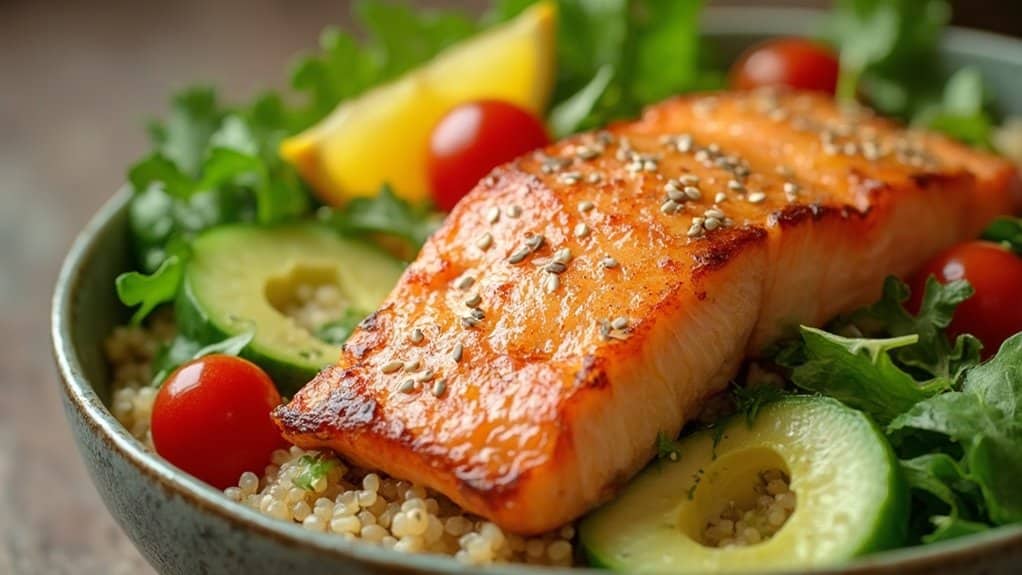
Picture perfectly crispy salmon with a tender, flaky center over a warm grain base, surrounded by colorful fresh vegetables and drizzled with a tangy lime yogurt sauce. This air fryer salmon rice bowl is a fast, healthy lunch that comes together in about 22 minutes, and the air fryer does the hard part: a crisp exterior and a moist interior with almost no cleanup. It is the kind of bright, satisfying bowl you will want on repeat.
Quick Stats
Why This Salmon Rice Bowl Works
Air Fryer Crispiness, No Mess: The air fryer gives salmon a beautifully crisp exterior and a moist, flaky center in about 12 minutes, the texture you usually only get from careful pan-searing, with none of the splatter or cleanup.
Protein That Keeps You Full: At 35 grams of protein per bowl, mostly from the salmon, this is a genuinely filling lunch. Salmon is also rich in omega-3 fats, which Healthline notes are a nourishing part of a balanced plate.
A Smart, Lighter Base: Keeping the rice or quinoa portion controlled brings the whole bowl to 12 grams of net carbs, so it eats light and bright instead of heavy. It is a satisfying, blood-sugar-conscious take on the trendy salmon rice bowl.
Endlessly Customizable: The same crispy salmon works with a teriyaki glaze one day and a cajun rub the next, over rice, quinoa, or cauliflower rice. It is a build-your-own template, not a single fixed recipe. If you love a hands-off salmon dinner, our sheet pan salmon with asparagus is another easy win.
Built for Meal Prep: Every component stores and reheats well, so a few minutes of prep turns into fresh, grab-and-go lunches all week.
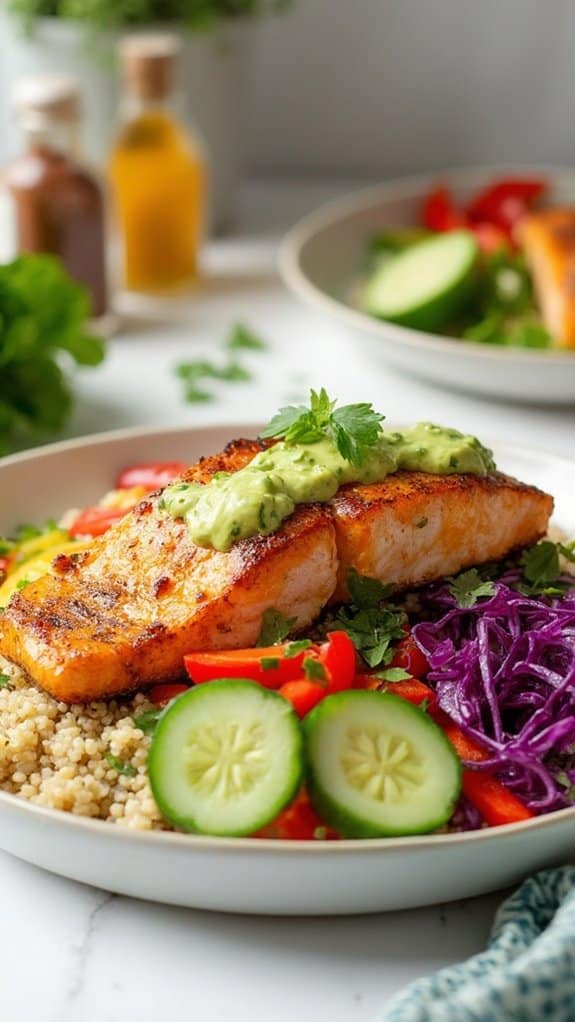
Takeout Salmon Bowl vs. This Air Fryer Bowl
| Nutrient | Typical Takeout Bowl | This Recipe | Difference |
|---|---|---|---|
| Calories | 680 | 445 | -235 (-35%) |
| Net Carbs | 65g | 12g | -53g (-82%) |
| Sugar | 14g | 2g | -12g |
| Protein | 28g | 35g | +7g |
Here is the full air fryer salmon rice bowl recipe, with measurements, the air fryer timing, and the lime yogurt sauce.
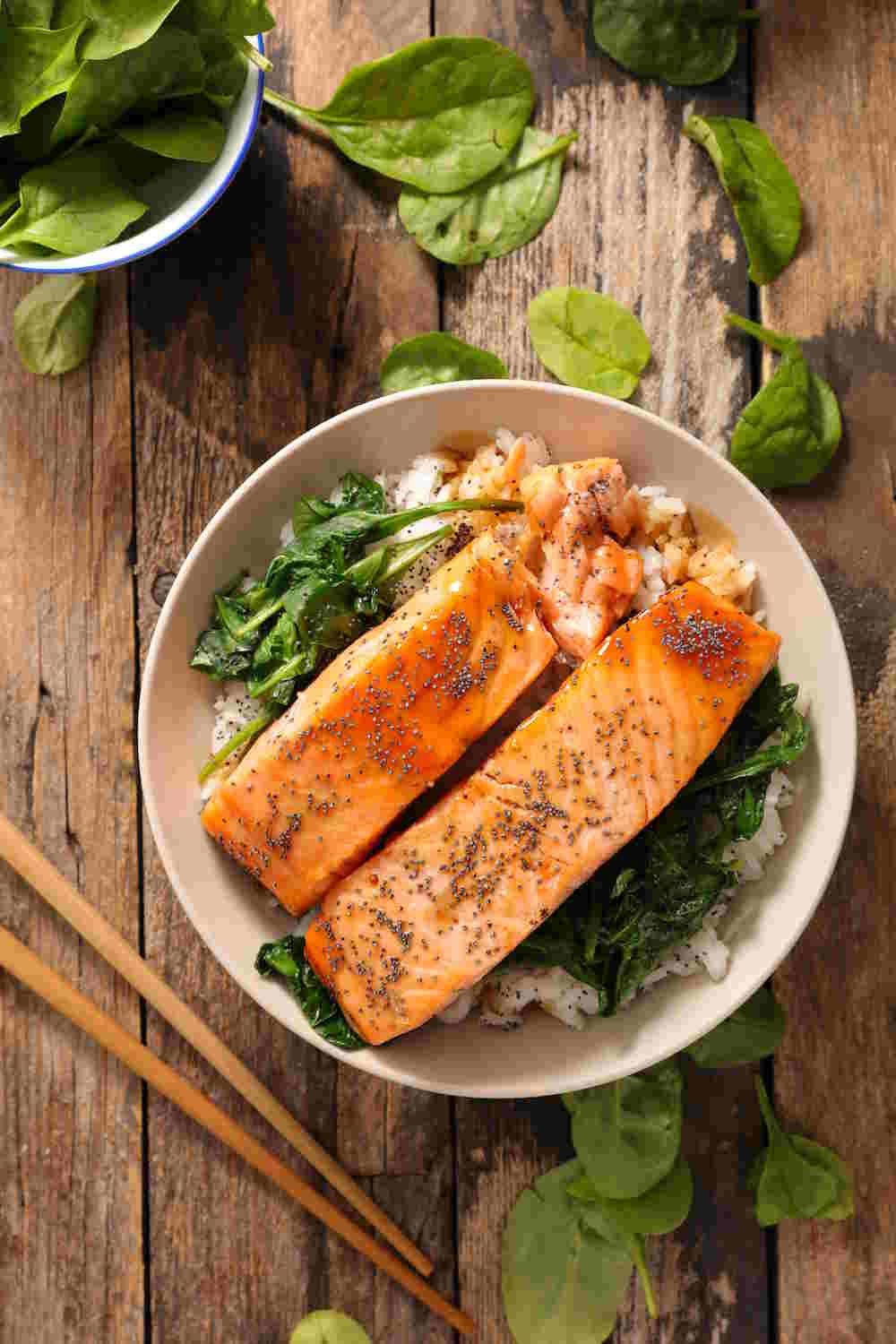

Air Fryer Salmon Bowls | Keto, Low-Carb & Diabetic-Friendly
Ingredients
Equipment
Method
- Preheat your air fryer to 400°F (200°C) for 3-5 minutes.
- Pat salmon fillets dry with paper towels. In a small bowl, whisk together 2 tablespoons olive oil, soy sauce, garlic powder, 1/2 teaspoon salt, and black pepper.
- Brush or rub the seasoning mixture evenly over all sides of the salmon fillets.
- Place salmon fillets in the air fryer basket in a single layer, leaving space between each piece. If salmon has skin, place skin-side down.
- Air fry for 10-12 minutes, depending on thickness, until salmon reaches an internal temperature of 145°F (63°C) and flakes easily with a fork. The exterior should be lightly golden and crispy.
- While salmon cooks, prepare the yogurt sauce: In a small bowl, whisk together Greek yogurt, lime juice, and a pinch of salt until smooth. Adjust seasoning to taste. Refrigerate until serving.
- Assemble the bowls: Divide quinoa (or cauliflower rice) among four serving bowls as the base.
- Arrange mixed greens, cucumber slices, avocado slices, and halved cherry tomatoes around each bowl in sections for a colorful presentation.
- Once salmon is done, place one fillet on top of each bowl.
- Squeeze fresh lemon juice over each bowl, drizzle with the lime yogurt sauce, and sprinkle with sesame seeds.
- Serve immediately while salmon is warm. Enjoy your nutrient-packed, diabetic-friendly meal!
Nutrition
Notes
Tried this recipe?
Let us know how it was!On a bowl kick? Two more easy, customizable bowls worth bookmarking are these fresh keto Buddha bowls and these one-pot teriyaki beef bowls.
Chef Tips for Perfect Air Fryer Salmon
Do Not Overcrowd the Basket: Leave space between the fillets so the hot air can circulate. Crowding steams the salmon instead of crisping it. The fish is done when it flakes easily with a fork and reaches an internal temperature of 145°F.
Skin-Side Down: If your salmon has skin, place it skin-side down in the basket. The skin shields the flesh from the direct heat and crisps up, and the fillet lifts off cleanly when it is ready.
Cool the Base Before Topping: Let the rice or quinoa cool slightly before you add the vegetables. A piping-hot base wilts fresh produce and turns crisp toppings soft, so a couple of minutes of patience keeps everything vibrant.
Switch Up the Seasoning: The same method takes the salmon in any direction. A teriyaki glaze one day, a cajun rub the next, or a simple lemon and dill. Use tamari instead of regular soy sauce in any glaze to keep the bowl gluten-free.
Keep Avocado Fresh: A quick spritz of lemon or lime juice on cut avocado keeps it from browning, which matters when you are prepping bowls a day or two ahead.
Storage and Serving Suggestions
Refrigerator Storage: Store the components separately in airtight containers. The salmon and grain base keep for up to 3 days, and the lime yogurt sauce stays fresh for about 4 days. Keeping the salmon apart from the vegetables protects everyone’s texture.
Freezer Storage: Cooked salmon freezes well for up to 2 months. Wrap portions tightly, then bag them, and thaw overnight in the fridge. Do not freeze fully assembled bowls, since the fresh vegetables do not hold up.
Meal Prep Strategy: Pack the components in compartmented containers for grab-and-go lunches that taste fresh all week. Try the same approach with our quinoa power bowl and more make-ahead cold lunches.
Complete the Meal: A sprinkle of everything bagel seasoning adds flavor with no real carbs, and a small side of miso soup or a seaweed salad rounds things out. For another low-carb seafood night, our keto sushi guide is a fun next step.
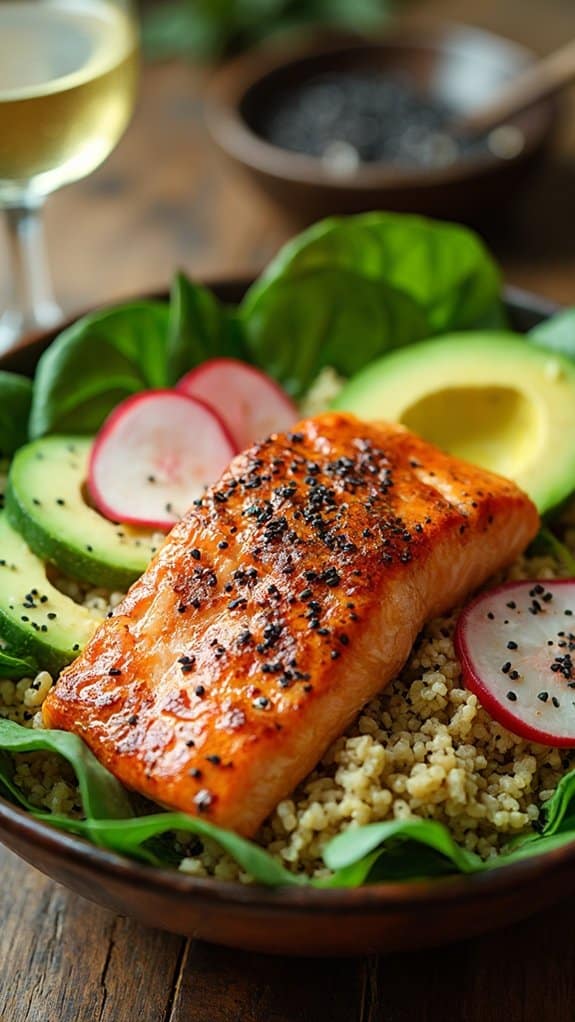
Frequently Asked Questions
Is air fryer salmon healthy?
Air-frying salmon is one of the lighter ways to cook it, since it crisps the fish with little or no added oil. The salmon brings lean protein and omega-3 fats, and building it into a bowl with vegetables and a controlled grain portion keeps the whole meal balanced and satisfying.
How long do you cook salmon in an air fryer?
Most fillets take about 10 to 12 minutes at 400°F, depending on thickness. The salmon is done when it flakes easily with a fork and reaches an internal temperature of 145°F. Leave space between fillets so they crisp rather than steam.
Can I use frozen salmon?
Yes. For the best texture, thaw the salmon overnight in the fridge and pat it dry before seasoning. You can air-fry from frozen in a pinch, just add a few minutes and check that it reaches 145°F in the center.
What base is best for a salmon rice bowl?
White or brown rice is classic, but quinoa adds protein and fiber, and cauliflower rice keeps the carbs lowest. Pick the base that fits your goals, and keep the portion moderate so the bowl stays light and the salmon stays the star.
You Might Also Like
Flaky, 1g net carb fish in 25 minutes.
Keto seafood dinner with 5g net carbs.
Fast, low-carb and high-protein.
A no-cook, keto take on a sushi craving.
This air fryer salmon rice bowl proves a healthy lunch can be fast, flexible, and genuinely crave-worthy. Crisp the salmon, build your bowl, and you have a bright, protein-packed meal in about 22 minutes, hot or cold, that is easy to prep ahead and endlessly easy to make your own.
Medical Disclaimer: The nutritional information provided in this article is for informational purposes only. While we strive for accuracy, individual responses to foods vary. Always consult with your healthcare provider or registered dietitian about dietary changes.


