Published January 23, 2026 · Updated June 26, 2026
Ten minutes. That’s all it takes to upgrade your sandwich lunch from ordinary to extraordinary. This quick gazpacho is cold, fresh, and pairs beautifully with any sandwich you can dream up, from classic turkey clubs to fancy grilled cheese creations.
Quick Stats
Why This Recipe Works
Lycopene from Ripe Tomatoes: Tomatoes are the backbone of gazpacho. They’re rich in lycopene, an antioxidant that’s actually more bioavailable when tomatoes are blended and combined with olive oil, exactly how gazpacho is made.
Natural Hydration: Cucumbers and tomatoes are over 90% water. On hot days, gazpacho functions as both a meal and a hydrating drink, which may support overall fluid intake without added sugars.
Heart-Healthy Fats: Extra-virgin olive oil provides monounsaturated fatty acids that are associated with cardiovascular wellness. A drizzle in gazpacho delivers flavor and healthy fats in every spoonful.
Fiber and Satiety: With 4g of fiber per serving, gazpacho helps maintain steady energy levels after lunch, with no afternoon slump.
Zero-Cook Convenience: No heat means no nutrient loss from cooking. Raw vegetables retain their full vitamin C and enzyme content, making gazpacho one of the most nutrient-dense cold soups you can make.
Restaurant Gazpacho vs. Homemade Gazpacho
| Factor | Restaurant | Homemade | Advantage |
|---|---|---|---|
| Sodium | 800 to 1,200 mg | 200 to 400 mg | 60 to 70% less |
| Added Sugar | Often added | None | Zero added sugar |
| Olive Oil Quality | Often refined | Extra-virgin | Better fats |
| Freshness | Batch-made | Same-day produce | Peak nutrients |
| Cost (per serving) | $8 to $14 | $2 to $3 | 75% cheaper |
| Customization | Fixed menu | Your choice | Fully adjustable |
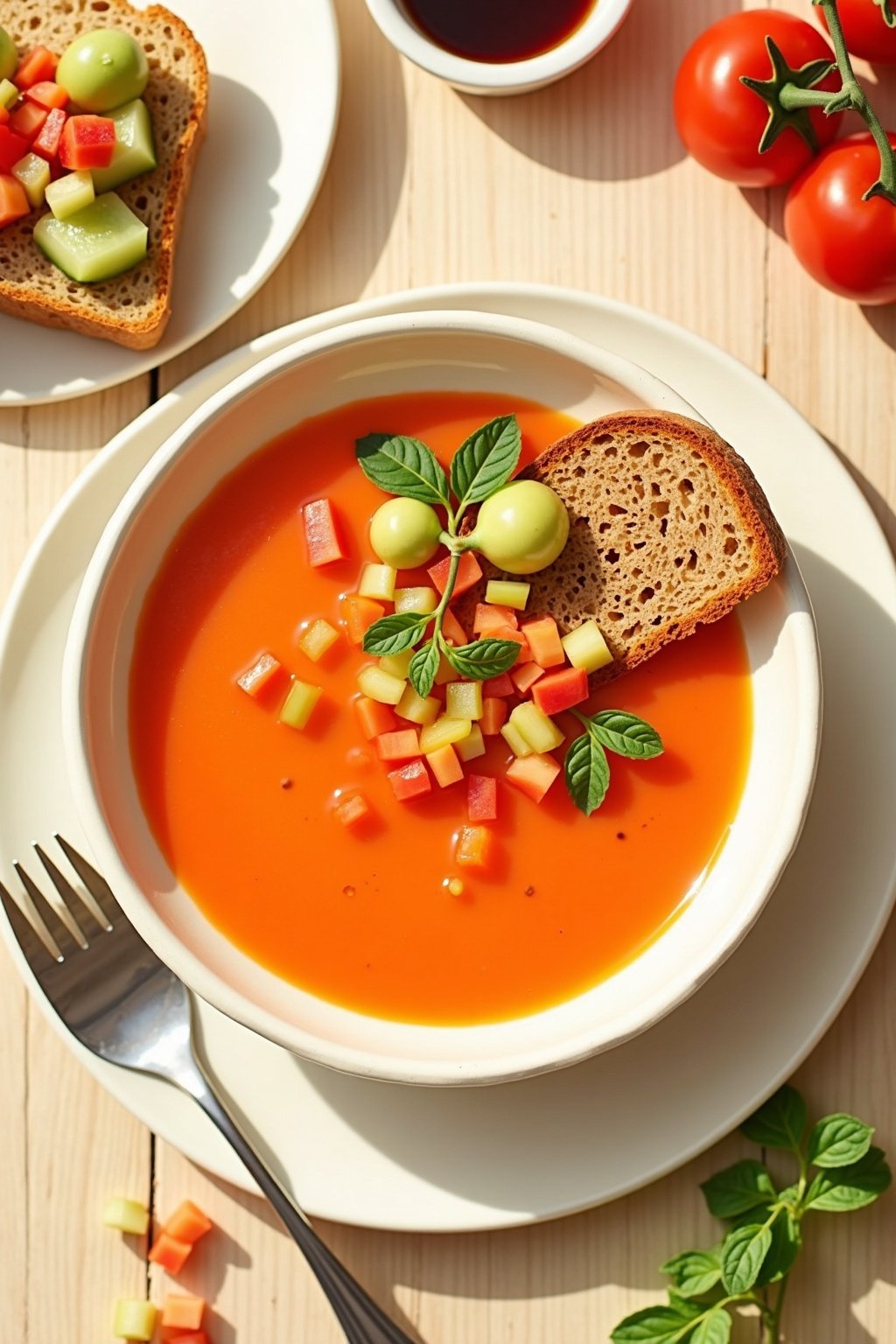

10 Minute Gazpacho | Fresh Cold Soup for Summer Sandwiches
Ingredients
Equipment
Method
- Rough chop tomatoes, cucumber, and bell pepper into large chunks. Leave vegetables at room temperature for best blending results and optimal flavor release.
- Add tomatoes and garlic to blender. Pulse 4-5 times until roughly chopped but not pureed. This creates texture foundation.
- Add cucumber and bell pepper to blender. If using bread, soak it in cold water for 30 seconds, squeeze out excess water, and add last. Pulse 5-7 times until desired consistency is reached, chunky or smooth is your choice.
- Add olive oil, vinegar, salt, and pepper. Blend briefly to incorporate. Taste and adjust seasoning, keep it slightly under-seasoned if making ahead, as flavors intensify over time.
- Transfer to airtight container and refrigerate for at least 1 hour for flavors to meld (or serve immediately if needed). Before serving, drizzle with olive oil and garnish with fresh herbs if desired.
Nutrition
Notes
Tried this recipe?
Let us know how it was!Chef Tips for Perfect Gazpacho
Use the Ripest Tomatoes: Gazpacho is only as good as its tomatoes. In-season, vine-ripened tomatoes give you the deepest flavor. Out of season, quality canned San Marzano tomatoes work surprisingly well.
Room Temperature Matters: Leave your vegetables out for 20 to 30 minutes before blending. Cold produce doesn’t release flavors as readily and creates a muted soup. Room-temperature ingredients blend smoother and taste brighter.
Don’t Skip the Sherry Vinegar: Regular red wine vinegar works in a pinch, but sherry vinegar gives gazpacho its distinctive Andalusian character. Just a tablespoon transforms the entire bowl.
Control Your Texture: For a silky-smooth gazpacho, blend for 2 to 3 minutes and strain through a fine mesh sieve. For a chunkier, more rustic version, pulse briefly and leave some texture.
Let It Rest Overnight: Gazpacho develops much deeper flavor after 8 to 12 hours in the fridge. Make it the night before and the flavors meld beautifully.
Garnish at Service: Save your best olive oil, fresh herbs, and any diced vegetables for finishing. These bright touches make the difference between good gazpacho and restaurant-quality gazpacho.
Storage and Serving Suggestions
Refrigerator Storage: Store in an airtight container for up to 3 days. The flavor actually improves on day two as the vegetables meld together. Give it a good stir before serving.
Freezer Storage: Not recommended. Gazpacho’s high water content creates a watery, separated texture when thawed and the fresh vegetable flavors deteriorate significantly. Make fresh batches instead.
Meal Prep Strategy: Blend a large batch on Sunday and portion into jars for the week. This works perfectly for 5-day meal prep, just stir before serving each day.
Complete the Meal: Pair your gazpacho with a chicken and avocado lettuce wrap for extra protein, or serve alongside a low-carb cauliflower rice bowl for a filling Mediterranean spread.
Seasonal Serving Ideas
Summer: Serve ice-cold with a drizzle of olive oil, diced cucumber, and fresh herbs on top. The temperature contrast with warm bread is the star.
Fall/Winter: Serve slightly cool (not ice-cold) with roasted peppers stirred in and a pinch of smoked paprika. Pair with hot pita fresh from the oven or a warm falafel sandwich.
Spring: Add green garlic and early herbs from the garden. A slightly cool gazpacho with warm toasted pita triangles makes a perfect light lunch.
Frequently Asked Questions
What is gazpacho, and how do you make it?
Gazpacho is a cold Spanish soup made by blending ripe tomatoes, cucumbers, bell peppers, garlic, olive oil, and sherry vinegar until smooth. No cooking required, just blend, season to taste, and chill for at least 2 hours (overnight is even better). Traditional Andalusian recipes include day-old bread for the body, but you can skip it for a lighter version.
Can you make gazpacho ahead of time?
Yes, and you should. Gazpacho tastes significantly better after 8 to 12 hours in the fridge because the flavors have time to develop and meld. Make it the night before serving. It keeps well for 3 days in the fridge, and the flavor peaks on day two.
What pairs well with gazpacho for a complete meal?
Warm pita sandwiches stuffed with hummus, grilled chicken, or falafel are the classic Mediterranean pairing. The temperature contrast between chilled soup and warm bread makes each bite interesting. You can also pair gazpacho with grain bowls, green salads, or grilled protein for a balanced lunch.
Is gazpacho healthy, and what are the nutritional benefits?
Gazpacho is naturally low in calories (about 145 per bowl), dairy-free, and packed with vitamins from raw vegetables. The tomatoes provide lycopene, cucumbers contribute hydration, and olive oil delivers heart-healthy monounsaturated fats. Since nothing is cooked, the vegetables retain their full vitamin C and enzyme content.
You Might Also Like
No mayo, all flavor. Quick, keto-friendly tuna salad that pairs perfectly with gazpacho for a complete Mediterranean lunch.
Another bold-flavored soup that proves homemade beats restaurant every time, warm, tangy, and low carb.
Creamy, comforting, and surprisingly low in carbs, perfect for cooler weather when you want something warm.
A hands-off, protein-packed salmon lunch that goes beautifully with a bowl of chilled gazpacho on the side.
Mediterranean cooks have been pairing chilled soups with warm bread for centuries, and gazpacho proves why the combination endures. It’s a lunch that covers every base, refreshing, nourishing, and endlessly adaptable to whatever’s in season. Make a batch tonight and taste the difference tomorrow.
Medical Disclaimer: The nutritional information provided in this article is for informational purposes only. While we strive for accuracy, individual responses to foods vary. Always consult with your healthcare provider or registered dietitian about dietary changes, especially if you’re managing diabetes or other health conditions.


