
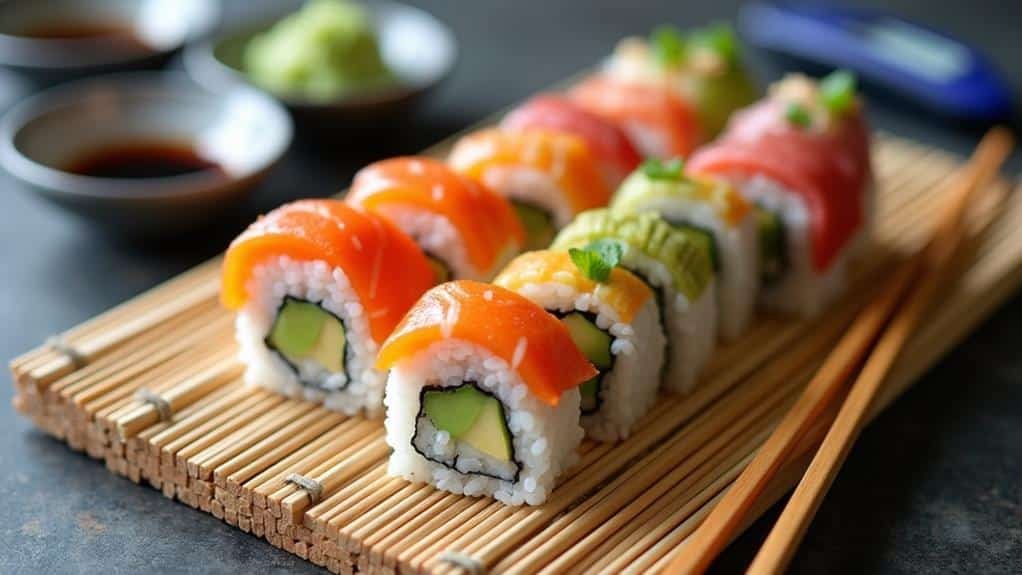
Can diabetics eat sushi rice? The short answer: yes, but it’s not the best choice. Traditional sushi rice contains roughly 35-40 grams of carbs per cup—plus added sugar from the seasoning vinegar. A single California roll can pack 30-40g of carbs, almost entirely from the rice.
That doesn’t mean sushi is off-limits. It means you need a strategy. Whether you’re dining out or rolling at home, there are plenty of ways to enjoy Japanese cuisine without sending your blood sugar on a rollercoaster. Here’s your complete guide.
📊 Sushi Rice: The Numbers

🍚 Why Traditional Sushi Rice Isn’t Ideal for Diabetics
High Glycemic Index: White sushi rice has a GI of around 85-90, which means it causes rapid blood sugar spikes. For comparison, pure glucose is 100.
Hidden Sugar: Traditional sushi rice is seasoned with a mixture of rice vinegar, sugar, and salt. That sweet, slightly sticky texture? That’s added sugar doing its work.
Portion Creep: Rice makes up 60-70% of a typical sushi roll. Even a “healthy” salmon roll contains more rice than fish. Three rolls can easily hit 100g+ of carbs.
The Good News: You have options. Brown rice has a lower glycemic index. Cauliflower rice slashes carbs by 90%. And rice-free options like sashimi and cucumber sushi rolls let you skip the carb bomb entirely.
Low Glycemic Index Options
Ready to tame that sugar rollercoaster? Let’s plunge into the world of low glycemic index options for your sushi cravings. You don’t have to give up your favourite Japanese delicacy just because you’re watching your blood sugar.
There’s a whole ocean of low-carb alternatives waiting to be explored! These options help manage blood sugar, provide essential nutrients, and promote satiety, making them an excellent choice for a balanced diet.
Swap out that sticky rice for cauliflower “rice” – it’s a game-changer, trust us. Or wrap your sushi ingredients in crisp cucumber or nori sheets? It’s like a flavour explosion without the carb overload.
And let’s not forget about our protein-packed pals: salmon, tuna, and shrimp. They’re the real MVPs of blood sugar-friendly sushi. Who said eating healthy had to be boring?
With these options, you’ll be rolling (pun intended) towards better blood sugar control in no time!
🥢 Your Diabetic-Friendly Sushi Playbook
Best Choice — Skip the Rice Entirely: Sashimi (sliced raw fish) has zero carbs and delivers pure protein plus omega-3s. Cucumber sushi rolls and spicy tuna cucumber boats replace rice with crisp vegetables.
Good Choice — Swap the Rice: Ask for brown rice if the restaurant offers it—lower glycemic index, more fiber. At home, try cauliflower rice for a 90% carb reduction.
Okay in Moderation — Limit Traditional Rice: If you’re eating standard sushi, stick to 1-2 rolls max. Choose protein-heavy options like salmon or tuna. Pair with edamame and miso soup to fill up on lower-carb sides.
Avoid: Tempura rolls (battered and fried), rolls with sweet sauces (eel sauce, spicy mayo), and anything described as “crunchy” or “crispy”—that’s code for extra carbs.
For more options, check out our complete guide to low-glycemic Japanese lunch ideas.
Top 5 Diabetes-Friendly Sushi Rolls
Sushi lovers with diabetes, rejoice! You don’t have to give up your favourite Japanese delicacy.
Let’s explore the top 5 diabetes-friendly sushi rolls that’ll keep your taste buds happy and your blood sugar in check.
First, we’ve got the classic cucumber roll. It’s light, invigorating, and will not spike your glucose.
Diabetes-Friendly Sushi Recipes to Try
Instead of traditional rice-based sushi, try these blood sugar-friendly alternatives:
- Cucumber Sushi Rolls — Just 4g net carbs per serving. Crisp cucumber ribbons replace rice entirely.
- Spicy Tuna Cucumber Boats — Hollowed cucumber halves loaded with seasoned tuna. Keto-friendly.
- Cauliflower Fried Rice — Not sushi, but a great low-carb base for Asian-inspired bowls.
Each recipe includes full nutrition info and diabetic-friendly adaptations.
Soy Sauce Portion Control
How can you enjoy sushi without overdoing it with soy sauce? It’s a delicate balance, my fellow sushi lovers!
Let’s explore some portion control techniques that’ll keep your blood sugar in check without sacrificing flavour.
First up, try the “dip, don’t drown” method. Lightly dip your sushi into the soy sauce rather than submerging it. You’ll still get that umami kick without going overboard.
For the rebellious spirits out there, why not explore some soy sauce alternatives? Ponzu, a citrus-based sauce, adds a zesty twist to your rolls. Or, go rogue with a wasabi-infused soy sauce – a little goes a long way!
If you’re feeling crafty, invest in a small sauce dish. It’s like portion control on training wheels! Fill it once, and that’s your soy sauce allowance for the meal. Easy peasy, right?
Frequently Asked Questions
Can Diabetics Eat Sushi With White Rice?
You can enjoy sushi, but white rice isn’t ideal for people with diabetes. Break free from tradition and explore sushi alternatives! Try rice substitutes like cauliflower or quinoa to satisfy your cravings while keeping your blood sugar in check.
How Does Wasabi Affect Blood Sugar Levels?
Wabi won’t spike your blood sugar like a gentle breeze cooling a hot day. It’s a low-carb condiment with potential benefits. You can enjoy it, but try horseradish or mustard as alternatives to wasabi if it’s too spicy.
Are There Any Sushi Toppings Diabetics Should Avoid?
You should avoid sushi toppings with high sugar content, such as sweet sauces, tempura, and sugary glazes. Instead, stick to fresh fish, veggies, and avocado. You’re free to enjoy sushi; just make smart choices!
What’s the Best Time of Day for Diabetics to Eat Sushi?
While you might think any time is fine for sushi, the timing of the sushi meal matters. You’ll want to eat sushi for lunch or early dinner. Practice portion control with sushi, and you’ll be free to enjoy it without worrying. Your blood sugar will thank you later.
Can Diabetic Medication Be Adjusted When Incorporating Sushi Into the Diet?
When adding sushi to your diet, you should analyze the ingredients and practice portion control. It’s also essential to consult your doctor about adjusting your diabetic medication. They’ll help you fine-tune your treatment plan for ideal freedom and health.
🍽️ You Might Also Like
Only 4g net carbs per serving
Beyond sushi—full meal ideas
Keto sushi alternative
Complete ordering guide
Medical Disclaimer: The nutritional information and diabetic-friendly adaptations provided in this article are for informational purposes only. While we strive for accuracy, we are culinary experts, not medical doctors. Individual responses to foods vary, and you should always consult with your healthcare provider or registered dietitian about dietary changes, especially if you’re managing diabetes or other health conditions. Always monitor your blood sugar as recommended by your healthcare team.


