Published May 25, 2026 · Updated August 18, 2026
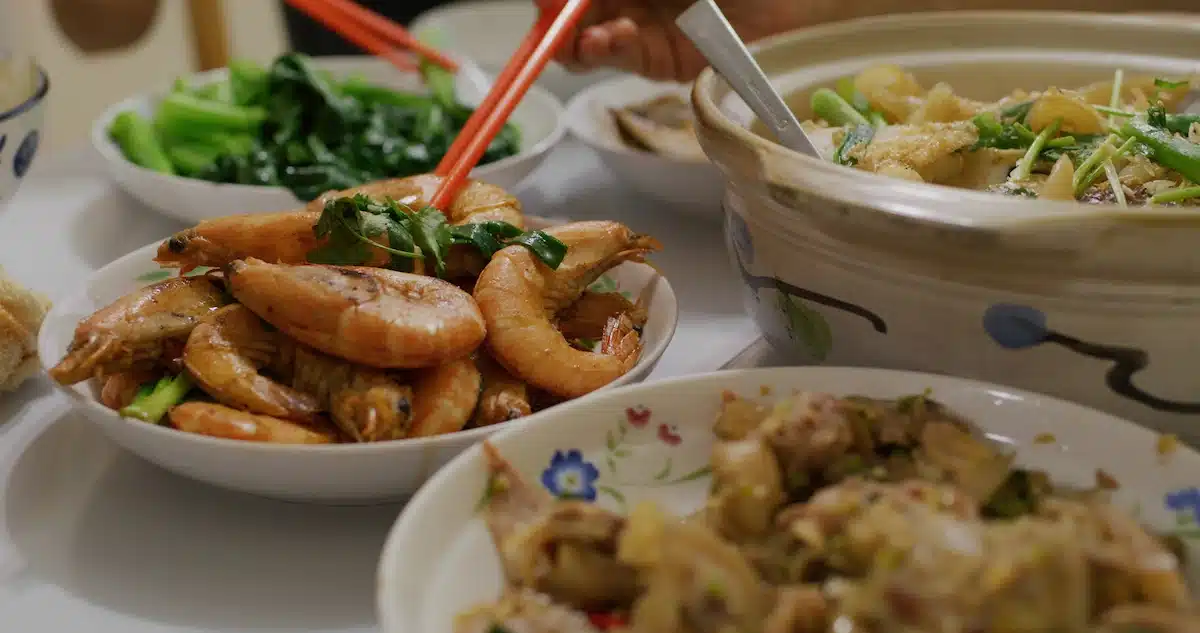
Diabetic Chinese food has a bad reputation, but the problem is almost always the takeout container, not the cuisine itself. Healthy Chinese food for diabetics is very doable: real Chinese cooking is built on lean protein, nonstarchy vegetables, and bright aromatics, which makes it one of the easier cuisines to eat well with diabetes once you know what to order and how to cook it at home. This guide walks through 16 of the smartest diabetic Chinese food choices, plus restaurant-ordering tactics, portion strategies, and lower-sodium swaps that keep the flavor intact so you can stay on top of your blood-sugar management.
Short on time? Jump straight to the 16 diabetes-friendly dishes, the smart way to order at a restaurant, or the dishes to skip.
At a Glance
Why This Guide Works for Diabetes Management
Carb-aware ordering: Chinese cuisine leans on rice and noodles, but the same dishes can be balanced with brown rice, whole-grain noodles, or smaller starch portions. Choosing slower-digesting carbs and keeping starch portions modest helps maintain steady energy and is associated with better blood-sugar outcomes.
Lean-protein emphasis: Chicken, fish, lean pork, and extra-firm tofu are staples in Chinese cooking. These proteins are satisfying without the saturated-fat load of fattier cuts, and pairing them with fiber-rich vegetables further softens any blood-sugar response.
Vegetable-forward plates: Nonstarchy vegetables such as bok choy, broccoli, bitter melon, snow peas, and shiitake mushrooms are core to Chinese home cooking. They add fiber, volume, and micronutrients with minimal impact on glucose, which makes the half-plate-vegetables rule easy to follow.
Healthier cooking methods are built-in: Steaming, stir-frying with minimal oil, and broth-based cooking are traditional Chinese techniques that line up naturally with diabetes-aware eating. Avoiding deep-fried and heavy-sauce preparations is usually a matter of which dishes you order, not how the cuisine itself is structured.
Typical Takeout vs. Smart Chinese Ordering
| Factor | Typical Takeout | Smart Order | Difference |
|---|---|---|---|
| Calories (entree) | ~1,200 | ~450 | -750 (-63%) |
| Sodium | ~2,500 mg | ~900 mg | -1,600 mg (-64%) |
| Carbs | ~120 g | ~35 g | -85 g (-71%) |
| Fiber | ~3 g | ~9 g | +6 g (+200%) |
| Added sugar | ~25 g | ~2 g | -23 g (-92%) |
Understanding Carbohydrates in Chinese Cuisine
Carbohydrates show up everywhere in Chinese food: rice, noodles, dumpling wrappers, congee, even glazes. They are not off-limits, but the type and amount matter. Brown rice keeps its bran layer, which slows digestion and provides fiber that helps moderate the rise in blood glucose. Whole-grain noodles do the same job for noodle dishes. Carbohydrate management in any cuisine comes down to portion size and quality, and Chinese cooking gives you plenty of room to swap.
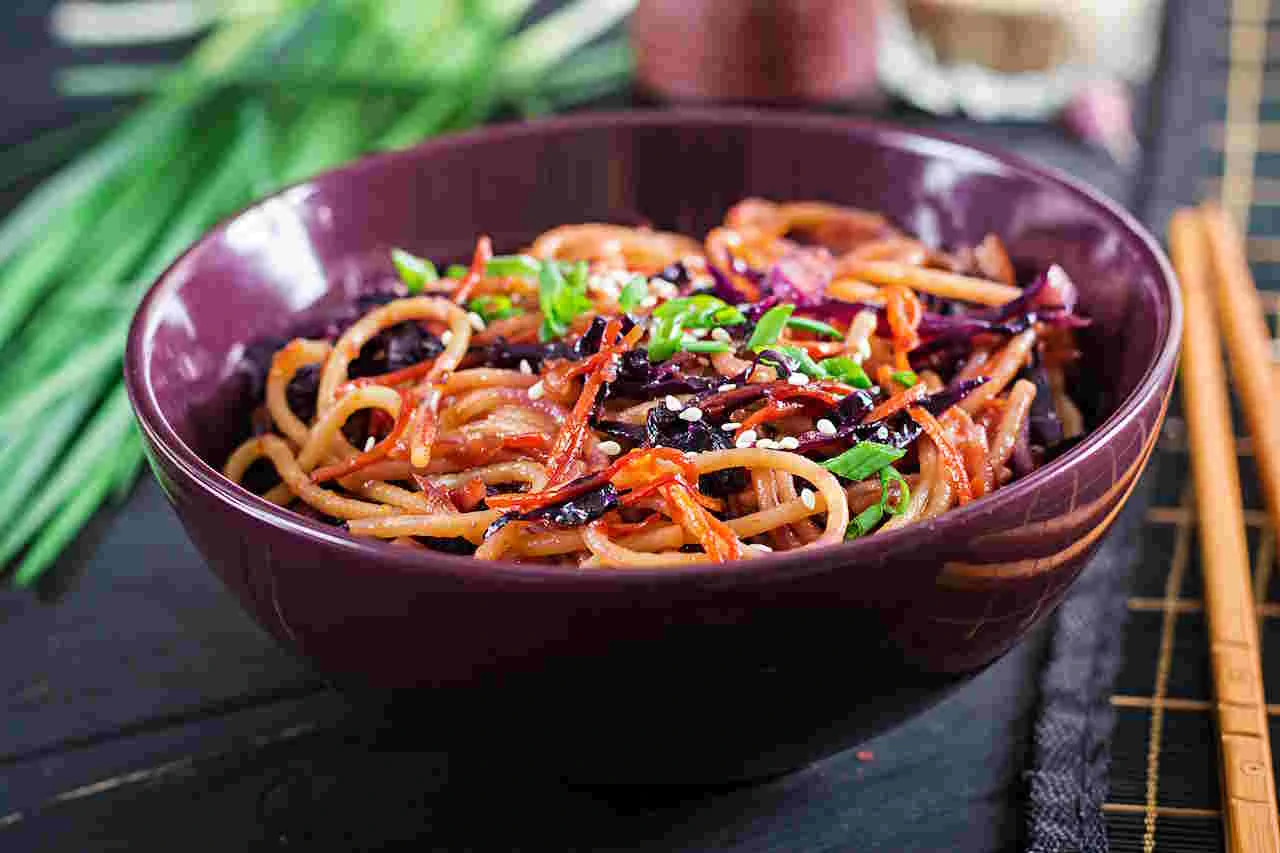
The single highest-impact move is swapping the starch base. Cauliflower rice stands in for fried rice and most steamed-rice dishes, shirataki (konjac) noodles replace wheat noodles in lo mein and noodle soups, and zucchini noodles or spaghetti squash work for stir-fried noodle dishes. Our vegetable lo mein is a better-than-takeout starting point you can push even lower in carbs with shirataki. A practical guideline if you would rather keep the grain: hold the rice or take half of what is served, keep a steamed bun under about 60 grams, and ask for multigrain or brown-rice options when you can.
Smart Protein Choices
Protein anchors a diabetes-friendly plate because it slows digestion and provides satiety without raising blood sugar. The leanest options in Chinese cooking are chicken breast, lean ground pork, white fish, shrimp, and extra-firm tofu, all of which absorb sauces and aromatics beautifully without needing breading or deep-frying. Extra-firm tofu, in particular, has a low moisture content, making it ideal for stir-fry without extra oil.
Fatty fish like salmon and mackerel deserve a regular spot too. The omega-3 fats they provide support heart health, which matters for anyone managing diabetes, since cardiovascular risk is closely linked to it. A simple steamed fish with ginger and scallions is one of the lowest-effort, highest-payoff Chinese dishes you can put on a weeknight table, and a quick garlic ginger shrimp is another fast, high-protein option that keeps carbs near zero.
Nonstarchy Vegetables to Include
Nonstarchy vegetables are the workhorse of any diabetes-aware plate. They are low in calories, high in fiber and water, and barely register on the glycemic radar. Chinese cuisine has an enormous pantry of them: broccoli, cucumber, bitter melon, bok choy, watercress, shiitake mushrooms, eggplant, snow peas, and Chinese broccoli (gai lan). Each adds its own flavor profile and texture, so a vegetable-heavy plate never has to feel monotonous.
A reliable strategy is the half-plate rule: fill half your plate with nonstarchy vegetables, a quarter with lean protein, and a quarter with a smart carb like brown rice or whole-grain noodles. It is simple enough to apply at home or in a restaurant and works whether you are plating one dish or sharing several family-style.
Healthier Cooking Techniques in Chinese Cuisine
The same ingredient can swing from very diabetes-friendly to problematic depending on how it is cooked. Steaming, quick stir-frying with a small amount of oil, poaching, and broth-based simmering are the techniques to favor. They preserve nutrients, keep added fats low, and avoid the heavy sauces and breading that drive up sodium, sugar, and calories. The mechanics matter: a genuinely hot wok sears protein and vegetables in a couple of minutes, which keeps them crisp and limits the oil they soak up, while a lukewarm pan steams everything into something soggy and oily. Steamed fish, steamed dumplings, stir-fried greens with garlic, and clear soups all fit comfortably on a diabetes-aware plate.
What to limit: deep-fried items (egg rolls, crab rangoon, General Tao’s chicken), batter-fried meats coated in sugary sauces (sweet and sour pork, orange beef), and dishes that lean on cornstarch-thickened gravies. A homemade low-sodium broth, shiitake and ginger is a classic, adds depth without the salt load of commercial sauces.
Diabetes-Friendly Chinese Dishes to Try
Here are sixteen reliable diabetic Chinese food picks across appetizers, mains, and vegetable sides: steamed dumplings (pork or vegetable), wonton soup, egg drop soup, hot and sour soup, steamed chicken with broccoli, Kung Pao chicken with light sauce, beef and broccoli (sauce on the side), Vegetarian Buddha’s Delight, moo goo gai pan, garlic ginger broccoli, stir-fried bok choy, steamed whole fish, shrimp with snow peas, tofu with mixed vegetables, Chinese-style cucumber salad, and a side of steamed brown rice in a modest portion. Each of these leans on lean protein or nonstarchy vegetables, uses gentler cooking methods, and keeps added sugar and sodium reasonable.
Want the full recipes behind these picks? Step up the carb restriction with our keto Chinese meals guide and its ready-to-cook recipe cards, or browse our 25 best diabetic lunch recipes for more blood-sugar-friendly lunches beyond Chinese food.
Portion Control at Chinese Restaurants
Chinese restaurants typically serve generous portions, and many dishes are designed for sharing. Use that to your advantage. Order one protein dish, one vegetable dish, and a small side of brown rice for two people instead of an entree each. Ask for sauces on the side so you can control how much hits the food. Take half the rice home in a container before you start eating, since it stops the casual top-ups that quietly double a carb portion.
Pacing matters too. Chinese meals are traditionally served as a sequence of shared plates, which naturally slows eating and gives your satiety signals time to catch up. Lean into that rhythm rather than rushing through one big plate.
Lowering Sodium in Your Chinese Meal
Sodium is the quiet variable in Chinese cooking. A single order of barbecue spare ribs can carry roughly one-and-a-half times the full daily limit, and soy sauce, oyster sauce, hoisin, and salt-cured vegetables all add up quickly. The recommended daily ceiling is around 2,300 mg for most adults, and lower for many people managing diabetes alongside high blood pressure.
Practical moves: ask for low-sodium or sauce on the side, skip dried, salted, pickled, and fermented sides, and rinse stir-fry ingredients of any salt-heavy marinades when cooking at home. Use aromatics such as garlic, ginger, scallion, chili, and citrus zest, plus rice vinegar or a splash of unseasoned rice wine, to build flavor without leaning on the salt shaker.
Dishes to Skip or Limit
Some dishes are simply harder to make diabetes-friendly. Egg rolls and crab rangoon are deep-fried and offer minimal nutritional value. General Tao’s chicken and sweet-and-sour pork are battered, fried, and finished with sugar-heavy glazes. Orange beef and barbecue spare ribs run very high in sodium. Lo mein made with white-flour noodles can spike blood sugar quickly, especially in restaurant-sized portions. These are not permanent bans, since an occasional shared portion is fine, but they should not be the default order. If you love dim sum, the home version is far friendlier: swap wheat wrappers for almond-flour or coconut-flour alternatives, fill with shrimp or lean pork and cabbage, and steam rather than fry.
Eating Out and Eating Mindfully
The behaviors around the meal matter almost as much as the food itself. Start with a broth-based soup or a small vegetable plate, since both blunt appetite and reduce the chance of overshooting on the higher-carb dishes that follow. Eat slowly enough to notice fullness signals, which usually take 15 to 20 minutes to register. A 10- to 15-minute walk after a meal is one of the simplest tools available for moderating the post-meal blood sugar rise, and it pairs beautifully with the shared, sociable style of Chinese dining.
Drinks count too. Skip the sweetened bubble teas and sugary jasmine drinks and lean on unsweetened green tea, oolong, pu-erh, jasmine, or chrysanthemum tea. These traditional Chinese teas add no sugar, hydrate well, and are associated with steady energy. For a cold option, brew any of them strong, chill, and add a squeeze of lemon.
Chef Tips for Cooking Diabetic Chinese Food at Home
Build a low-sodium aromatic base: Start most stir-fries with garlic, ginger, scallion, and a small amount of chili. That trio carries enormous flavor and lets you cut soy sauce roughly in half without anyone noticing.
Press your tofu: Extra-firm tofu absorbs sauce far better when its excess water is pressed out for 15 to 20 minutes. Drier tofu also browns properly in a hot wok with minimal oil, so you get texture without deep-frying.
Pre-cut everything before you start cooking: A real stir-fry is fast, often under five minutes once the wok is hot. Have proteins, vegetables, aromatics, and sauce measured and ready, and you will avoid the over-saucing that happens when one ingredient cooks too long while you finish prepping another.
Dress salads with vinegar, not sugar: For cold dishes like cucumber salad, build the dressing on rice vinegar with a touch of toasted sesame oil, fresh ginger, and garlic. Reach for a sugar substitute if you want sweetness, never sugar or honey.
Swap the thickener and the base: Cornstarch in marinades and sauces is a quiet carb source. Use a few tablespoons of reduced unsalted broth for a glossy finish instead, and choose brown rice, riced cauliflower, or shirataki noodles depending on how low you want the carbs to go.
Storage and Serving Suggestions
Batch-Cook the Base: Cook a pot of brown rice and a sheet pan of roasted nonstarchy vegetables on Sunday. Each weekday lunch becomes a 10-minute reheat with a quick stir-fried protein on top.
Refrigerator Storage: Most cooked Chinese-style stir-fries hold for 3 to 4 days in airtight glass containers. Store rice and protein separately so the rice does not go soft.
Freezer Storage: Soups like wonton and hot and sour, plus dumpling fillings, freeze beautifully for up to 2 months. Thaw overnight in the fridge before reheating.
Reheat: Reheat stir-fries on the stovetop in a non-stick pan with a splash of water, which refreshes texture far better than the microwave, which tends to soften vegetables.
Complete the Meal: Pair this style of eating with simple sides like a quick bok choy, a clear broth-based soup, or a Chinese cucumber salad. Add a short post-meal walk to smooth out the blood-sugar response.
Healthy Chinese Food for Diabetics FAQs
Is Chinese food good for diabetics?
Chinese food can be very good for diabetics when it is steamed, broth-based, or lightly stir-fried and built on lean protein and nonstarchy vegetables. The cuisine itself is naturally vegetable-forward, so the trouble usually comes from restaurant takeout, with its sugary sauces and big portions of refined carbs. Cooking at home, or ordering carefully, gives you control over the sauce, the oil, and the serving size.
What is the best Chinese food for diabetics to order?
The best choices are steamed fish with ginger, steamed chicken with broccoli, Vegetarian Buddha’s Delight, and broth-based soups like wonton or hot and sour. Ask for sauces on the side, prioritize the protein and vegetable dishes, and keep any rice to a fist-size portion. Sharing dishes family-style also makes portion control easier without giving anything up.
What Chinese food is worst for diabetics?
Limit deep-fried items like egg rolls and crab rangoon, battered-and-sauced dishes like General Tao’s chicken and sweet-and-sour pork, and high-sodium options like barbecue spare ribs and orange beef. Large portions of white-flour lo mein or fried rice can also raise blood sugar quickly. Sweetened drinks like bubble tea are best skipped entirely.
Is rice okay for diabetics eating Chinese food?
Rice is fine in modest portions, and brown or multigrain rice is the better choice because the extra fiber helps soften the blood sugar response. A serving roughly the size of your fist, paired with plenty of vegetables and lean protein on the same plate, fits most diabetes-aware eating plans. When you want to go lower, cauliflower rice is an easy swap.
You Might Also Like
A fast weeknight stir-fry at 5g net carbs, built on lean shrimp and crisp asparagus.
A light, comforting broth-based soup that is naturally low in carbs and ready in minutes.
A better-than-takeout noodle dish you can push lower-carb with shirataki noodles.
The classic vegetarian Chinese braise of tofu, vegetables, and aromatic broth.
Final Thoughts
Healthy Chinese food for diabetics is genuinely doable. It is a matter of leaning into the techniques and ingredients the cuisine already does well, like steaming, stir-frying, vegetable-forward plates, and lean proteins, while being deliberate about the few categories that do not, like deep-fried, sugar-glazed, and heavily salted dishes. Order with intention, keep portions modest, and let the meal stay sociable and slow. The cuisine you love can stay on the menu.
Medical Disclaimer: The nutritional information provided in this article is for informational purposes only. While we strive for accuracy, individual responses to foods vary. Always consult with your healthcare provider or registered dietitian about dietary changes.


