
Published June 5, 2026 · Updated August 18, 2026
Crisp-tender cabbage, earthy mushrooms, and crunchy bamboo shoots tossed in a hot wok with a glossy savory sauce, ready in about 35 minutes. Mu shu vegetables are the meat-free take on the Chinese takeout classic, naturally low in carbs and built for fast weeknight cooking. Tuck them into thin pancakes, pile them over rice, or wrap them in lettuce.
Quick Stats
It sits comfortably alongside our other Asian favorites like cold sesame noodles, and here is what makes it such a reliable weeknight win.
Why This Recipe Works
Built on non-starchy vegetables: Cabbage, mushrooms, bamboo shoots, and carrots keep this dish naturally low in carbs while delivering plenty of volume and crunch.
Fibre and potassium: The mix of fresh and crisp vegetables brings fibre along with minerals like potassium, all in a light 250-calorie serving.
One wok, fifteen minutes: High-heat stir-frying cooks everything quickly in a single pan, so dinner is on the table fast with minimal cleanup.
Savory and satisfying: A glossy sauce of soy, hoisin, ginger, and sesame coats the vegetables for that signature takeout flavor at home.
Endlessly adaptable: Add tofu or egg for extra protein, wrap it in pancakes or lettuce, or spoon it over rice or cauliflower rice to suit the meal.
Chinese Takeout Mu Shu vs. This Homemade Version
| Per serving | Takeout | This Recipe | Difference |
|---|---|---|---|
| Calories | 400 | 250 | -150 (38%) |
| Net Carbs | 28g | 13g | -15g |
| Fat | 26g | 16g | -10g |
| Sodium | 1100mg | 480mg | -620mg |
Here is the full recipe with the vegetable mix, the savory sauce, and the quick stir-fry method.
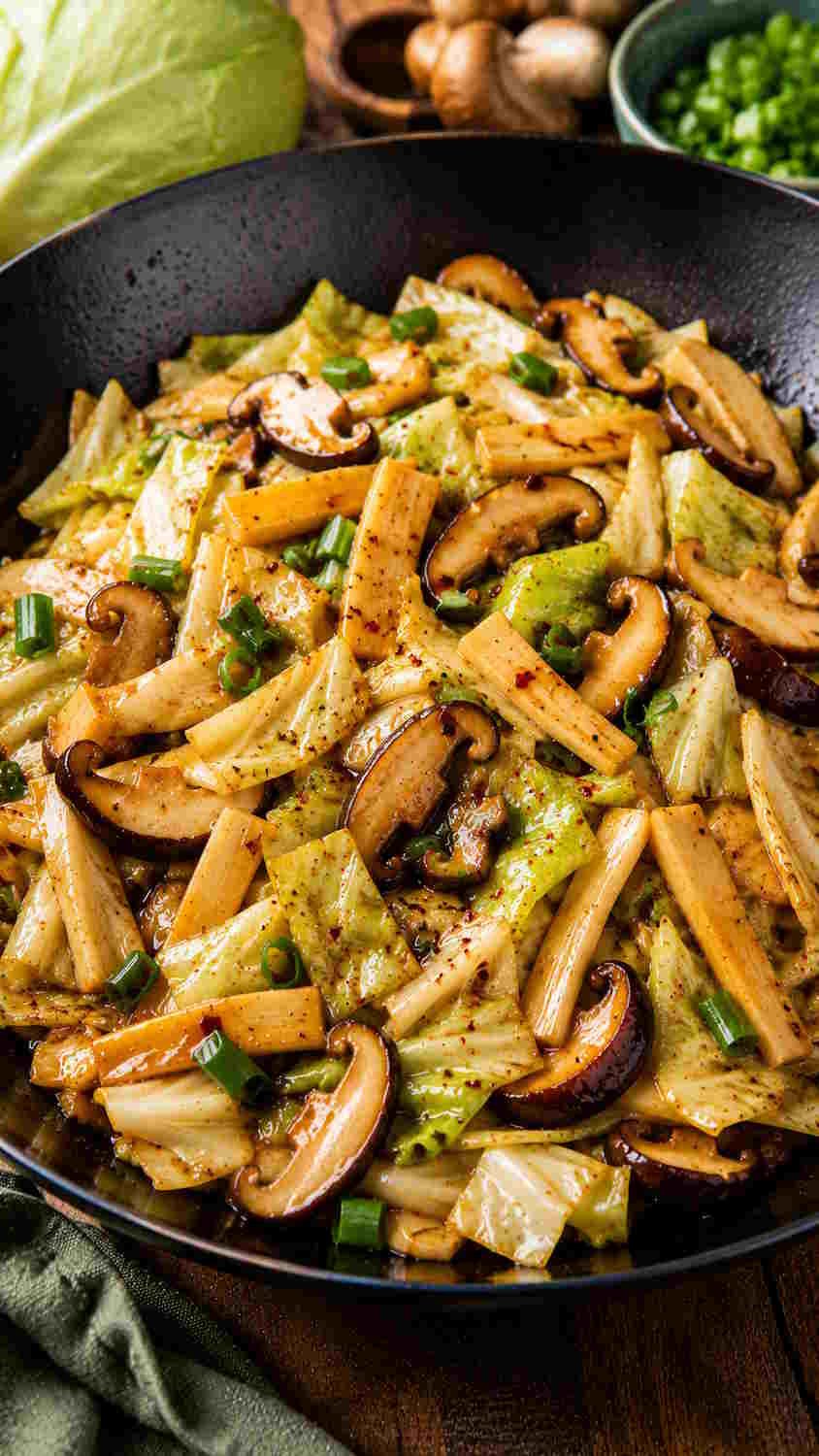

Mu Shu Vegetables
Ingredients
Equipment
Method
- Stir-fry the vegetables in a hot pan wok for about 3 minutes
- Mix the sauce and ingredients together.
- Add the sauce to the vegetables and cook until everything is well combined.
- Serve with warm, thin pancakes
Nutrition
Notes
Tried this recipe?
Let us know how it was!Chef Tips for Perfect Mu Shu Vegetables
Slice everything thin and even: Mu shu is all about fine, uniform shreds. Matchstick the carrots and finely slice the cabbage so everything cooks at the same rate.
Prep before you cook: Stir-frying moves fast, so have every vegetable and the sauce measured and ready beside the stove before the wok gets hot.
Get the wok screaming hot: High heat is what gives stir-fry its flavor and keeps the vegetables crisp-tender instead of soggy.
Do not crowd the pan: Cook in two batches if your wok is small. Overcrowding drops the temperature and steams the vegetables.
Drain the bamboo shoots well: Rinse and drain canned bamboo shoots thoroughly so they stay crisp and do not water down the sauce.
Add the sauce at the end: Toss the sauce in during the final minute so the cabbage keeps its bite and the sauce clings without going gummy.
This stir-fry is a meal-prep favorite, so a little planning keeps a quick lunch close at hand.
Storage and Serving Suggestions
Refrigerator Storage: Store cooled mu shu vegetables in an airtight container in the fridge for 3 to 4 days. The flavor holds up well, making it a great make-ahead lunch.
Freezer Storage: You can freeze it for up to a month, though the vegetables soften on thawing. For the best texture, enjoy it fresh or from the fridge.
Reheating: Reheat in a hot pan or wok rather than the microwave to bring back some of the stir-fried crispness. Add a splash of water if it looks dry.
Complete the Meal: Serve in mandarin pancakes or over rice, add a protein like bang bang chicken, and round things out with a low-carb side such as sweet potato shoots salad. For more lighter takeout-style ideas, see our guide to healthy Chinese food choices.
Frequently Asked Questions
What are mu shu vegetables?
Mu shu vegetables are a Chinese stir-fry of finely sliced cabbage, mushrooms, bamboo shoots, and carrots, often with egg, tossed in a savory soy-and-hoisin sauce. They are the meat-free version of mu shu pork and are traditionally served wrapped in thin mandarin pancakes. The dish is light, fast, and full of crisp-tender texture.
Are mu shu vegetables gluten-free?
Not automatically. Standard soy sauce and hoisin sauce are both made with wheat, so a typical mu shu is not gluten-free. To make it gluten-free, swap in tamari and a certified gluten-free hoisin, and double-check any other bottled sauces, since some contain trace wheat.
What do you serve with mu shu vegetables?
Thin mandarin pancakes with a smear of hoisin are the classic pairing, but mu shu vegetables are just as good over steamed rice or cauliflower rice, or spooned into crisp lettuce cups. Add a protein like tofu, egg, or chicken to make it a more substantial meal.
Can I make mu shu vegetables ahead of time?
Yes, it is excellent for meal prep. Store it in an airtight container in the fridge for 3 to 4 days and reheat in a hot pan to revive the texture. It can be frozen for up to a month, though the vegetables will soften once thawed.
Hungry for more easy, better-than-takeout dishes? These reader favorites are a natural next step.
You Might Also Like
Silky make-ahead noodles in a nutty sesame sauce, served chilled.
A light, high-protein Sichuan classic with a nutty, gently spicy sauce.
Four fresh low-carb bowls, including an Asian zucchini noodle version.
Sixteen lighter, blood-sugar-friendly picks for your next Chinese meal.
Final Thoughts
Mu shu vegetables prove that a fast, plant-forward dinner can taste every bit as good as takeout. With a hot wok and a handful of crisp vegetables, you have a light, savory meal in about 35 minutes. Make it once, and it will become a go-to whenever the takeout craving strikes.
Medical Disclaimer: The nutritional information provided in this article is for informational purposes only. While we strive for accuracy, individual responses to foods vary. Always consult with your healthcare provider or registered dietitian about dietary changes.


