Published May 23, 2026 · Updated August 18, 2026
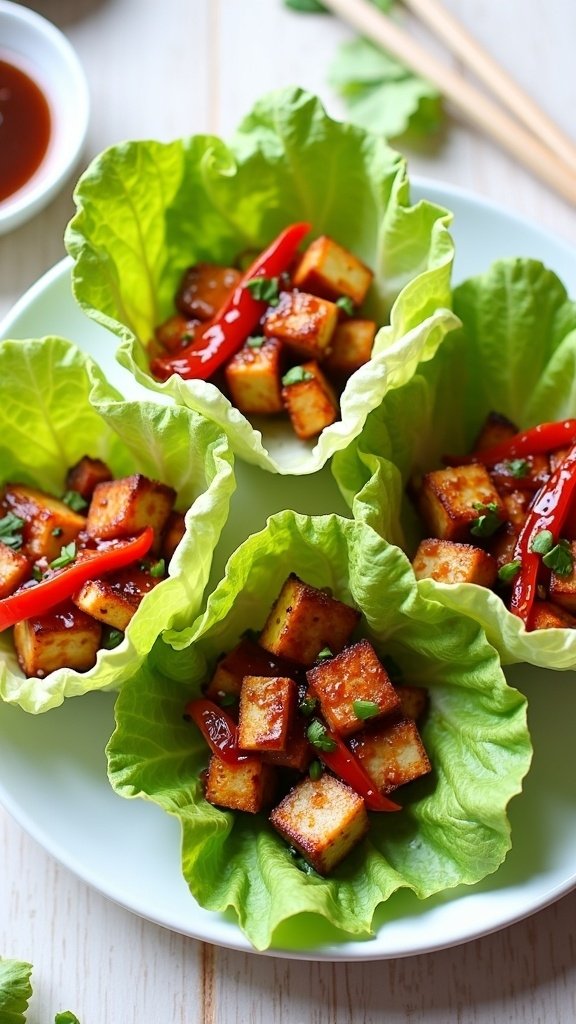
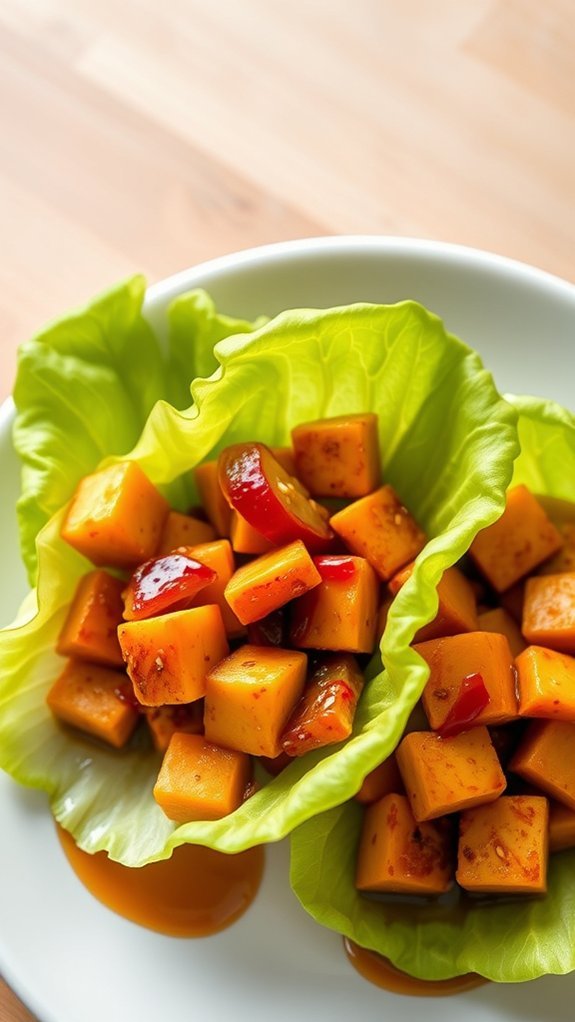
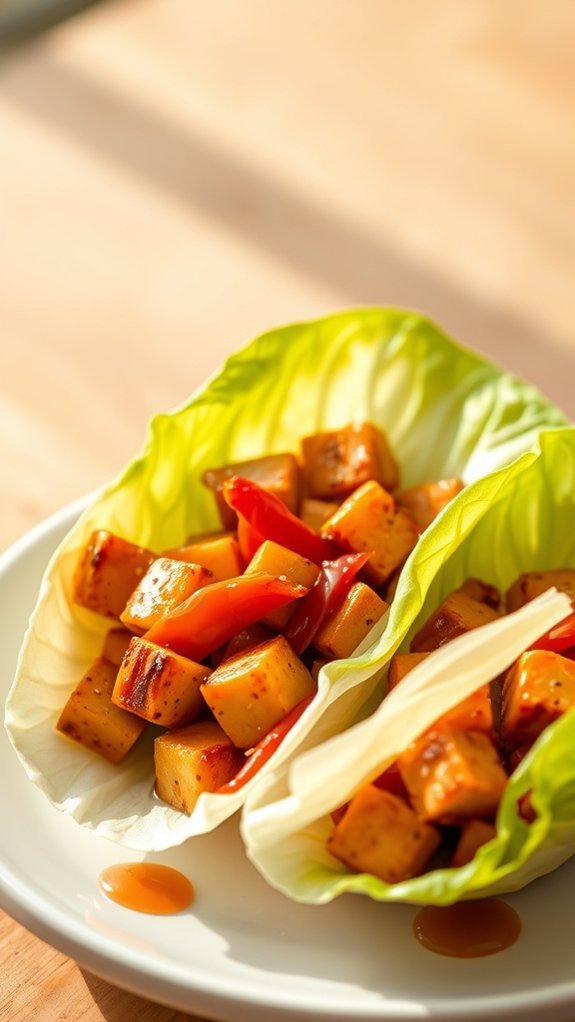
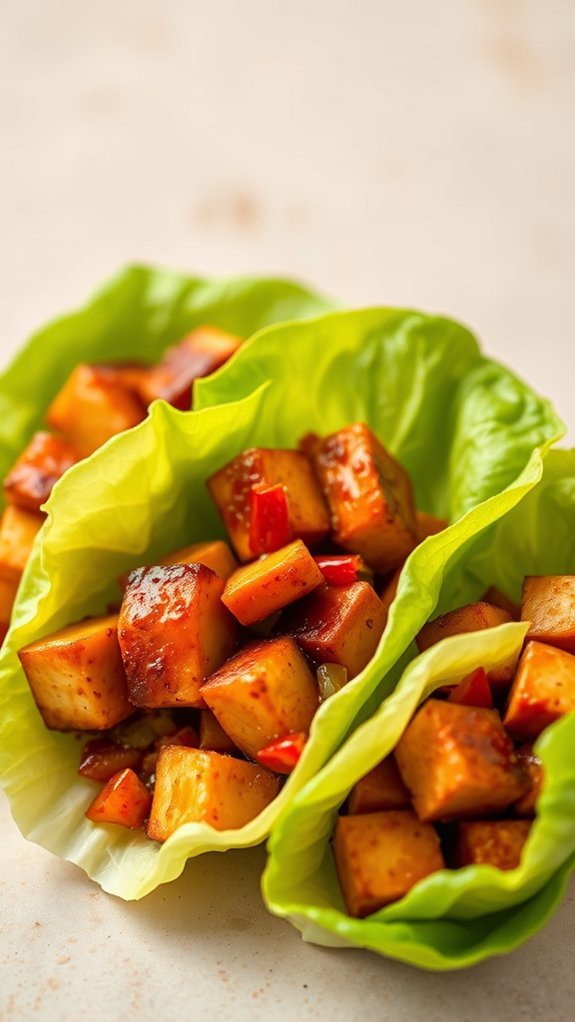
This vegan lettuce wrap recipe takes the PF Chang ‘s-style appetizer and rebuilds it at home with crispy dry-fried tofu, caramelized peppers and onions, and a hoisin-mustard sauce that tastes like restaurant takeout without the takeout markup. Twenty-five minutes start to finish, naturally vegan, gluten-free with a tamari swap, and just 169 calories per serving with 11 grams of protein. Butter lettuce is the cup of choice, crisp, scoop-shaped, and built for filling.
Lettuce Wrap Recipe Quick Stats
*Gluten-free with tamari instead of soy sauce and a certified gluten-free hoisin brand.
Why This Lettuce Wrap Recipe Works
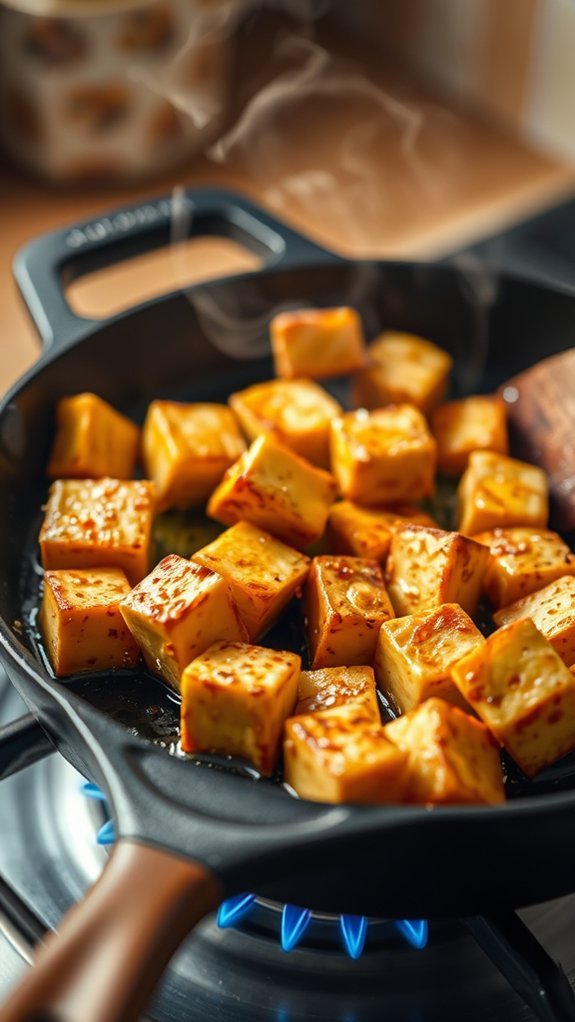
Dry-frying delivers actual crispy tofu: Most home tofu recipes simmer or steam the tofu into bland sponginess. Dry-frying in a hot skillet without oil (just a spray of nonstick cooking spray) drives moisture out of the surface and creates a golden crust that holds up to a glossy sauce without going soggy. Ten minutes flipping in a hot pan is genuinely the whole technique.
Hoisin and mustard balance the sauce: Straight hoisin can taste one-note sweet. Adding a tablespoon of mustard cuts through the sweetness with bright acidity and a peppery kick, the same flavor balance that classic Chinese mustard does for restaurant lettuce wraps, built from pantry staples instead.
Naturally plant-based protein with real numbers: Tofu delivers 11 grams of complete protein per serving from non-animal sources, with no cholesterol and just 8 grams of fat. The bell pepper and onion add 3 grams of fiber and meaningful vitamin C and A.
Made-to-order interactive eating: Lettuce wraps are the dinner-party appetizer that people remember, you serve the filling and lettuce leaves separately, guests assemble their own, and the crisp-vs-warm contrast is what makes them memorable. The recipe also doubles or triples cleanly if you’re feeding a crowd.
PF Chang’s Lettuce Wraps vs. This Homemade Version
| Nutrient (per serving) | PF Chang’s Vegetarian Lettuce Wraps | This Recipe | Difference |
|---|---|---|---|
| Calories | 390 | 169 | -221 (57%) |
| Sodium | 1,940mg | 718mg | -1,222mg (63%) |
| Sugar | 22g | 6g | -16g (73%) |
| Fat | 21g | 8g | -13g (62%) |
| Protein | 10g | 11g | +1g (more) |
| Fiber | 3g | 3g | Comparable |
The full Lettuce Wrap Recipe card is below with all ingredients, equipment, step photos, and the method.

Lettuce Wrap Recipe | Vegan Hoisin-Mustard Tofu, 25 Min
Ingredients
Equipment
Method
- Heat a cast iron or heavy-bottomed nonstick skillet over medium heat. Spray with nonstick cooking spray and let it come to temperature.

- Cube the pressed tofu into ¾-inch pieces and add to the skillet. Dry-fry for about 10 minutes, flipping halfway through until golden brown on multiple sides. Drizzle the soy sauce (or tamari) over the tofu and toss to coat.
- In a second pan, heat the sesame oil over medium heat. Add the chopped red bell pepper, onion, garlic, ginger, and red pepper flakes. Sauté for about 10 minutes until the vegetables soften and start to caramelize at the edges.
- Add the mirin to the vegetable mixture and simmer for 3 minutes to cook off the alcohol and concentrate the sweetness.
- Stir in the hoisin sauce and mustard, cooking for another minute until the sauce is glossy and well combined. Add the dry-fried tofu to the sauce and toss to coat every piece thoroughly.
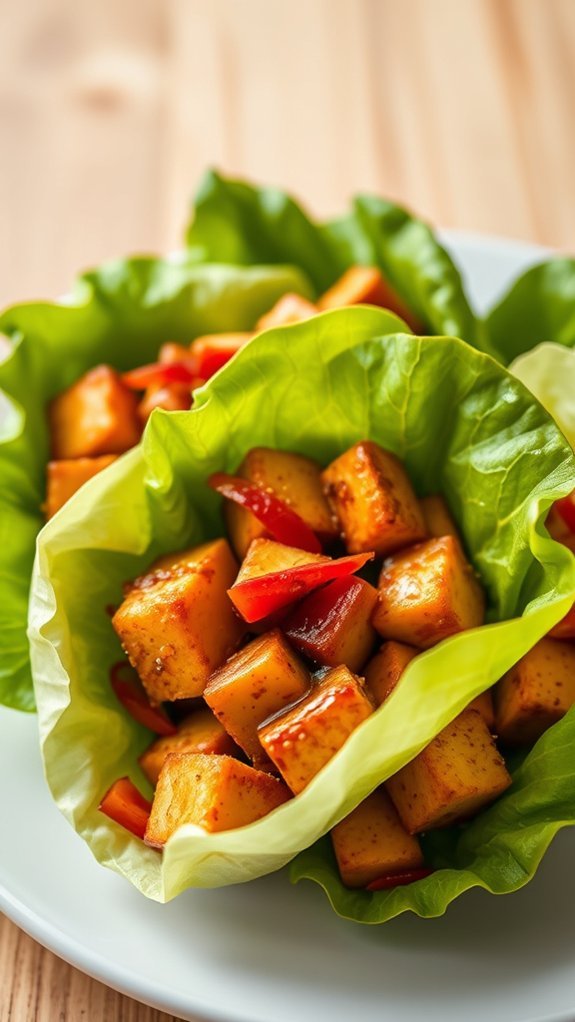
- Spoon the tofu and sauce mixture into the fresh lettuce leaves, serving immediately while warm and the lettuce is still crisp.
Nutrition
Notes
Tried this recipe?
Let us know how it was!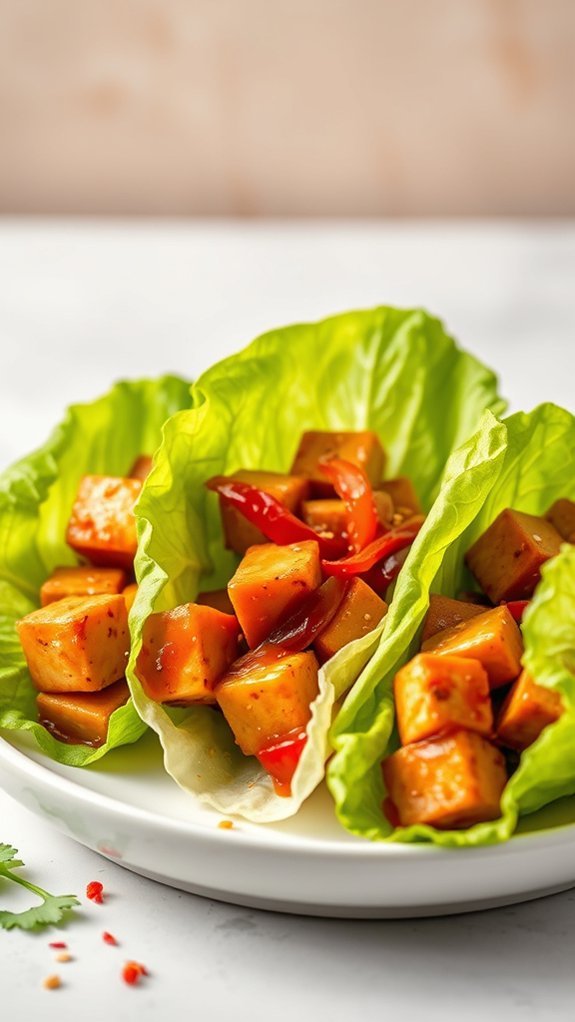
Chef Tips for Perfect Lettuce Wraps
Press your tofu before you fry it: Tofu straight from the package is roughly 70% water. Press it between two plates with a weight on top for 30 minutes (or 10 minutes in a dedicated tofu press) to drive out moisture. Pressed tofu crisps up dramatically better than unpressed, the difference between “soggy curd” and “golden cube.”
Dry-fry on real heat, not gentle heat: Medium-high is the right setting. Too low and the tofu just dries out without browning; too high and the outside burns before the surface seals. Aim for a steady sizzle when the tofu hits the pan, that’s the Maillard reaction starting.
Pick the right lettuce: Butter lettuce is the gold standard, its cup-shaped leaves hold filling without leaking and stay crisp through serving. Iceberg works if you want sturdier wraps. Avoid romaine (too flat) and red leaf (too floppy). For a low-carb keto-leaning variant, big leaves of cabbage hold up even better.
Caramelize the vegetables, don’t just soften them: Sautéing the pepper and onion past the translucent stage, until the edges turn golden and the natural sugars concentrate, adds the depth that makes restaurant lettuce wraps taste different from home versions. This takes the full 10 minutes the recipe calls for, not 4.
Cook the mirin separately for 3 minutes: Mirin contains alcohol. Adding it to the vegetables and simmering for 3 full minutes burns off the alcohol while concentrating the sweetness, what you want. Skipping this step leaves a slightly harsh edge in the sauce.
Assemble at the table, not in the kitchen: Don’t pre-fill the lettuce cups. The warm tofu mixture will start wilting the leaves within a few minutes. Plate the filling in a serving bowl, arrange the lettuce leaves on a separate platter, and let everyone build their own. Better texture, better experience.
Storage and Serving Suggestions
Refrigerator Storage: Store the tofu-vegetable filling and the lettuce leaves separately. The filling holds for 3 days in an airtight container in the fridge; lettuce stays crisp 4 to 5 days wrapped in paper towels inside a zip-top bag.
Freezer Storage: The cooked tofu filling freezes acceptably for up to 2 months, though the tofu loses some crispiness on thawing. Thaw overnight in the fridge and re-crisp briefly in a hot skillet before serving. Don’t freeze the lettuce, it turns to mush.
Meal Prep Strategy: A weekend batch of the tofu filling makes 3 to 4 weekday lunches. Pack the filling in one container, lettuce leaves in another, and assemble at the office in 30 seconds. The filling is also great spooned over rice, cauliflower rice, or quinoa if you want a heartier bowl format.
Complete the Meal: Lettuce wraps work as a starter for a larger Asian meal or as a standalone light dinner. Pair with our bok choy recipe for a fresh greens side, our sweet and sour tofu for a double-tofu spread, or build them into a larger meal alongside our keto wraps guide for variety. For a meatier lettuce wrap variation, our chicken and avocado lettuce wraps use the same butter-lettuce technique with a different filling. More vegetarian-keto lunch ideas in our 17 best vegetarian keto lunch ideas roundup.
Lettuce Wrap Recipe FAQs
What lettuce is best for lettuce wraps?
Butter lettuce (also sold as Boston or Bibb lettuce) is the gold standard, its naturally cup-shaped leaves hold filling without leaking and stay crisp through serving. Iceberg also works well for sturdier wraps. Avoid romaine (too flat to hold filling) and red leaf or green leaf (too floppy). For a low-carb keto variant, big cabbage leaves or radicchio cups hold up beautifully.
How do I get crispy tofu for lettuce wraps?
Two non-negotiable steps: press the tofu for at least 10 minutes before cooking (a tofu press or two plates with a weight on top) to remove excess moisture, and dry-fry it in a hot skillet with just a spray of nonstick cooking spray, no oil pool. The combination drives surface moisture out and creates a real Maillard crust, not the spongy texture most home cooks end up with.
Are these lettuce wraps gluten-free?
Yes, with two ingredient swaps. Replace the soy sauce with tamari (1:1 swap), and use a certified gluten-free hoisin brand, some standard hoisin sauces contain wheat. With those two swaps, the recipe is naturally gluten-free, and the flavor is identical.
How do I make a low-sugar lettuce wrap for people with diabetes?
The 6g of sugar in this recipe comes almost entirely from the hoisin sauce. Swap the hoisin for a sugar-free hoisin substitute, or make your own quick sauce by whisking together 2 tablespoons of natural peanut butter, 1 tablespoon of tamari, 1 teaspoon of rice vinegar, and a few drops of monk fruit syrup. The flavor profile stays close to authentic, and the sugar drops to under 2g per serving.
You Might Also Like
A vegetarian Chinese classic, tofu, mushrooms, and vegetables in a savory sauce, perfect alongside lettuce wraps.
A low-carb take on the takeout favorite, 7g net carbs, big Asian flavor, restaurant-quality at home.
Five vegetarian-friendly low-carb bowl recipes that work for the same audience as lettuce wraps.
An Asian-flavored cold noodle dish that doubles as a perfect side for a lettuce-wrap dinner spread.
Lettuce Wrap Recipe Closing Words
A good lettuce wrap recipe earns its place in your weeknight rotation by being fast, naturally plant-based, satisfying enough to call dinner, and impressive enough to call an appetizer. Crispy tofu, caramelized vegetables, a glossy hoisin-mustard sauce, and crisp butter lettuce cups, that’s the whole game in 25 minutes. Build the filling on Sunday, eat lettuce wraps three times across the week, and you’ll wonder why you ever ordered them out.
Medical Disclaimer: The nutritional information provided in this article is for informational purposes only. While we strive for accuracy, individual responses to foods vary. Always consult with your healthcare provider or registered dietitian about dietary changes.


