Published June 22, 2026 · Updated June 26, 2026
Crème anglaise is the quiet workhorse of the French dessert kitchen: a thin, pourable vanilla custard made from nothing more than milk, cream, egg yolks, sugar, and vanilla. Spoon it over a warm chocolate cake, pool it under poached fruit, or use it as the silky base for ice cream and floating island. It looks effortless because it nearly is. The only real skill is cooking the yolks gently enough that they thicken without scrambling.
Quick Stats
Why This Recipe Works
Five honest ingredients: A true vanilla crème anglaise needs only milk, cream, egg yolks, sugar, and vanilla. There are no stabilizers, no cornstarch, and no shortcuts, so the flavor is pure dairy and vanilla with nothing competing for attention.
Gentle cooking keeps it silky: Cooking the yolks slowly to the nappe stage thickens the custard with egg protein alone. That low and slow approach is what gives crème anglaise its glossy, spoon-coating body instead of a grainy or scrambled texture.
Tempering protects the eggs: Pouring the hot milk into the yolks in a thin stream warms them gradually, so they set into a smooth sauce rather than curdling. It is the single technique that turns nervous cooks into confident ones.
A versatile base, not just a sauce: The same custard pours warm over cake and fruit, chills into a sauce for plated desserts, and churns into the foundation of classic vanilla ice cream. One recipe quietly unlocks a dozen others.
Make-ahead friendly: Crème anglaise holds in the refrigerator for up to three days, so it is easy to prepare before guests arrive and serve warm or cold whenever dessert lands on the table.
Crème Anglaise vs. Pastry Cream
Both are egg-and-dairy custards, but they behave very differently on the plate. Crème anglaise is a pourable sauce, while pastry cream (crème pâtissière) is a thick, pipeable filling. Here is how the two compare.
| Attribute | Crème Anglaise | Pastry Cream |
|---|---|---|
| Thickened with | Egg yolks only | Egg yolks plus starch |
| Consistency | Thin and pourable | Thick and pipeable |
| Cooked to | 175 to 180°F (nappe) | Full boil |
| Best used for | Pouring over cake and fruit | Filling éclairs and tarts |
| Served | Warm or cold | Chilled |
If you can make a smooth crème anglaise, pastry cream is only a spoonful of cornstarch and a quick boil away.
Here is the full classic vanilla crème anglaise recipe, with exact measurements and step-by-step timing.
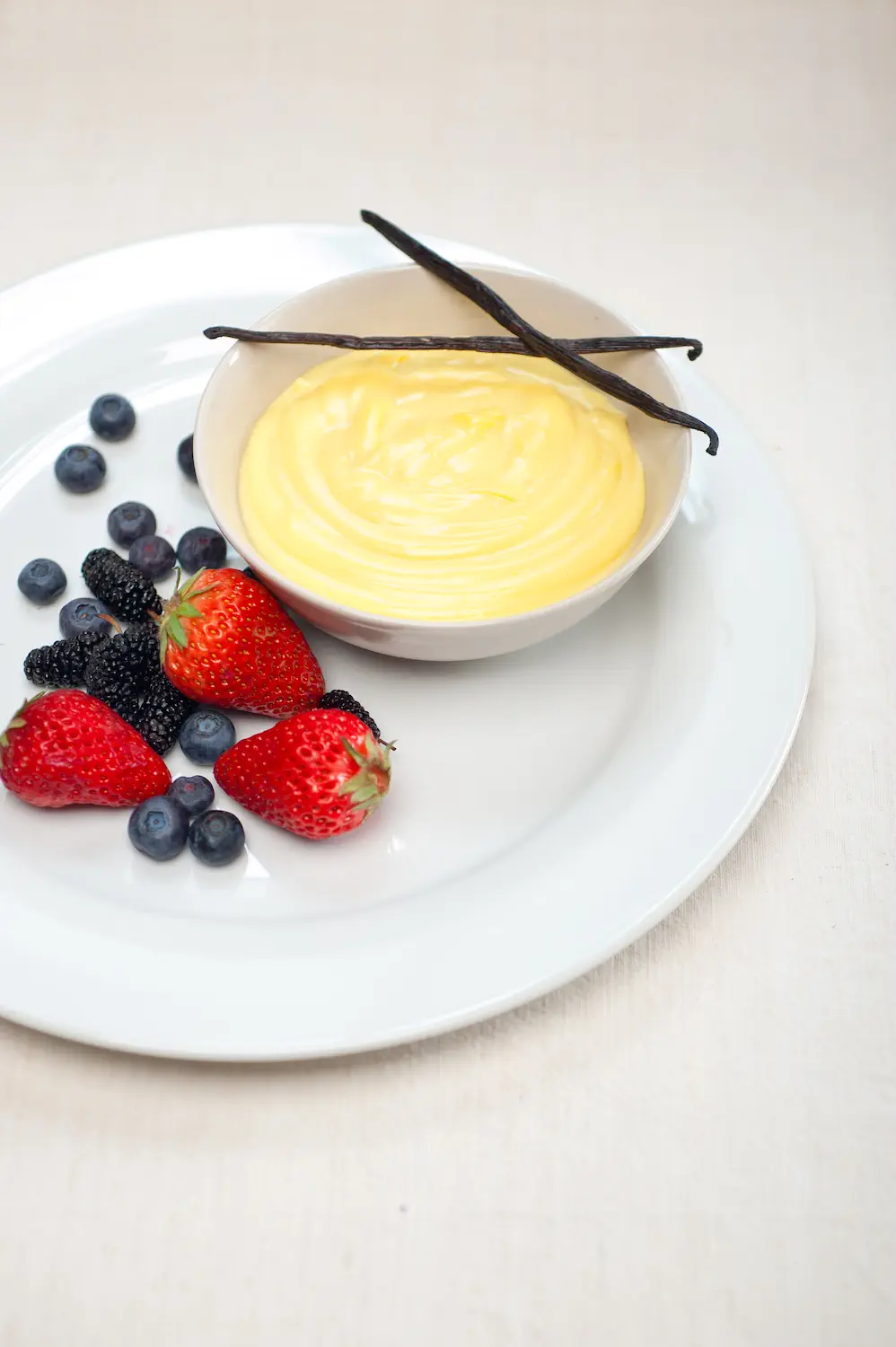

Crème Anglaise | Classic Vanilla Custard Sauce
Ingredients
Equipment
Method
- In a bowl, whisk the egg yolks and sugar together until pale and slightly thickened.
- In a saucepan, heat the milk and cream over medium heat until steaming and just about to simmer. Do not let it boil.
- Whisking constantly, pour the hot milk into the yolks in a thin stream to temper them. This warms the eggs gradually so they do not scramble.
- Return the mixture to the saucepan. Cook over medium-low heat, stirring constantly with a wooden spoon, until the custard coats the back of the spoon (the nappe stage), about 175 to 180°F (80 to 83°C). Never let it boil.
- Remove from the heat, stir in the vanilla, and immediately strain through a fine sieve into a clean bowl.
- Cool, cover, and refrigerate until ready to serve. Serve warm or cold.
Nutrition
Notes
Tried this recipe?
Let us know how it was!Looking for more ways to use it? Try this same pour-over treatment with our Milk Street invisible apple cake, or compare it to the Heritage Diner version in our Murray’s vanilla dessert sauce.
Chef Tips for Perfect Crème Anglaise
Temper slowly: Add the hot milk to the yolks in a thin, steady stream while whisking without stopping. Rushing this step is the most common way to end up with scrambled flecks instead of a smooth custard.
Trust the temperature, not the clock: The custard is ready at the nappe stage, around 175 to 180°F (80 to 83°C), when it coats the back of a spoon and a finger drawn through it leaves a clean line. Cooking egg dishes to a safe, gentle finish is also good food-safety practice, as the FDA notes for egg-based dishes. Never let it boil, or the yolks will set hard.
Keep the spoon moving: Stir constantly with a wooden spoon, scraping the bottom and corners of the pan so no yolk sets and grabs. Low, even heat does the work; impatience does the damage.
Have an ice bath ready: If you sense it is thickening too fast, pull the pan off the heat and set the bowl over a larger bowl of ice water, stirring for a minute. Residual heat keeps cooking the custard even after the burner is off.
Always strain: Pouring the finished sauce through a fine sieve catches any stray cooked bits and guarantees the glossy, lump-free texture that makes crème anglaise feel restaurant-made.
Upgrade to vanilla bean: For a deeper vanilla bean crème anglaise, steep the seeds and split pod in the warming milk, then strain them out at the end. The flecks and aroma are worth the small extra step.
Storage and Serving Suggestions
Refrigerator Storage: Keep crème anglaise covered in the refrigerator for up to 3 days. Press a piece of plastic wrap directly onto the surface to stop a skin from forming.
Freezer Storage: Freezing is not recommended. The custard tends to separate and turn grainy on thawing, so it is best made fresh or within a few days.
Meal Prep Strategy: Make it a day ahead and chill. If it thickens too much in the fridge, loosen it with a splash of cold milk and whisk it smooth before serving. Serve it warm or cold.
Complete the Meal: Pour it over our flourless chocolate cake, spoon it alongside easy baked rice pudding, or use it as the silky counterpoint to a warm Murray’s rice custard pudding.
Frequently Asked Questions About Crème Anglaise
Why is my crème anglaise not thickening?
Crème anglaise thickens from egg protein, so it needs gentle, sustained heat to reach the nappe stage at about 175 to 180°F (80 to 83°C). If it stays thin, the heat is too low, or you pulled it off too soon. Keep stirring over medium-low heat until it coats the back of a spoon, but never let it boil, or the yolks will curdle.
How long does crème anglaise last?
Stored covered in the refrigerator, crème anglaise keeps for up to 3 days. Press plastic wrap onto the surface to prevent a skin, and whisk in a splash of cold milk if it firms up too much before serving. Freezing is not recommended because the custard separates on thawing.
What is the difference between crème anglaise and pastry cream?
Crème anglaise is thickened with egg yolks alone, so it stays thin and pourable, perfect as a sauce. Pastry cream (crème pâtissière) is thickened with cornstarch and boiled, making it thick enough to pipe into éclairs and tarts. Same custard family, very different jobs.
Can you make crème anglaise with milk instead of heavy cream?
Yes. This recipe already leans on milk with just a splash of cream, and you can use all milk for a lighter sauce or half-and-half for a richer one. More cream gives a thicker, more luxurious custard, while all milk keeps it pourable and delicate.
You Might Also Like
A warm baked custard pudding that loves a pour of crème anglaise alongside.
Creamy, comforting, and even better with a spoonful of vanilla custard sauce.
A delicate apple cake that practically asks for a pool of crème anglaise.
Dense and rich, the classic partner for a cool ribbon of vanilla custard.
Final Thoughts
Crème anglaise rewards patience more than skill: keep the heat gentle, the spoon moving, and the sieve ready, and you will have a glossy vanilla custard sauce that makes any dessert look intentional. Make it once, and it becomes a habit, because almost everything sweet is better under a pour of it.
Medical Disclaimer: The nutritional information provided in this article is for informational purposes only. While we strive for accuracy, individual responses to foods vary. Always consult with your healthcare provider or registered dietitian about dietary changes.