
Published March 2, 2026 · Updated July 30, 2026
A 2007-2009 study of Boston middle schoolers found students consumed only 58% of the calories served at lunch, discarding 73% of vegetables and 25% of milk outright, a pattern that, scaled nationally, wastes an estimated $1.2 billion a year in school food. Good picky eater lunch box ideas start with one food your child already trusts, add small portions of one or two other foods, and adjust for what your child can actually manage at their age. This guide covers the feeding strategy and lunchbox mechanics that work at every age, plus highlights from our age-specific idea lists: kindergarten, middle school, and high school.
Short on time? Jump straight to ideas by age, lunchbox hardware and sandwich science, or the FAQs.
In this Picky Eater Lunch Box Ideas Article
Quick Stats: The Full Picky Eater System
Why This System Works
It follows the “what, when, and where” rule, not a new one: registered dietitian Ellyn Satter’s Division of Responsibility, endorsed widely in pediatric feeding guidance, holds that the adult decides what food is offered and when, while the child decides whether and how much to eat of it. Every idea across all three age guides is built to be offered neutrally, not negotiated over.
It is organized by developmental stage, not just food type: a kindergartener and a high schooler fail at the same lunch box for different reasons, choking risk and portion size for one, time pressure and social self-consciousness for the other, so the ideas live on three separate, age-specific pages rather than one long list.
It treats a rejected food as data, not defiance: a food a child only looks at, touches, or smells still counts as a step toward accepting it. Children often need 12 to 15 distinct, neutral exposures to a new food before they accept it, and none of those exposures require an actual bite.
Nut-free is treated as a label question, not a promise: several ideas across every age guide can be made without nuts, but “may contain” statements and individual school policies decide what is actually safe, not a blanket claim on any of these pages.
The Feeding Relationship: Why Pressure Backfires
Before any lunch idea, the single most useful shift most parents can make is procedural, not culinary. Commenting on how much a child ate, bribing them to finish vegetables, or showing disappointment over a full lunchbox all add pressure, and pressure tends to make selective eating worse, not better. The adult’s job stops at packing a balanced lunch and offering it without comment. What the child does with it, eating all of it, some of it, or just the familiar piece, is theirs to decide.
Two techniques make that easier to put into practice. The first is food chaining: introducing a new food that shares a texture, color, or flavor with something already accepted, so a child who only eats chicken nuggets might move to a breaded fish stick before trying grilled chicken, rather than jumping straight there. The second is a texture ladder: gradually shifting the physical form of a food, from pureed to mashed to soft-cooked to raw and crunchy, for children whose resistance is about mouthfeel rather than flavor. Both work slowly, and both work better without pressure attached.
The Rule of 5
Across every age, the same structure repeats: one vegetable, one fruit, two protein sources (dairy can count as one), and one whole grain. It is not a strict requirement; some days one category will be thin, but it is a fast mental checklist when you are packing lunches at 7 a.m. and do not have time to think about macronutrients.
What Federal Guidance Says About Added Sugar and Sodium
The 2025-2030 Dietary Guidelines for Americans, released by the USDA and HHS in January 2026, recommend no more than 10 grams of added sugar per meal, with packaged grain snacks (crackers) capped around 5 grams of added sugar per three-quarter-ounce serving and dairy snacks (yogurt) around 2.5 grams per two-thirds cup. Sodium guidance scales by age: under 1,200 mg a day for children under 3, 1,500 mg for ages 4 to 8, 1,800 mg for ages 9 to 13, and under 2,300 mg for 14 and older. These are daily totals across all meals, not lunch box thresholds on their own, but they are a useful check when comparing a homemade lunch to a packaged one.
Strategic Lunchbox Preparation: Hardware and Sandwich Science
For a child with sensory sensitivities, foods touching each other can make an entire lunch feel inedible before a single bite. Compartmentalized bento-style containers address that directly: separating foods prevents moisture, flavor, and texture from bleeding into each other, and opening one lid to a tidy, visually organized layout is less overwhelming than unzipping several bags of large portions.
Bento Box Options by Need
| Box | Material | Best For |
|---|---|---|
| OmieBox | BPA-free plastic and stainless steel, built-in thermos | Warm and cold food side by side. Note: at least one independent review found the built-in thermos did not keep food hot for a full school day in testing, so pair it with food that is already warm rather than food that needs to stay hot for hours. |
| PlanetBox Rover | Stainless steel, five compartments | Durable, plastic-free, dry “grazing” foods; not fully leak-proof for thin liquids. |
| Bentgo Kids | BPA-free plastic, rubberized edges | Younger children, ages roughly 3 to 7; smaller portions and drop-resistant. |
| Yumbox Original | BPA-free plastic, silicone seal | Leak-proof enough for yogurt or applesauce; pre-portioned sections model balanced packing. |
| Takenaka Bento Bite Dual | PBT plastic, two-tiered | Middle and high schoolers who need larger portions and gear that does not read as juvenile. |
Keeping a Sandwich From Going Soggy
Moisture from tomatoes, wet condiments, or damp lettuce migrates into bread and breaks it down before lunchtime. Spreading a thin, edge-to-edge layer of softened butter or a high-fat spread on the interior of the bread creates a barrier that slows that migration. For a grilled sandwich meant to be eaten warm, spreading the outside of the bread with mayonnaise instead of butter produces a crispier, more golden crust that holds up better than a butter crust once packed. For the highest-moisture ingredients, pack them in a small separate container and have an older child assemble the sandwich right before eating rather than in the morning.
Lunch Ideas by Age
The 71 ideas across our three age guides live on their own pages, so each one can go deeper on what actually changes at that stage, portion sizes, choking safety, lunch-period length, peer pressure, and gear, rather than being compressed into one long list. Highlights from each are below.
Kindergarten Lunch Ideas (Ages 5 to 8)
Kindergarten lunch ideas need to solve for neophobia and a lunchbox a child can open alone. Two favorites from our full list of 18 kindergarten lunch ideas:
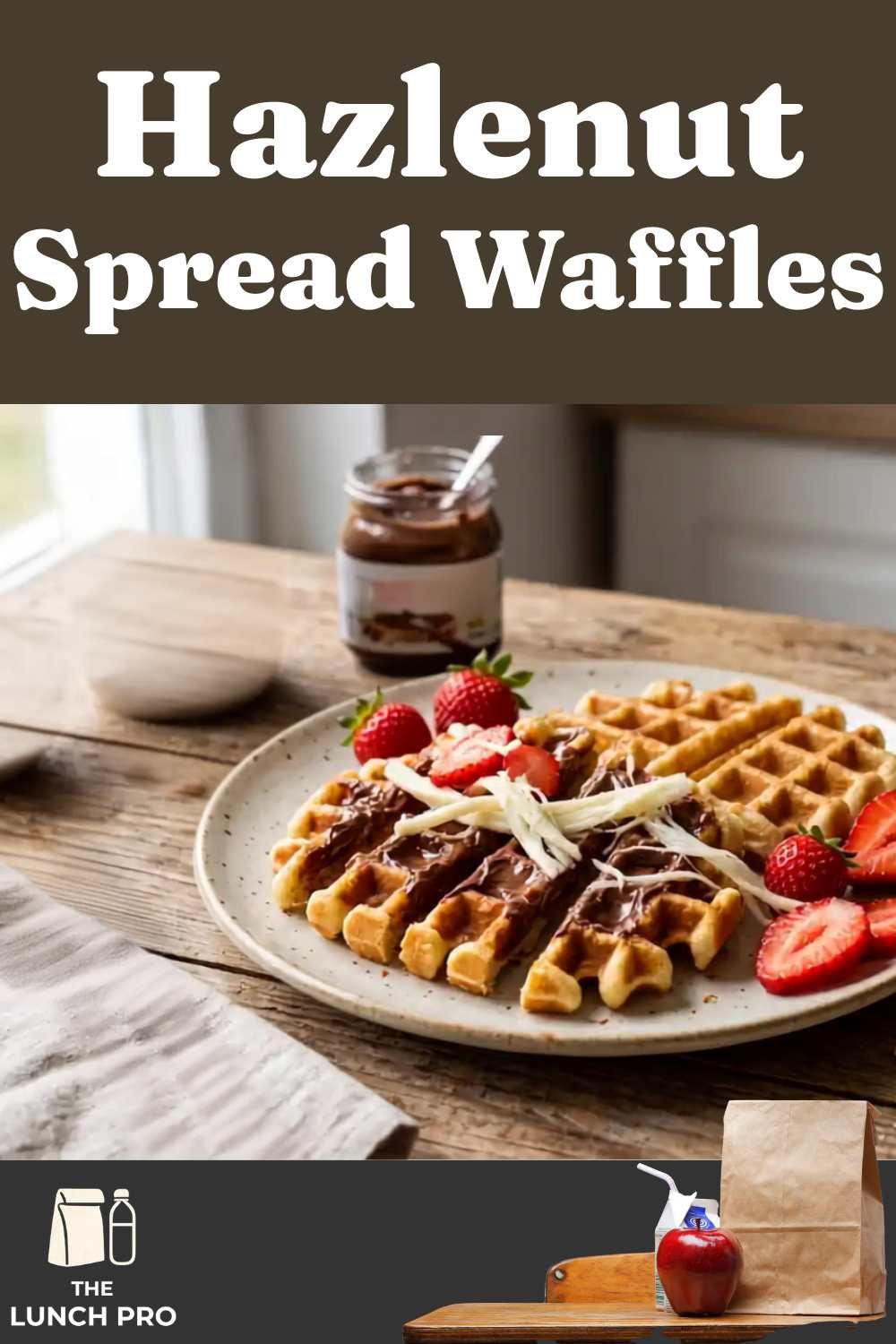
Hazelnut Spread Waffles and Cheese. Mini waffles, hazelnut spread, string cheese, and strawberries, an easy, familiar-format lunch most kindergarteners already accept.
Banana Sushi. Nut or seed butter and banana rolled in a tortilla and sliced into rounds, a playful format that turns an already-accepted flavor into something new to look at.
→ See all 18 kindergarten lunch ideas, plus choking-hazard guidance for this age
Middle School Lunch Ideas (Ages 9 to 13)
Middle school lunch ideas need to assemble fast and survive peer opinion. Two favorites from our full list of 18 middle school lunch ideas:
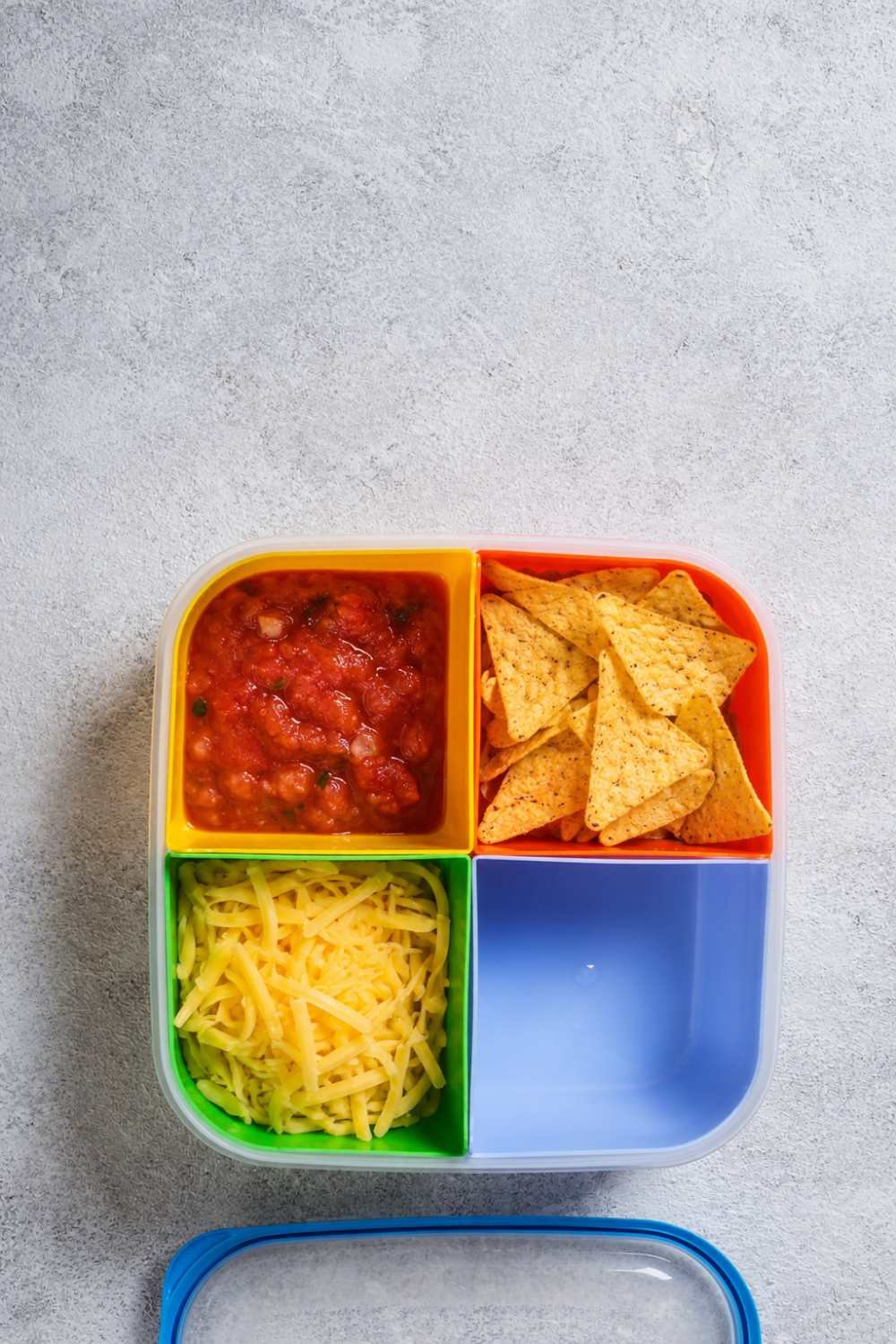
Build-Your-Own Nachos. Crackers or chips, shredded cheese, and salsa packed separately, letting a child assemble their own lunch, which restores some of the autonomy this age craves.
Thermos Mac and Cheese. A creamy, preheated thermos lunch that solves the “I don’t like cold leftovers” problem this age group often develops.
→ See all 18 middle school lunch ideas, plus a fast-lunch-period FAQ
High School Lunch Ideas (Ages 14 to 18)
High schoolers want autonomy more than novelty, and a lunch that reads as something they would order for themselves- a bowl, a wrap, a salad- tends to get eaten. We cover that stage in a dedicated guide rather than here: Healthy Lunches for Teenagers has 35 ideas built around grazing between classes, adult-style gear, and larger portions.
School Lunch Food Safety
Use an insulated lunch bag for foods that need temperature control. Pack an ice pack with cold foods such as deli meat, cheese, yogurt, eggs, cut fruit, hummus, and cooked rice. Heat hot food thoroughly and transfer it to a preheated insulated food container. Wash produce, hands, containers, and utensils before packing. Follow school allergen rules and read ingredient and precautionary labels every time, since product formulations can change. These practices align with Health Canada’s school lunch safety guidance.
Packing and Storage Quick Reference
Packing and Storage Quick Reference
Cold foods: deli meat, cheese, yogurt, eggs, cut fruit, hummus, and cooked rice all need an ice pack and an insulated bag.
Warm thermos foods: preheat the container with boiling water first, empty and dry it, then add food that is still steaming hot and close it right away. A thermos keeps hot food hot; it does not cook cold food.
Freezer prep: label portions with the food and date, cool anything cooked before freezing, and pack it still partly frozen so it thaws by lunchtime. For a full week’s worth of prep in one sitting, our Sunday school lunch meal prep guide builds this into a repeatable routine.
Most portable for an unpredictable day: dip boxes and pre-rolled items travel well without refrigeration for a few hours if the ice pack fails, a safer default for field trips or hot weather.
What to Do When Lunch Comes Home Uneaten
- Check logistics first. Ask whether the child had enough time, could open every container, and knew which food was meant to stay hot or cold.
- Check the portion. Reduce large servings before replacing the food.
- Check the condition. Soggy bread, browned fruit, warm yogurt, or clumped pasta may be the real problem.
- Keep one reliable food. Change only one part of the lunch so the next result tells you something useful.
- Offer rejected foods again without pressure. Repeated, neutral exposure alongside at least one liked food remains the most consistent recommendation in pediatric feeding guidance.
When Picky Eating May Need Professional Help
Ordinary picky eating is common, especially in early childhood, but a lunch-idea list cannot address every feeding problem. Speak with your child’s healthcare provider if their list of accepted foods keeps shrinking, especially if it drops under roughly 20 total foods, if eating causes fear or distress, if they have trouble chewing or swallowing, if they regularly gag or vomit, if they show possible nutrient deficiencies, or if you are concerned about weight, growth, or energy. Severe restriction can sometimes be associated with avoidant/restrictive food intake disorder, also called ARFID, and deserves individual assessment rather than another lunch idea.
You Might Also Like



Picky Eater Lunch Box Ideas Q&A
What should I put in a picky eater’s lunch box?
Start with one accepted main food, add a small portion of a familiar fruit or vegetable, then include one optional learning food. A dip or crunchy side can help, but there is no need to fill every compartment.
How can I keep a school lunch from getting soggy?
Cool cooked foods before sealing them, keep wet ingredients separate, pat washed produce dry, and create a barrier between bread and moist fillings with cheese, cream cheese, or seed butter. Test the packed texture at home if your child is especially sensitive to sogginess.
Are these lunches nut-free?
Several ideas across all three age guides can be made without nuts, but a lunch is only suitable when every ingredient follows the school’s allergy policy. Check labels for the ingredients and precautionary statements such as “may contain.”
Should I hide vegetables in my child’s lunch?
Blending vegetables into a familiar food can add variety, but secrecy can damage trust if a child discovers it. Tell your child what is in the food and continue offering vegetables in recognizable forms without pressure.
Where do I find ideas for my child’s specific age?
This page covers the feeding strategy and lunchbox mechanics that apply at every age, with the full idea lists living on their own pages: 18 kindergarten lunch ideas for ages 5 to 8, 18 middle school lunch ideas for ages 9 to 13, and 35 healthy lunches for teenagers for ages 14 to 18.
How many times should I offer a rejected food?
Children often need 12 to 15 distinct, neutral exposures before accepting a new food. Touching, smelling, or tasting and spitting out all count as progress, not just a finished bite, so a food that comes home untouched today is not a permanent rejection.
Final Thoughts
The feeding relationship behind these picky eater lunch box ideas is the same at every age: one familiar food, a small learning food beside it, and no pressure either way. Start with whichever age-specific guide matches your child today, and revisit this page as the strategy, not the specific ideas, that carries them from kindergarten through high school.
Sources and Medical References
- American Academy of Pediatrics: How Do I Help My Picky Eater Try More Foods?
- American Academy of Pediatrics: 10 Tips for Parents of Picky Eaters
- Centers for Disease Control and Prevention: Choking Hazards
- Health Canada: Safe School Lunches
- National Institute of Mental Health: Eating Disorders, Including ARFID
- Ellyn Satter Institute: The Division of Responsibility in Feeding
- National CACFP Association: 2025-2030 Dietary Guidelines for Americans Released
- PMC: School Lunch Waste Among Middle School Students (the Chef Initiative)
- Idaho Falls Pediatrics: How to Manage Picky Eating Children
- The Kitchn: Tips for Preventing Soggy Sandwiches
- Tasting Table: Martha Stewart’s Butter Trick for the Ultimate Melty Grilled Cheese
- BabyGearLab: The Best Lunch Boxes for Kids, Tested and Ranked
This article provides general information and is not a substitute for advice from your child’s pediatrician, registered dietitian, or feeding specialist.


