Published May 26, 2026 · Updated August 18, 2026
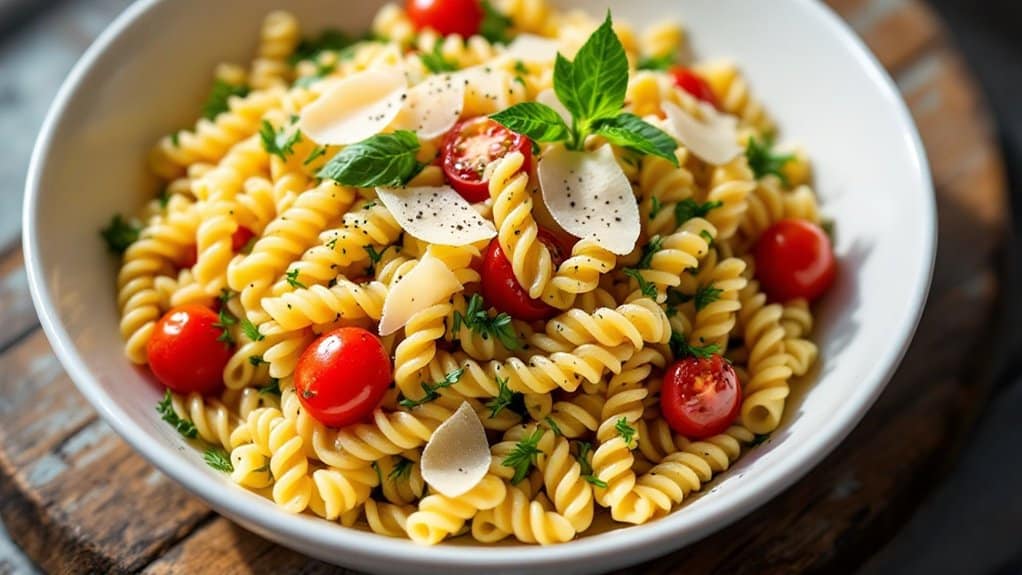
Cold pasta recipes earn a permanent spot in any make-ahead lunch rotation — they hold up to a fridge stay, they travel without needing a microwave, and the flavors actually deepen overnight as the herbs and dressings settle in. The three below cover classic basil pesto, a creamy dill-and-Greek-yogurt orzo, and a brighter mint-cilantro bowtie salad with honey-lime dressing. Pick one, batch four servings on Sunday, and lunch is sorted for half the week.
Quick Stats — All 3 Recipes
Cold Pasta Recipes
Why These Cold Pasta Recipes Work
Flavor improves overnight: Cold pasta dishes are one of the rare formats that actually get better as they sit. The pasta absorbs the dressing, the herbs release their oils, and the acidic ingredients (lemon, lime, vinegar) mellow into the base. Make them on Sunday night and Monday’s lunch tastes better than it would have fresh.
Built for no-microwave lunches: Cold pasta needs nothing but a fork. No reheating, no microwave queue at the office, no concern about texture loss in transit. Pack it in the morning and it eats well at noon.
Herbs do the heavy flavor lifting: Each of these three leans on fresh herbs as the headline ingredient rather than heavy sauces, which keeps the calorie load reasonable and the flavor bright. Basil, dill, mint, and cilantro each carry their own antioxidant and aromatic compounds, and the assertive flavors hold up even when the dish is served cold.
Protein flexibility: All three recipes work as vegetarian mains, but each absorbs added protein effortlessly. Chickpeas, grilled chicken, hard-boiled egg, shredded rotisserie, smoked salmon — pick one and you’ve turned a side into a satisfying main without rebuilding the recipe.
Hot Pasta Lunch vs. Cold Pasta Lunch (For Work)
| Factor | Hot Pasta Lunch | Cold Pasta Lunch | Advantage |
|---|---|---|---|
| Reheat required | Yes — microwave or stove | No — eat straight from container | Cold |
| Texture after fridge | Often gummy or dry | Improves overnight | Cold |
| Sauce binding | Cream-based, can split | Oil/yogurt/vinaigrette, stable | Cold |
| Make-ahead horizon | 1–2 days | 3–4 days | Cold |
| Portability | Needs thermos | Any container, any bag | Cold |
The 3 Cold Pasta Recipes
Each WPRM card below has the full ingredient list, step-by-step prep, dressing ratios, and storage notes. Same workflow across all three — cook the pasta al dente, shock in cold water, combine with dressing and herbs, then chill for at least 30 minutes before serving.
1. Chilled Basil Pesto Fusilli
The classic of the three. Fusilli’s spiral shape grabs every drop of pesto, which is exactly what you want in a cold pasta — no sauce pools at the bottom of the container. Traditional Genovese pesto works, but a walnut version (cheaper and nut-friendly for many who skip pine nuts) is just as good. For an Asian-inflected cousin of this format, cold sesame noodles use the same overnight-improves principle with sesame paste instead of pesto.
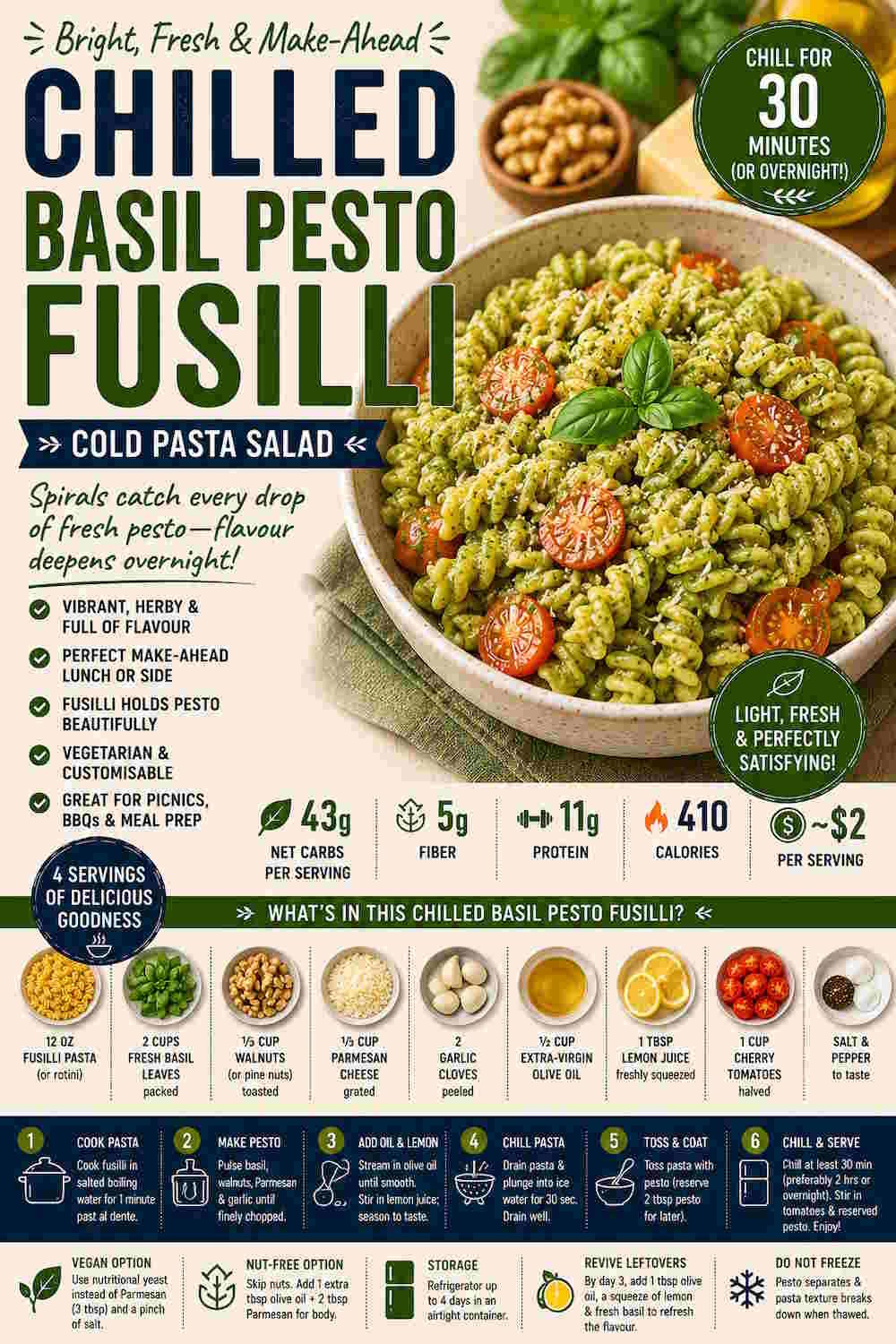

Chilled Basil Pesto Fusilli
Ingredients
Equipment
Method
- Bring a large pot of generously salted water to a boil. Add the fusilli and cook for 1 minute past the package’s al dente time — the pasta will firm up as it cools, so slightly soft now is perfect.
- While the pasta cooks, make the pesto. Combine the basil, walnuts, Parmesan, and garlic in a food processor and pulse until finely chopped.
- With the processor running, slowly stream in the olive oil until the pesto is smooth and emulsified. Stir in the lemon juice and season with salt and pepper to taste.
- Drain the pasta and immediately plunge it into a bowl of ice water for 30 seconds to stop the cooking and rinse off excess starch. Drain again thoroughly.
- Transfer the cooled pasta to a large mixing bowl. Reserve 2 tablespoons of pesto, then toss the pasta with the rest until evenly coated.
- Cover and chill in the fridge for at least 30 minutes (preferably 2 hours, or overnight). Just before serving, stir in the cherry tomatoes and the reserved pesto to refresh the flavour.
Nutrition
Notes
Tried this recipe?
Let us know how it was!2. Dill Greek Yogurt Orzo
The protein-richest of the three, thanks to a creamy Greek-yogurt-and-lemon dressing that doubles the protein per serving without adding meat. Fresh dill is the headline herb; cucumber and red onion bring crunch. The Greek yogurt base puts this squarely in Mediterranean lunch territory and may help maintain steadier energy levels through the afternoon because the protein-to-carb ratio is friendlier than that of most pasta dishes.
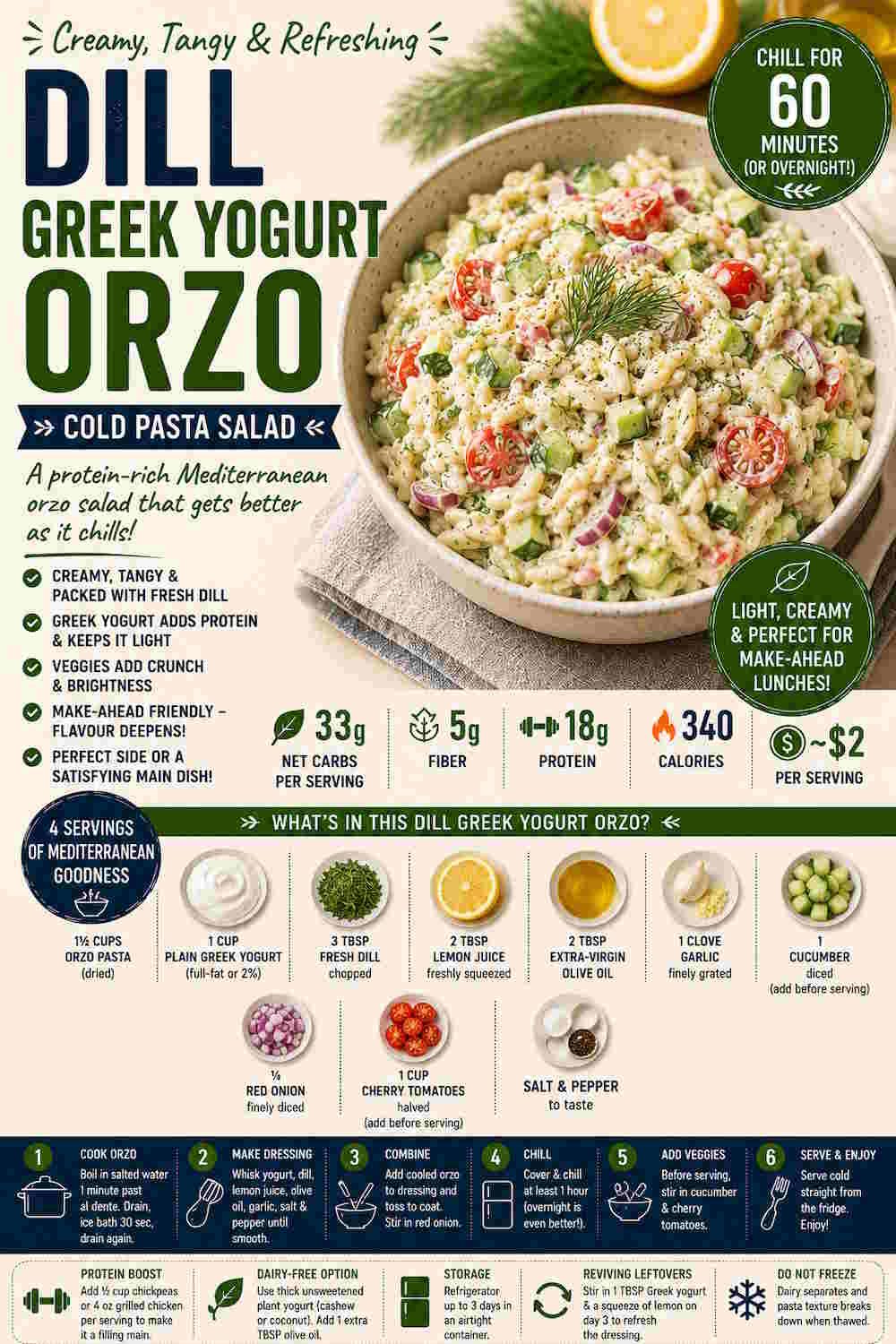
Dill Greek Yogurt Orzo
Ingredients
Equipment
Method
- Bring a large pot of generously salted water to a boil. Add the orzo and cook for 1 minute past the package’s al dente time. Drain and immediately plunge into a bowl of ice water for 30 seconds to stop the cooking, then drain again thoroughly.
- In a large mixing bowl, whisk together the Greek yogurt, chopped dill, lemon juice, olive oil, and grated garlic until smooth. Season with salt and pepper.
- Add the cooled orzo to the dressing and stir until every grain is coated. Stir in the red onion.
- Cover and chill in the fridge for at least 1 hour (overnight is even better — the dill flavour develops as it sits).
- Just before serving, stir in the diced cucumber and halved cherry tomatoes. Taste and adjust with extra lemon juice or salt if needed.
- Serve cold straight from the fridge. The dish actually tastes better on day two — the yogurt mellows and the dill deepens.
Nutrition
Notes
Tried this recipe?
Let us know how it was!3. Mint Cilantro Bowtie Salad
The brightest, summeriest of the three. Mint and cilantro sound like an unexpected pair until you’ve tried them together over honey-lime vinaigrette — they balance each other rather than compete. Bowtie pasta (farfalle) catches the herbs in its folds, and the dressing is intentionally light so the herbs lead. Best of the three for picnics and warm-weather outdoor lunches.
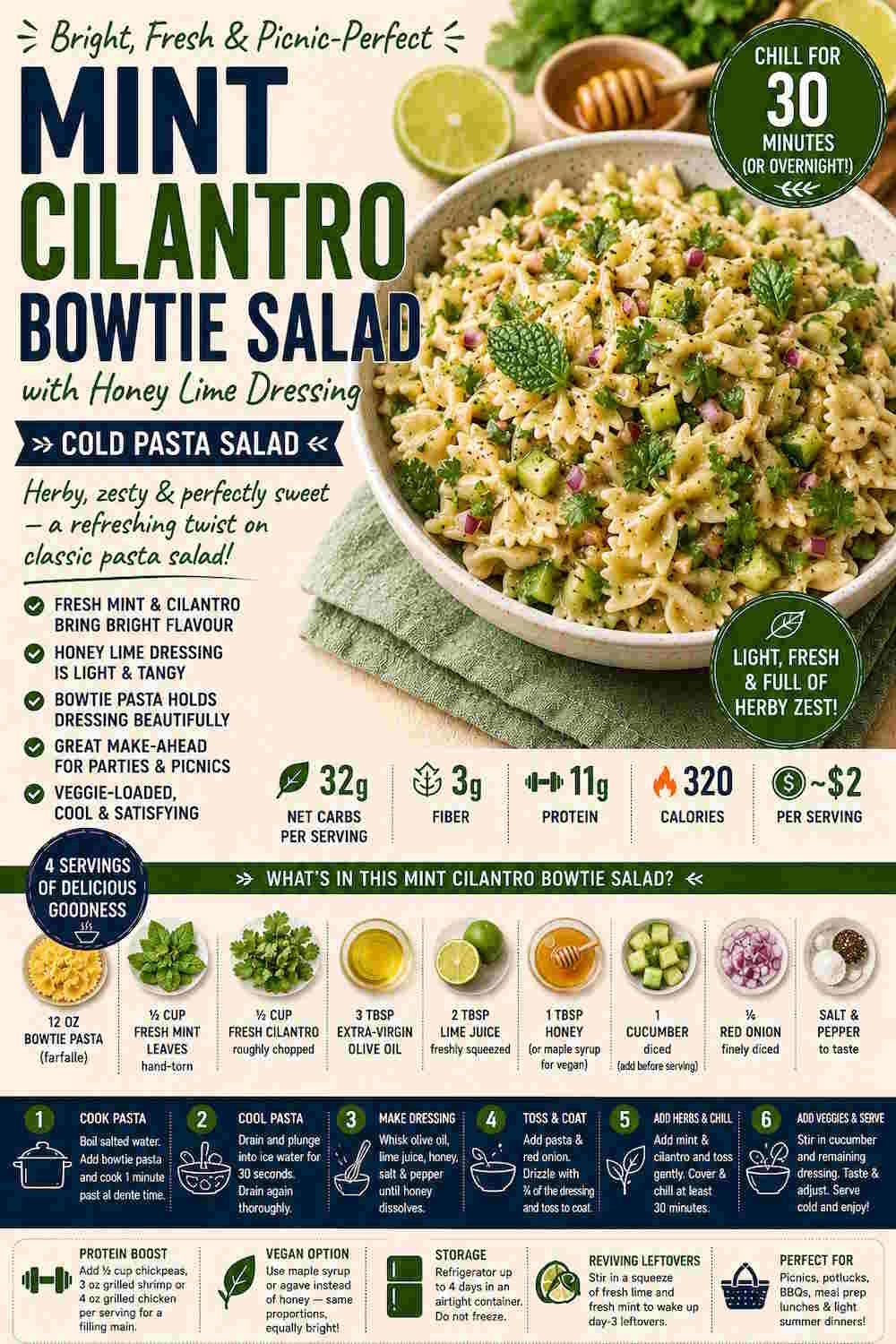
Mint Cilantro Bowtie Salad with Honey Lime Dressing
Ingredients
Equipment
Method
- Bring a large pot of generously salted water to a boil. Add the bowtie pasta and cook for 1 minute past the package’s al dente time.
- Drain the pasta and immediately plunge it into a bowl of ice water for 30 seconds to stop the cooking and lock in the bowtie shape. Drain again thoroughly.
- In a small bowl, whisk together the olive oil, lime juice, honey, salt, and pepper until the honey dissolves and the dressing emulsifies.
- Transfer the cooled pasta to a large mixing bowl. Add the red onion, drizzle with about three-quarters of the dressing, and toss to coat.
- Add the hand-torn mint and chopped cilantro and toss gently — you want the herbs to stay leafy, not bruised. Cover and chill for at least 30 minutes.
- Just before serving, stir in the diced cucumber and the remaining dressing. Taste and adjust with extra lime, honey, or salt as needed.
Nutrition
Notes
Tried this recipe?
Let us know how it was!Chef Tips for Perfect Cold Pasta
Cook the pasta one minute past al dente: Pasta firms up as it cools. What feels slightly too soft when hot will be perfectly textured once chilled. Underdone pasta becomes unpleasantly chalky after a fridge stay.
Shock in cold water immediately: The moment the pasta is drained, plunge it into a bowl of ice water for 30 seconds. This stops the cooking instantly and rinses off excess starch that would otherwise glue the noodles together in the fridge.
Dress the pasta while it’s still slightly warm: Warm pasta absorbs dressing far better than cold. Toss in olive oil and the bulk of the dressing first, then refrigerate. Reserve a few tablespoons of dressing to stir in right before serving, which refreshes the flavor after the fridge.
Salt the pasta water heavily: Cold pasta has nowhere to hide flavor. The pasta itself needs to taste seasoned before any dressing touches it. Use about a tablespoon of salt per 4 quarts of water — it should taste like a mild broth.
Add tender herbs at the end, hardy herbs early: Basil, mint, and cilantro should be torn or chopped and stirred in just before chilling so they don’t bruise. Rosemary, thyme, oregano can go in earlier — they hold up to longer contact.
Hold the cucumber and tomato until serving: Watery vegetables release liquid as they sit, which dilutes the dressing and sogs the pasta. Dice them in the morning if you’re packing lunch, or stir them in right at lunchtime.
Storage and Serving Suggestions
Refrigerator Storage: All three cold pasta recipes hold for 3–4 days in airtight containers at 40°F (4°C) or below. The dill yogurt orzo is the most perishable of the three because of the dairy — eat that one within 3 days.
Freezer Storage: Not recommended. Pasta texture breaks down on thawing, and creamy or oil-emulsion dressings separate. Cold pasta is a fridge format, not a freezer format.
Meal Prep Strategy: Cook a double batch of pasta on Sunday, then split it between two of the three dressings. You’ll get two different lunches across the week from one cooking session — variety without extra work. The same approach works for mason jar salads if you want to swap pasta for greens.
Reviving Day 3: Pasta absorbs dressing as it sits, so by day 3 the dish often looks dry. Stir in a tablespoon of olive oil, a squeeze of lemon or lime, and a small handful of fresh herbs right before eating — it brings the dish back to day-one flavor.
Portable Lunch: A wide-mouth container plus a fork is all you need. These pair well with the wider no-microwave work lunch approach and make a great anchor dish for a desk lunch rotation.
Complete the Meal: Add a hard-boiled egg, a small handful of chickpeas, or a few slices of grilled chicken to any of the three for a more substantial lunch with more protein and longer staying power.
Frequently Asked Questions About Cold Pasta Recipes
How long do cold pasta recipes last in the fridge?
Most cold pasta recipes hold for 3 to 4 days in airtight containers stored at 40°F (4°C) or below. Recipes with a Greek yogurt or sour cream base sit closer to the 3-day mark; oil-based pestos and vinaigrettes stretch to 4 days. Cold pasta dishes are not freezer-friendly — the pasta texture breaks down on thawing.
What’s the best pasta shape for cold pasta recipes?
Short shapes with ridges or twists hold dressing far better than smooth tubes or strands. Fusilli, rotini, bowtie (farfalle), penne, and orzo are the most reliable picks. Long pasta like spaghetti or linguine clumps in the fridge and isn’t ideal for cold preparations.
Can you make cold pasta recipes in advance?
Yes — cold pasta is actually one of the best make-ahead lunch formats. Flavors deepen as the herbs and dressing settle into the noodles, so a batch made Sunday night usually tastes better Monday and Tuesday than it did fresh. Watery vegetables like cucumber and tomato are best added closer to serving so they don’t dilute the dressing.
Are cold pasta recipes healthy?
They can be — the herbs, olive oil, and acidic dressings used in these three recipes deliver real flavor without heavy cream or cheese loads. Calorie counts run 320 to 410 per serving. For added protein and steadier energy, stir in chickpeas, grilled chicken, or a hard-boiled egg, which turns a pasta side into a balanced lunch.
You Might Also Like
The parent cold-lunch hub — broader collection covering soups, salads, wraps, and proteins beyond pasta.
Ten ready-to-pack cold lunches built on lean protein — natural pairings for any of the three pasta dishes here.
When you want the warm-pasta counterpart to these cold dishes — comforting, creamy, and 45 minutes start to finish.
A lighter alfredo for warm pasta nights — same make-ahead spirit, completely different format.
Final Thoughts
Three cold pasta recipes, one Sunday evening, half a week of desk-ready lunches that need nothing but a fork at noon. The basil pesto fusilli is the comfort pick, the dill yogurt orzo is the protein-forward pick, and the mint cilantro bowtie is the picnic pick — between them, you’ve got coverage across mood and weather. Add a protein side if you want a fuller lunch, swap in gluten-free pasta if you need it, and keep a small jar of leftover dressing to revive day-three leftovers.
Medical Disclaimer: The nutritional information provided in this article is for informational purposes only. While we strive for accuracy, individual responses to foods vary. Always consult with your healthcare provider or registered dietitian about dietary changes.


