Published July 18, 2026 · Updated July 25, 2026
Apple Mille-Feuille layers crisp puff pastry, caramelized cinnamon apples, and softly whipped vanilla cream into eighteen wafer-thin squares, rebuilt as six individual pastries. The name means a thousand leaves, a nod to the shattering layers that separate a real mille-feuille from a simple apple tart. Forty-five minutes of hands-on work, most of it inactive baking and chilling, turns two sheets of store-bought puff pastry into a dessert that looks like it came from a patisserie.
Quick Stats
The Art of the Thousand Leaves: Why Apples Perfect the Classic Mille-Feuille
The mille-feuille is an iconic pillar of French pastry making, a dessert defined by its architecture. Its name literally translates to a thousand leaves, a nod to the numerous whisper-thin layers of puff pastry that give it a signature shatter-crisp texture. Outside France, it is often called a Napoleon, though this classic treat has a history as rich as its cream-filled layers.
A Legacy of Lamination
The dessert’s origins date back to at least 1651, when the French chef Francois Pierre de La Varenne documented an early version of a layered pastry in Le Cuisinier Francois. That early rendition sometimes used fruit preserves rather than custard. The modern mille-feuille, as we know it, was refined in the eighteenth and nineteenth centuries by chefs such as Marie-Antoine Carême, who is credited with popularizing the handmade puff pastry and the generous custard filling still used today.
The Napoleon name likely has nothing to do with the French emperor. Some historians believe it is instead a corruption of the word napolitain, a reference to the Italian city of Naples, which was known for its own intricate layered desserts. Either way, both names describe the same architecture of alternating crisp pastry and soft filling.
The Apple Innovation
A traditional mille-feuille is usually filled with plain vanilla pastry cream alone. Adding caramelized apples is a natural evolution that improves the dessert in three ways. The sauteed apples add a jammy, tender texture that sits perfectly between the flaky pastry and the smooth cream, so every bite has three distinct textures instead of two. The fruit’s slight tartness also cuts through the cream’s richness, giving the dessert a balance that a purely sweet filling cannot. And incorporating apples nods to Normandy, France’s premier apple-growing region, where orchard fruit and rich dairy have been paired for generations.
Whether served as individual portions or assembled into one large family-style cake, the mille-feuille remains one of French pastry’s clearest demonstrations that a few well-executed layers can outshine a far more complicated dessert.
Bakery Napoleon vs. Homemade Apple Mille-Feuille
| Factor | Bakery Napoleon | Homemade Version |
|---|---|---|
| Cost per serving | $6 to $8 | About $2 |
| Freshness | Baked hours or days earlier | Assembled same day |
| Pastry crunch | Softened from display case storage | Crisp to order |
| Filling | Fixed, usually plain vanilla | Customizable apple and spice level |
This recipe rebuilds that bakery case classic with caramelized apples worked into the layers.
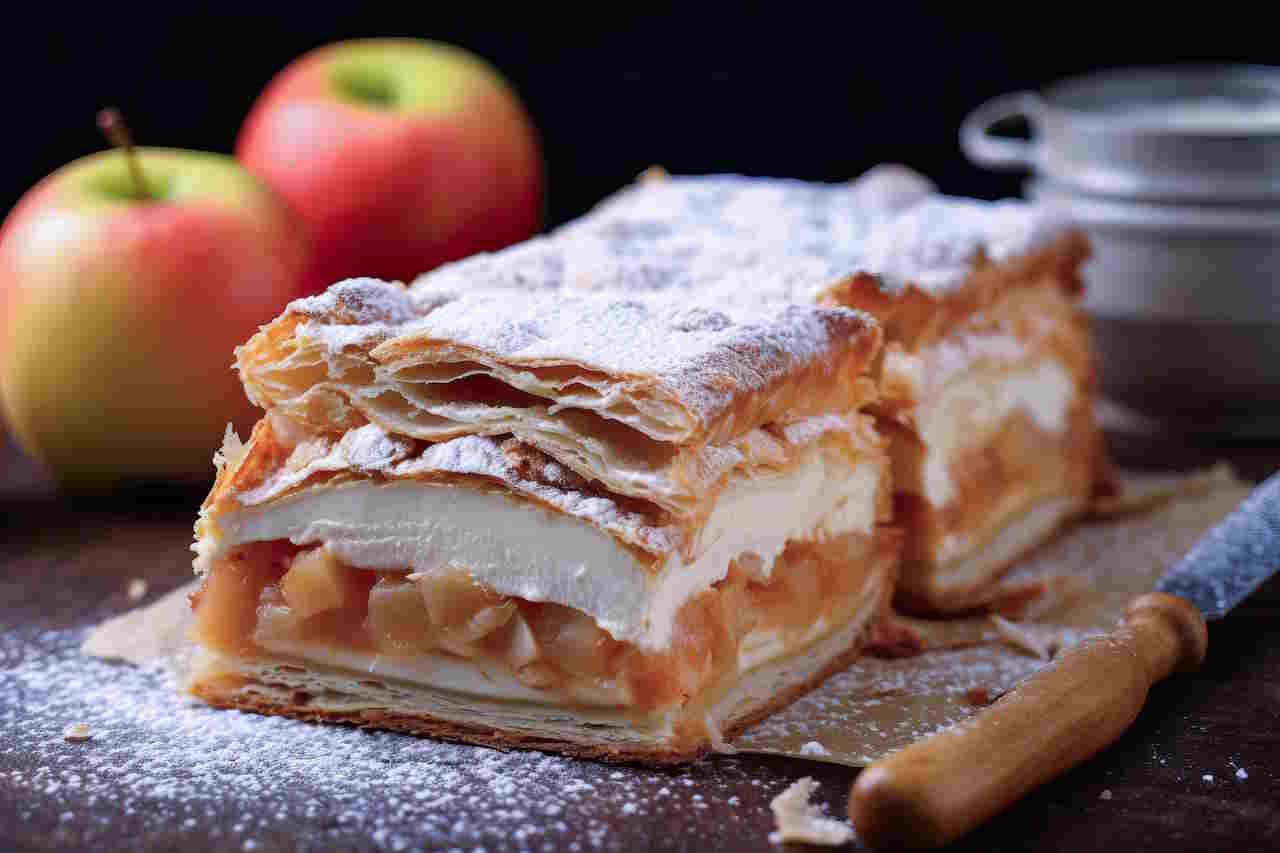
Apple Mille-Feuille
Ingredients
Equipment
Method
- Bake the pastry layers. Preheat your oven to 400°F (200°C).
- Roll out both puff pastry sheets slightly on a lightly floured surface. Cut each sheet into 3 equal rectangular strips, giving you 6 strips total.
- Place the strips on a baking sheet lined with parchment paper. Prick them thoroughly with a fork so they don’t rise too unevenly.
- Dust the strips generously with 1 tablespoon of the powdered sugar.
- Bake for 15 to 20 minutes until golden brown and crispy. Let them cool completely, then carefully slice each strip into 3 equal squares, for 18 small squares total.
- Sauté the apples. Melt the butter in a skillet over medium heat. Add the sliced apples, brown sugar, cinnamon, and lemon juice.
- Cook for 8 to 10 minutes until the apples are tender and coated in a glossy caramel sauce. For extra depth, add a splash of Calvados or another apple brandy once the apples have softened and let it bubble away for a minute.
- Remove from heat and let the apples cool completely before assembly.
- Whip the vanilla cream. In a large bowl, combine the chilled heavy cream, 2 tablespoons of the powdered sugar, and the vanilla extract.
- Whip on high speed until stiff peaks form. Transfer the cream into a piping bag, or a plastic zip-top bag with the corner snipped off.
- Assemble the desserts. To build one individual mille-feuille, place a pastry square on a plate. Pipe a layer of vanilla cream over the pastry, then arrange a layer of cooled caramelized apples on top.
- Place a second pastry square on top and repeat the cream and apple layers, then finish with a third pastry square.
- Dust the top layer with the remaining powdered sugar right before serving. Repeat to build the remaining 5 desserts.
Nutrition
Notes
Tried this recipe?
Let us know how it was!You Might Also Like

Chef Tips for Perfect Apple Mille-Feuille
Choose a firm apple: Granny Smith is the gold standard for its tartness and structure. Honeycrisp, Braeburn, and Pink Lady also hold their shape well. Skip softer varieties like Red Delicious, which turn mushy and add little flavor once cooked.
Sear on high heat: Let the apples sit in the hot skillet without stirring too much at first, so the natural sugars sear into a deep caramel color before you flip them. Constant stirring steams the fruit instead of caramelizing it.
Watch for excess liquid: If the apple mixture looks too runny after cooking, continue over the heat for another minute or two until the juices reduce into a glossy syrup, or lift the apples out with a slotted spoon and leave any watery liquid behind.
Flavor booster: A splash of Calvados, the French apple brandy, added once the apples have softened deepens the flavor considerably as it cooks off. A pinch of salt in the caramel and a little extra lemon juice both sharpen the apple flavor too.
Cool everything first: Warm apples or warm pastry will melt the whipped cream and turn crisp layers soggy within minutes. Let both components reach room temperature before you start stacking.
Slice with a sawing motion: A long serrated knife held at a 45 degree angle, with almost no downward pressure, lets the blade’s teeth cut through the top pastry layer cleanly before you slice down through the filling.
Apple Mille-Feuille Storage and Serving Suggestions
Same-Day Best: Mille-feuille is at its best the day it is assembled, while the pastry is still shattering-crisp. Leftovers keep in the fridge for up to a day, though the layers will soften.
Make-Ahead Components: The baked pastry squares and the caramelized apples can both be made up to a day ahead. Store the pastry in an airtight container at room temperature and the apples in the fridge, then whip the cream and assemble just a few hours before serving.
Serving Size Options: Build six individual pastries for a plated dessert, or follow the large cake method and slice one showstopper into 6 to 8 wedges for a dinner party.
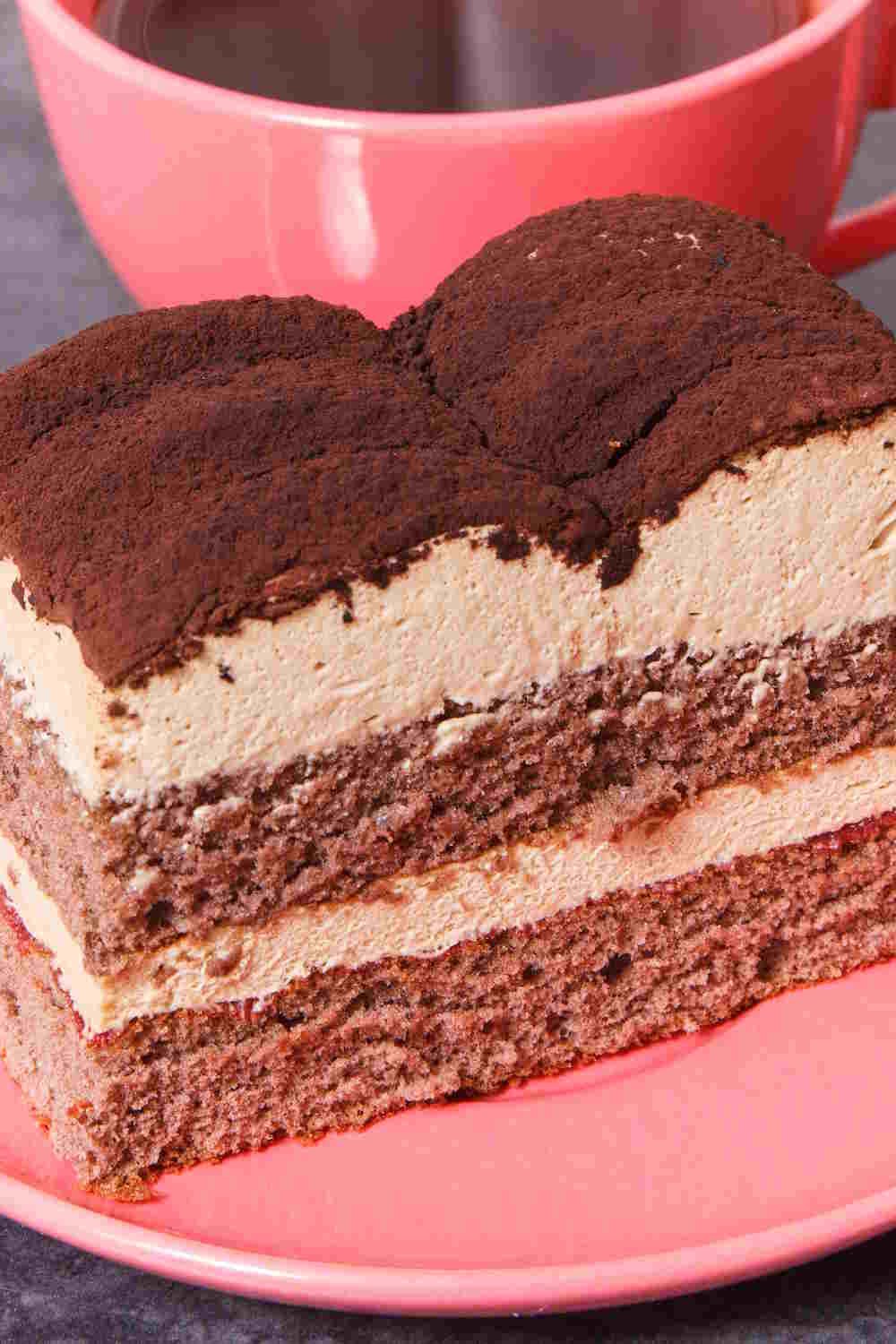
Pairing: This dessert fits naturally at the end of a heritage-inspired meal. For a similar layered dessert with make-ahead components, see the Tiramisu, or for more Montreal restaurant history in the same spirit, read about Le 9e Montreal.
Apple Mille-Feuille Q&A
What does mille-feuille mean?
Mille-feuille translates from French as a thousand leaves or a thousand sheets, describing the many whisper-thin layers of puff pastry that give the dessert its shattering texture. It is not literally a thousand layers, but the name captures how delicate and numerous the pastry sheets appear once baked and stacked.
Is mille-feuille the same as a Napoleon?
Yes, outside France, the dessert is commonly called a Napoleon. Some historians believe the name has nothing to do with the French emperor and is instead a corruption of napolitain, a reference to Naples, Italy, which was known for its own layered pastries. Both names describe the same alternating layers of crisp pastry and cream.
What is the best apple for mille-feuille?
Granny Smith is the classic choice for its tartness and firm texture, and it holds its shape well during cooking. Honeycrisp, Braeburn, and Pink Lady are also good options. Softer varieties like Red Delicious tend to turn mushy and lack the flavor needed to stand up to the pastry and cream.
Can I make apple mille-feuille ahead of time?
The pastry squares and caramelized apples can both be made up to a day in advance and stored separately, pastry at room temperature and apples in the fridge. Wait to whip the cream and assemble the layers until a few hours before serving so the pastry stays crisp.
Final Thoughts
A four-hundred-year-old pastry technique still holds up because it is built on a simple idea done well: crisp against soft, tart against sweet. Apples bring both to the table, which is exactly why this variation earns a permanent place next to the classic vanilla version.
Medical Disclaimer: The nutritional information provided in this article is for informational purposes only. While we strive for accuracy, individual responses to foods vary. Always consult with your healthcare provider or registered dietitian about dietary changes.