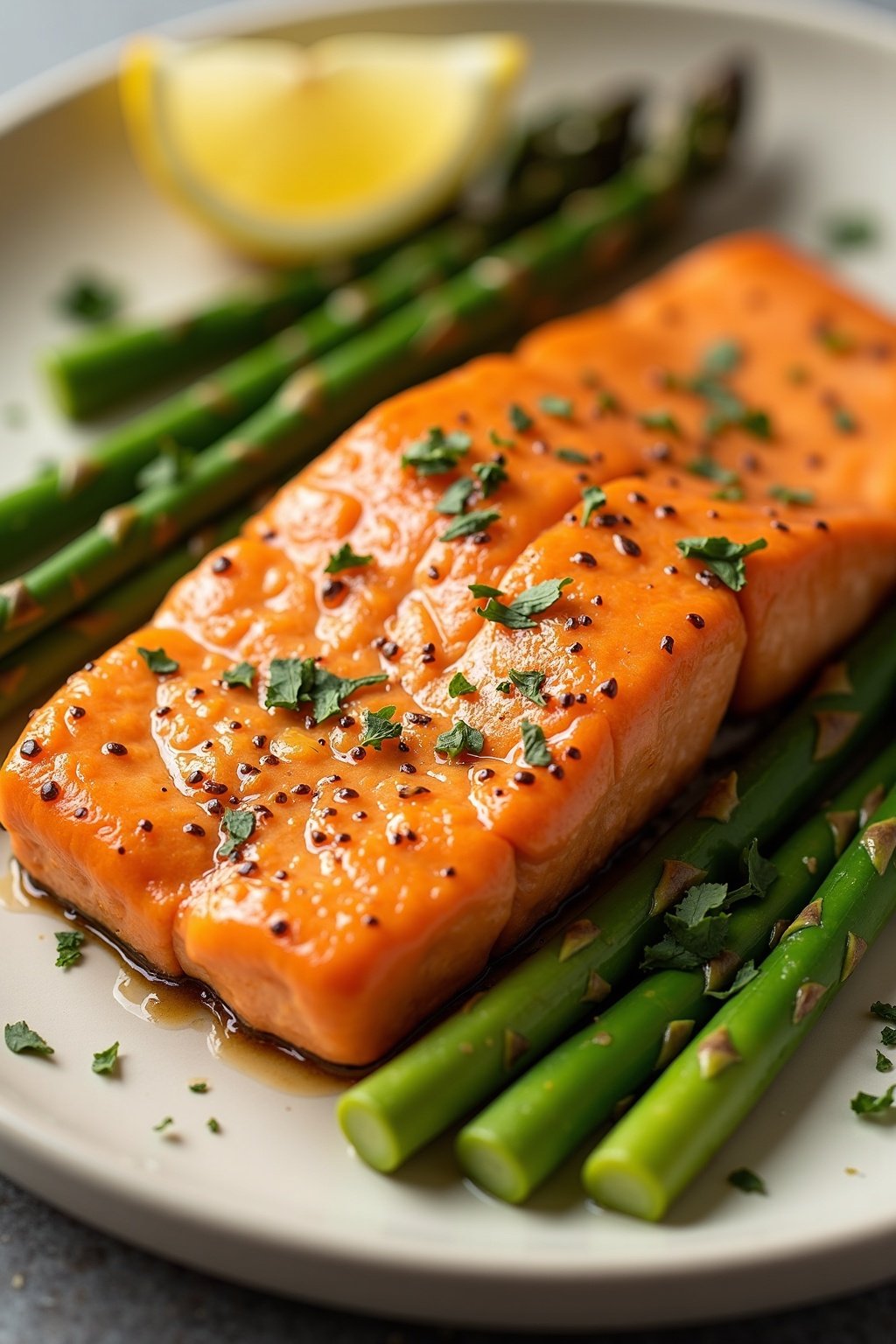
Ingredients
Equipment
Method
- Preheat your oven to 400°F (200°C). Line a large sheet pan with parchment paper or lightly grease with olive oil for easy cleanup.
- Pat salmon fillets completely dry with paper towels. This helps achieve a better texture and allows seasonings to stick properly.
- Trim the tough woody ends from asparagus spears (usually the bottom 1-2 inches). You can bend each spear gently and it will naturally snap where the tender part begins.
- In a small mixing bowl, whisk together olive oil, fresh lemon juice, minced garlic, chopped dill or parsley, salt, and black pepper until well combined.
- Arrange salmon fillets and asparagus spears on the prepared sheet pan, spacing them evenly. Place asparagus in a single layer for even cooking.
- Drizzle the herb-lemon mixture over both the salmon and asparagus, using a brush or spoon to coat everything evenly. Make sure the salmon tops are well-seasoned.
- Roast in the preheated oven for 12-15 minutes. Thin fillets (3/4 inch) need about 12 minutes, while thicker cuts (1+ inch) may need the full 15 minutes. Check asparagus at 10 minutes if using very thin spears.
- Check salmon for doneness: it should flake easily with a fork and reach an internal temperature of 145°F on a meat thermometer inserted into the thickest part. The center should be just barely opaque.
- Remove from oven and let rest for 2-3 minutes. The salmon will continue cooking slightly from residual heat.
- Serve immediately with fresh lemon wedges, or divide into four equal portions for meal prep. Store in airtight containers in the refrigerator for up to 3 days.
Nutrition
Notes
This recipe is exceptionally diabetic-friendly with only 3g net carbs per serving. Salmon provides high-quality protein and omega-3 fatty acids (EPA and DHA) that support insulin sensitivity and cardiovascular health. The combination of protein and healthy fats helps stabilize blood sugar levels and promotes satiety. Asparagus is low in calories and carbs while providing fiber, folate, and vitamins A, C, E, and K. The recipe uses minimal sodium and no added sugars, making it heart-healthy for those managing diabetes. This meal is compatible with Keto, Low-Carb, Gluten-Free, Dairy-Free, and Paleo diets.
