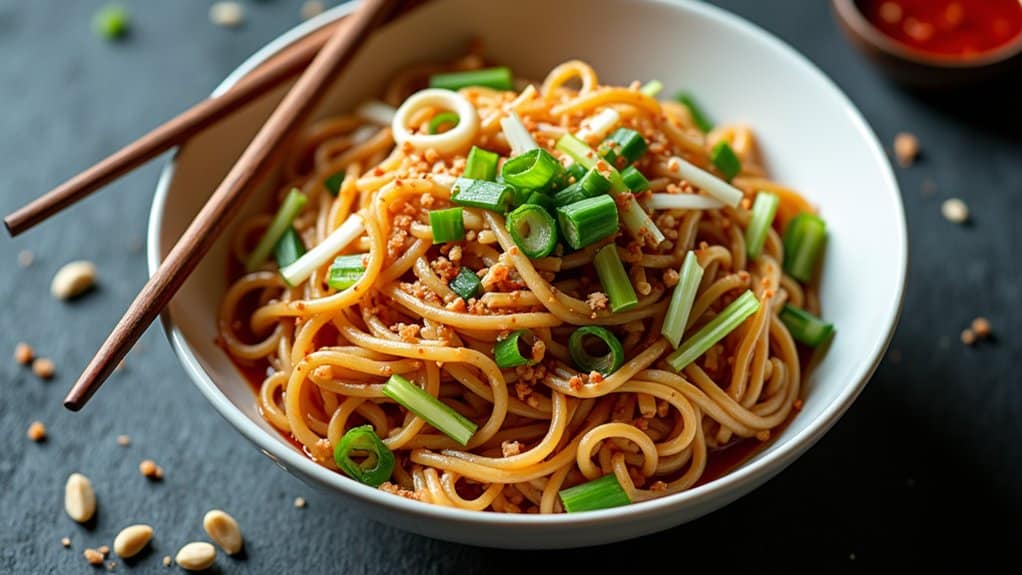

Ingredients
Equipment
Method
- Open the package of shirataki noodles and drain them in a colander. Rinse thoroughly under cold running water for 2 minutes to remove any odor. Pat dry with paper towels or a clean kitchen towel.
- Heat a dry skillet over medium-high heat. Add the rinsed shirataki noodles and dry-roast for 2-3 minutes, stirring frequently, to remove excess moisture. Transfer to a large bowl and set aside to cool.
- In the same dry skillet over medium heat, toast the Szechuan peppercorns for 1-2 minutes until fragrant, shaking the pan frequently to prevent burning. Remove from heat and let cool slightly.
- Grind the toasted Szechuan peppercorns using a mortar and pestle or spice grinder until coarsely ground.
- In a large mixing bowl, whisk together the low-sodium soy sauce, Chinese black vinegar, sesame oil, minced garlic, grated ginger, chili oil, and ground Szechuan peppercorns until well combined.
- Add the cooled shirataki noodles to the bowl with the sauce and toss thoroughly with tongs or chopsticks until the noodles are evenly coated.
- Add the sliced green onions, chopped peanuts, julienned cucumber, and bean sprouts to the noodles. Toss everything together until well mixed and all ingredients are coated with the sauce.
- Cover the bowl and refrigerate the noodle salad for at least 30 minutes (or up to 4 days) to chill thoroughly and allow the flavors to meld together.
- Before serving, toss the salad briefly to redistribute the sauce. Taste and adjust seasoning if needed, adding a bit more chili oil for extra heat or a splash of vinegar for more tang.
Nutrition
Notes
This diabetic-friendly Szechuan Noodle Salad uses shirataki noodles, which contain virtually zero digestible carbohydrates and have a glycemic index of zero. With only 12g total carbs and 4g fiber per serving (8g net carbs), this recipe is suitable for low-carb and diabetic meal plans. The healthy fats from sesame oil and peanuts help slow digestion and promote stable blood sugar levels. Bean sprouts and cucumber provide additional fiber, vitamins, and minerals with minimal carbohydrate impact. Using low-sodium soy sauce helps manage sodium intake, which is important for cardiovascular health in people with diabetes.
